eventConference
AI & The Future of Work Conference
Digital technologies, and especially artificial intelligence, present incredible possibilities for improving how we live and work, but they also pose real challenges.
Get the latest news, advances in research, policy work, and education program updates from HAI in your inbox weekly.
Sign Up For Latest News
Digital technologies, and especially artificial intelligence, present incredible possibilities for improving how we live and work, but they also pose real challenges.
The rapid acceleration of AI comes with a profound wave of anxiety. Across every sector of society, people are facing unsettling questions about their worth and their place in a shifting world.
The rapid acceleration of AI comes with a profound wave of anxiety. Across every sector of society, people are facing unsettling questions about their worth and their place in a shifting world.
AI is advancing rapidly at the cognitive tasks that make up knowledge work, raising fears among firms, policymakers, and, not least, workers of a “China shock” for white-collar jobs. Neil Thompson will present new research on whether those fears are warranted.
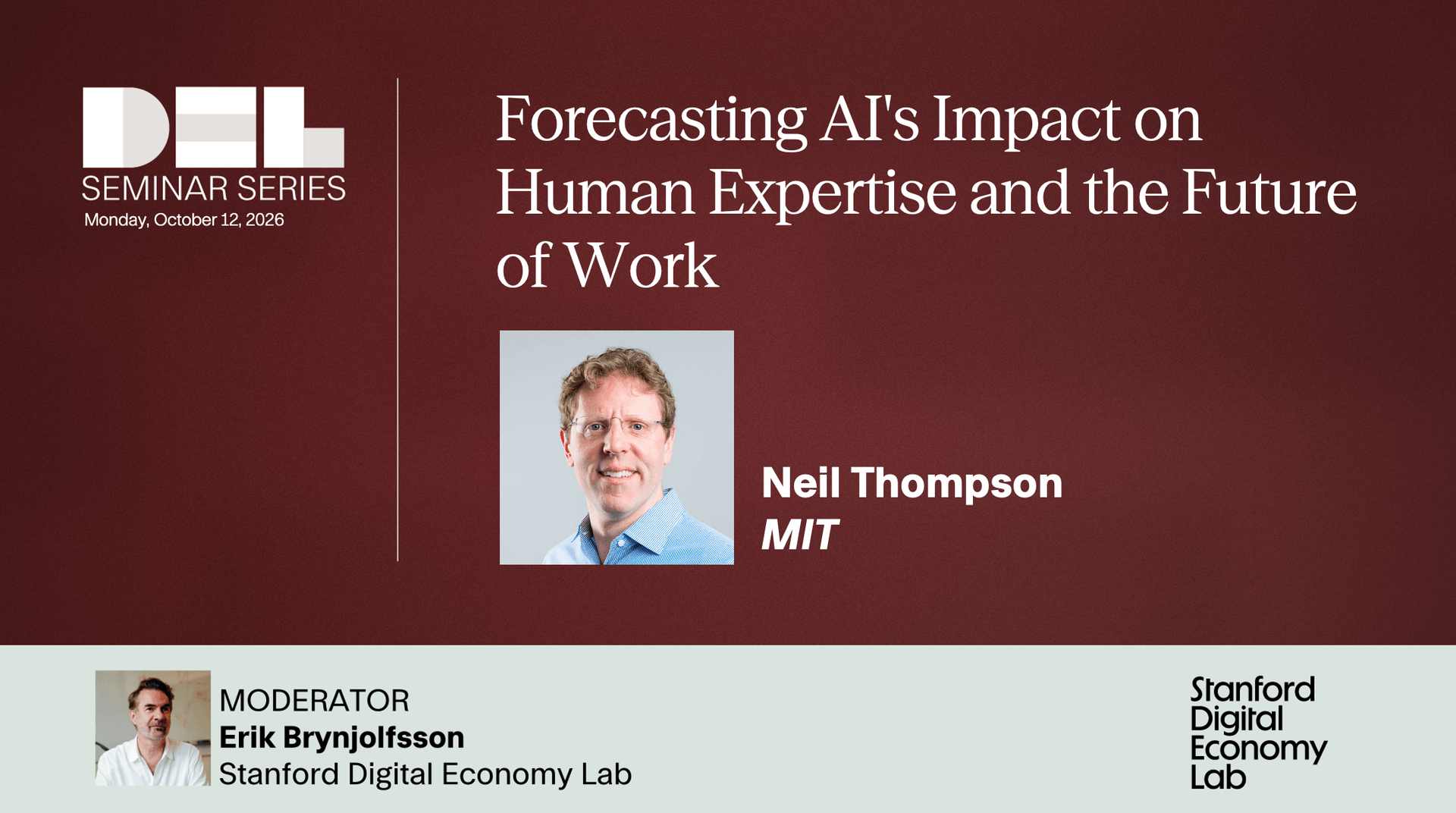
AI is advancing rapidly at the cognitive tasks that make up knowledge work, raising fears among firms, policymakers, and, not least, workers of a “China shock” for white-collar jobs. Neil Thompson will present new research on whether those fears are warranted.
Sessions run Wednesdays from 4:30–5:30 PM in CoDa E160. Each session features a different Stanford speaker; talk titles are announced by the organizers.

Sessions run Wednesdays from 4:30–5:30 PM in CoDa E160. Each session features a different Stanford speaker; talk titles are announced by the organizers.
At HAI, we are working to advance AI research, education, policy, and practice to improve the human condition. The Digital Economy Lab at HAI is charged with creating tools, insights, data, and resources to improve our understanding of the economic and productivity implications of AI technology, with the future of work as a central focus.