Upcoming Events
Carina Hong | AI That Can Prove It: From Mathematical Discovery to Verified Software
A eureka moment is a two-step process: discovering something new and surprising, and establishing that it is correct. Drawing on her work at Axiom, Carina will discuss the transition from solving mathematical benchmarks to contributing to research, and from proving individual theorems to formalizing mathematical theories in Lean.
Carina Hong | AI That Can Prove It: From Mathematical Discovery to Verified Software
A eureka moment is a two-step process: discovering something new and surprising, and establishing that it is correct. Drawing on her work at Axiom, Carina will discuss the transition from solving mathematical benchmarks to contributing to research, and from proving individual theorems to formalizing mathematical theories in Lean.
Nicholas Branigan | Non-ergodicity and Simpson’s paradox in neural correlates
A Center for Neural Data Science Seminar Series
Nicholas Branigan | Non-ergodicity and Simpson’s paradox in neural correlates
A Center for Neural Data Science Seminar Series
Bay Area Tech Economics Seminar with Rehan Khan, Snowflake
The Bay Area Tech Economics Seminar is for graduate-trained economists and other quantitative social scientists from academia, policy, or the private sector who are interested in the tech economy and methods for analyzing it, and in making connections with others in this broadly defined space.
Bay Area Tech Economics Seminar with Rehan Khan, Snowflake
The Bay Area Tech Economics Seminar is for graduate-trained economists and other quantitative social scientists from academia, policy, or the private sector who are interested in the tech economy and methods for analyzing it, and in making connections with others in this broadly defined space.
Marlowe | AI + Data for Science with Anshul Kundaje
Sessions run Wednesdays from 4:30–5:30 PM in CoDa E160. Each session features a different Stanford speaker; talk titles are announced by the organizers.
Sessions run Wednesdays from 4:30–5:30 PM in CoDa E160. Each session features a different Stanford speaker; talk titles are announced by the organizers.
Daniel Rock | The Free Hypothesis: AI and Shifted Bottlenecks in Science
Scientific progress is a key driver of economic growth and prosperity. There is great excitement- but also concerns- about the impacts of AI on science, but so far little data. We provide early insights on this from three data sources: a sample of 15 million Gemini interactions, an inventory of over 2,600 specialized AI models across disciplines, and a survey of over 600 scientists.
Daniel Rock | The Free Hypothesis: AI and Shifted Bottlenecks in Science
Scientific progress is a key driver of economic growth and prosperity. There is great excitement- but also concerns- about the impacts of AI on science, but so far little data. We provide early insights on this from three data sources: a sample of 15 million Gemini interactions, an inventory of over 2,600 specialized AI models across disciplines, and a survey of over 600 scientists.
Confronting Our AI Future: Hope, Fear, and the Choices Ahead
The rapid acceleration of AI comes with a profound wave of anxiety. Across every sector of society, people are facing unsettling questions about their worth and their place in a shifting world.
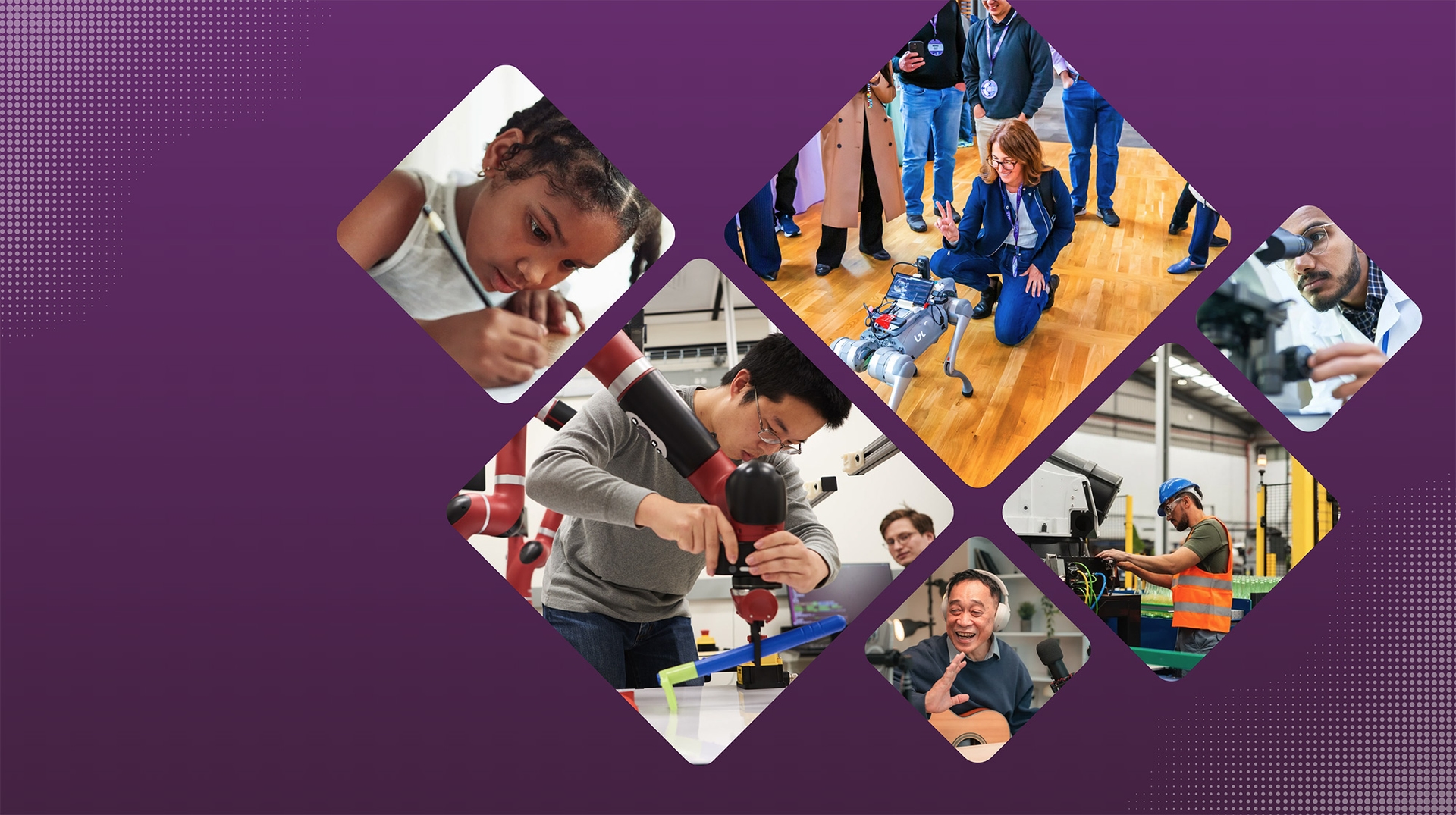
Confronting Our AI Future: Hope, Fear, and the Choices Ahead
The rapid acceleration of AI comes with a profound wave of anxiety. Across every sector of society, people are facing unsettling questions about their worth and their place in a shifting world.
Marlowe | AI + Data for Science with Dan Yamins
Sessions run Wednesdays from 4:30–5:30 PM in CoDa E160. Each session features a different Stanford speaker; talk titles are announced by the organizers.
Marlowe | AI + Data for Science with Dan Yamins
Sessions run Wednesdays from 4:30–5:30 PM in CoDa E160. Each session features a different Stanford speaker; talk titles are announced by the organizers.
Marcos Santiago Rojas Pino & Thomas Caruso | Building an International AI Platform for Health Professions Education and the Learning Sciences
Clinical Mind AI is a Stanford-developed, international collaborative platform designed to strengthen clinical reasoning education through AI-simulated patient encounters across health professions.
Marcos Santiago Rojas Pino & Thomas Caruso | Building an International AI Platform for Health Professions Education and the Learning Sciences
Clinical Mind AI is a Stanford-developed, international collaborative platform designed to strengthen clinical reasoning education through AI-simulated patient encounters across health professions.
Marlowe | AI + Data for Science with Ruijiang Li
Sessions run Wednesdays from 4:30–5:30 PM in CoDa E160. Each session features a different Stanford speaker; talk titles are announced by the organizers.
Marlowe | AI + Data for Science with Ruijiang Li
Sessions run Wednesdays from 4:30–5:30 PM in CoDa E160. Each session features a different Stanford speaker; talk titles are announced by the organizers.
CNDS Seminar - Daniel Wurgaft
A Center for Neural Data Science Seminar Series
CNDS Seminar - Daniel Wurgaft
A Center for Neural Data Science Seminar Series
Marlowe | AI + Data for Science with Mohsen Bayati
Sessions run Wednesdays from 4:30–5:30 PM in CoDa E160. Each session features a different Stanford speaker; talk titles are announced by the organizers.
Sessions run Wednesdays from 4:30–5:30 PM in CoDa E160. Each session features a different Stanford speaker; talk titles are announced by the organizers.
AI100 | AI Goes Mainstream: The Scaling Era and the Rise of Generative AI
This talk will cover key insights from the third AI100 report, AI Goes Mainstream: The Scaling Era and the Rise of Generative AI, set for release in November 2026. The report was commissioned by the AI100 standing committee and led by study panel chair Michael Wooldridge.
AI100 | AI Goes Mainstream: The Scaling Era and the Rise of Generative AI
This talk will cover key insights from the third AI100 report, AI Goes Mainstream: The Scaling Era and the Rise of Generative AI, set for release in November 2026. The report was commissioned by the AI100 standing committee and led by study panel chair Michael Wooldridge.
Marlowe | AI + Data for Science with Andreas Tolias
Sessions run Wednesdays from 4:30–5:30 PM in CoDa E160. Each session features a different Stanford speaker; talk titles are announced by the organizers.
Sessions run Wednesdays from 4:30–5:30 PM in CoDa E160. Each session features a different Stanford speaker; talk titles are announced by the organizers.
Marlowe | AI + Data for Science with Leonidas Guibas
Sessions run Wednesdays from 4:30–5:30 PM in CoDa E160. Each session features a different Stanford speaker; talk titles are announced by the organizers.
Sessions run Wednesdays from 4:30–5:30 PM in CoDa E160. Each session features a different Stanford speaker; talk titles are announced by the organizers.
Angèle Christin & Hannah Zeavin | Gurus, Hucksters, Entertainers: How Influencers Reshaped Social Media
Please join us for an illuminating investigation of the complex work of social media content creators—their lives, conflicts, and controversies.
Angèle Christin & Hannah Zeavin | Gurus, Hucksters, Entertainers: How Influencers Reshaped Social Media
Please join us for an illuminating investigation of the complex work of social media content creators—their lives, conflicts, and controversies.
YoungJu Jo | Data-driven discovery and control of neural computations
A Center for Neural Data Science Seminar Series
YoungJu Jo | Data-driven discovery and control of neural computations
A Center for Neural Data Science Seminar Series
Featured Videos
Hear from speakers and attendees at recent Stanford HAI events across research, policy, and education.
Previous Events at HAI
Serena Wang: From Metric Selection to Metric Discovery in AI Evaluation
Serena Wang: From Metric Selection to Metric Discovery in AI Evaluation
Marlowe | AI + Data for Science with Curtis Langlotz
Sessions run Wednesdays from 4:30–5:30 PM in CoDa E160. Each session features a different Stanford speaker; talk titles are announced by the organizers.
Sessions run Wednesdays from 4:30–5:30 PM in CoDa E160. Each session features a different Stanford speaker; talk titles are announced by the organizers.
Neil Thompson: Forecasting AI’s Impact on Human Expertise and the Future of Work
AI is advancing rapidly at the cognitive tasks that make up knowledge work, raising fears among firms, policymakers, and, not least, workers of a “China shock” for white-collar jobs. Neil Thompson will present new research on whether those fears are warranted.
Neil Thompson: Forecasting AI’s Impact on Human Expertise and the Future of Work
AI is advancing rapidly at the cognitive tasks that make up knowledge work, raising fears among firms, policymakers, and, not least, workers of a “China shock” for white-collar jobs. Neil Thompson will present new research on whether those fears are warranted.
Marlowe | AI + Data for Science with Olivier Gevaert
For 9/23 and 10/7 only, sessions are at the David Packard Electrical Engineering Building, Room 101. Each session features a different Stanford speaker; talk titles are announced by the organizers.
For 9/23 and 10/7 only, sessions are at the David Packard Electrical Engineering Building, Room 101. Each session features a different Stanford speaker; talk titles are announced by the organizers.
Tim de Silva | AI Financial Advice: Supply, Demand, and Life Cycle Implications
Tim de Silva | AI Financial Advice: Supply, Demand, and Life Cycle Implications
This session covers the foundational knowledge of GPUs, including their architecture, functionality, and applications in computing. It provides an introduction to GPU computing through the lens of the Marlowe SuperPod and prepares learners for advanced topics such as GPU-accelerated data science and machine learning.
Location: CoDa W401
This session covers the foundational knowledge of GPUs, including their architecture, functionality, and applications in computing. It provides an introduction to GPU computing through the lens of the Marlowe SuperPod and prepares learners for advanced topics such as GPU-accelerated data science and machine learning.
Location: CoDa W401
Andrew Shen | Unlocking LLM Creativity in Science through Analogical Reasoning
A Center for Neural Data Science Seminar Series
Andrew Shen | Unlocking LLM Creativity in Science through Analogical Reasoning
A Center for Neural Data Science Seminar Series
Anastasios Angelopoulos | Measuring AI in the Real World
This seminar co-hosted with the AI Measurement Science Center (AIMS) invites speakers to discuss academic work in AI evaluation and measurement science.
Anastasios Angelopoulos | Measuring AI in the Real World
This seminar co-hosted with the AI Measurement Science Center (AIMS) invites speakers to discuss academic work in AI evaluation and measurement science.
Marlowe | AI + Data for Science with Gordon Wetzstein
Sessions run Wednesdays from 4:30–5:30 PM in CoDa E160. Each session features a different Stanford speaker; talk titles are announced by the organizers.
Sessions run Wednesdays from 4:30–5:30 PM in CoDa E160. Each session features a different Stanford speaker; talk titles are announced by the organizers.