Stanford
University
  • Stanford Home
  • Maps & Directions
  • Search Stanford
  • Emergency Info
  • Terms of Use
  • Privacy
  • Copyright
  • Trademarks
  • Non-Discrimination
  • Accessibility
© Stanford University.  Stanford, California 94305.
Artificial Intelligence in Healthcare: The Hope, The Hype, The Promise, The Peril | Stanford HAI
Skip to content
  • About

    • About
    • People
    • Get Involved with HAI
    • Support HAI
    • Subscribe to Email
  • Research

    • Research
    • Research Programs
    • Grants
    • Marlowe (opens in new tab)
    • Student Affinity Groups
    • Centers & Labs
    • Research Publications
    • Research Partners
  • Education

    • Education
    • Executive and Professional Education
    • Government and Policymakers
    • K-12
    • Stanford Students
  • Policy

    • Policy
    • Policy Publications
    • Policymaker Education
    • Student Opportunities
  • AI Index

    • AI Index
    • AI Index Report
    • Global Vibrancy Tool
    • People
  • News
  • Events
  • Industry
  • Centers & Labs
Navigate
  • About
  • Events
  • AI Glossary
  • Careers
  • Search
Participate
  • Get Involved
  • Support HAI
  • Contact Us

Stay Up To Date

Get the latest news, advances in research, policy work, and education program updates from HAI in your inbox weekly.

Sign Up For Latest News

Your browser does not support the video tag.
event

Artificial Intelligence in Healthcare: The Hope, The Hype, The Promise, The Peril

Status
Past
Date
Friday, November 08, 2019 8:00 AM - 5:00 PM PST/PDT
Topics
Healthcare

This conference is anchored and building on the release of the Special National Academy of Medicine (NAM) publication titled: “Artificial Intelligence in Healthcare: The Hope, The Hype, The Promise, The Peril.” Co-led by Michael Matheny and Sonoo Thadaney Israni.

Objectives At the conclusion of this activity, participants should be able to: 
  1. Evaluate AI in the healthcare landscape

  2. Critically assess the opportunities for AI in healthcare

  3. Develop appropriate criteria for evaluating/deploying AI solutions

  4. Build frameworks for creating and testing AI healthcare solutions
Share
Link copied to clipboard!

Related Events

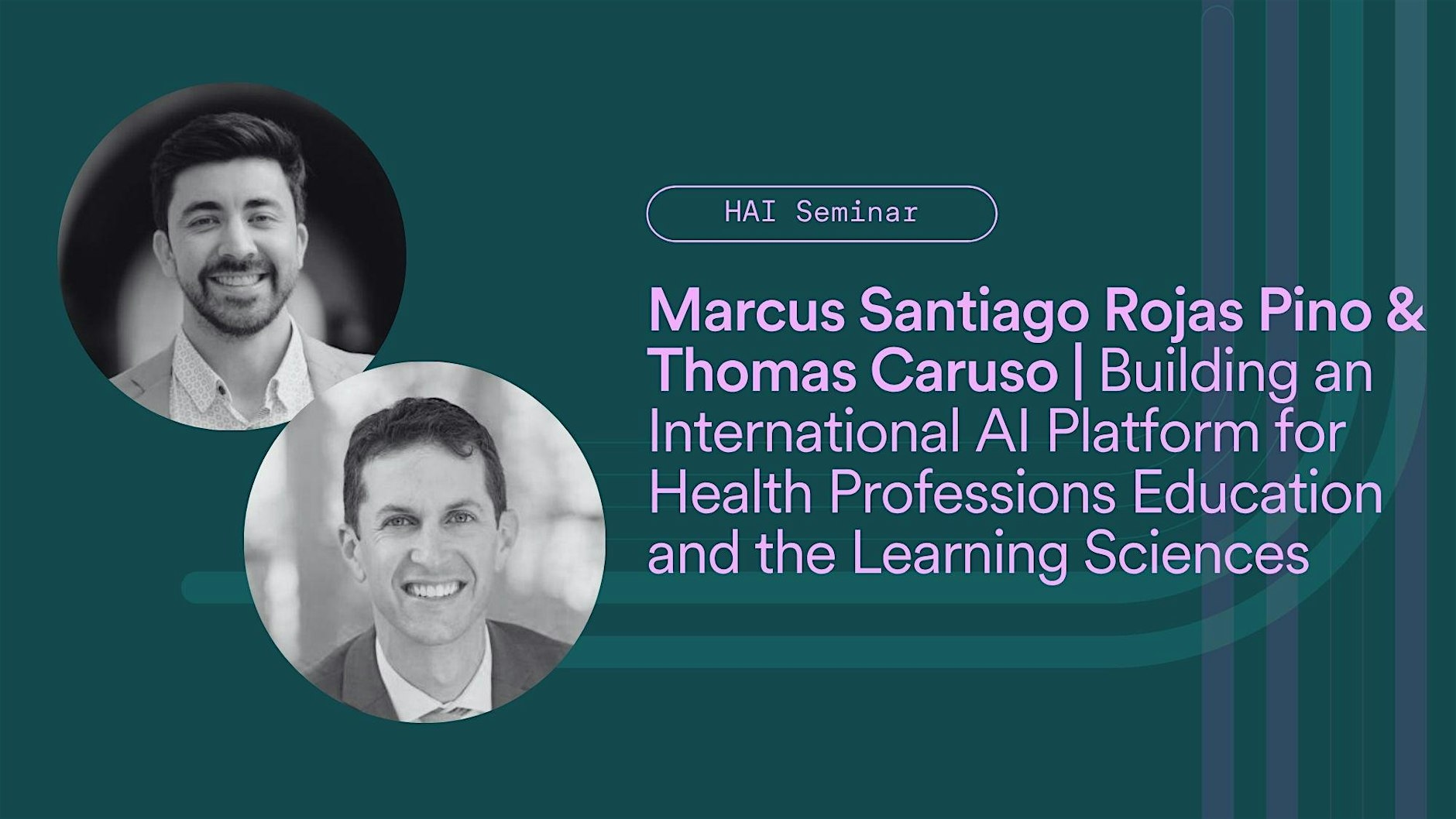
Marcos Santiago Rojas Pino & Thomas Caruso | Building an International AI Platform for Health Professions Education and the Learning Sciences
SeminarNov 04, 202612:00 PM - 1:15 PM
November
04
2026

Clinical Mind AI is a Stanford-developed, international collaborative platform designed to strengthen clinical reasoning education through AI-simulated patient encounters across health professions.

Seminar

Marcos Santiago Rojas Pino & Thomas Caruso | Building an International AI Platform for Health Professions Education and the Learning Sciences

Nov 04, 202612:00 PM - 1:15 PM

Clinical Mind AI is a Stanford-developed, international collaborative platform designed to strengthen clinical reasoning education through AI-simulated patient encounters across health professions.

Andrew Shen | Unlocking LLM Creativity in Science through Analogical Reasoning
LectureOct 05, 20264:00 PM - 5:30 PM
October
05
2026

A Center for Neural Data Science Seminar Series

Event

Andrew Shen | Unlocking LLM Creativity in Science through Analogical Reasoning

Oct 05, 20264:00 PM - 5:30 PM

A Center for Neural Data Science Seminar Series

Tim de Silva | AI Financial Advice: Supply, Demand, and Life Cycle Implications
SeminarOct 07, 202612:00 PM - 1:15 PM
October
07
2026
Seminar

Tim de Silva | AI Financial Advice: Supply, Demand, and Life Cycle Implications

Oct 07, 202612:00 PM - 1:15 PM

This conference is anchored and building on the release of the Special National Academy of Medicine (NAM) publication titled: “Artificial Intelligence in Healthcare: The Hope, The Hype, The Promise, The Peril.” Co-led by Michael Matheny and Sonoo Thadaney Israni.

Objectives 

At the conclusion of this activity, participants should be able to:

  1. Evaluate AI in the healthcare landscape

  2. Critically assess the opportunities for AI in healthcare

  3. Develop appropriate criteria for evaluating/deploying AI solutions

  4. Build frameworks for creating and testing AI healthcare solutions