Stanford
University
  • Stanford Home
  • Maps & Directions
  • Search Stanford
  • Emergency Info
  • Terms of Use
  • Privacy
  • Copyright
  • Trademarks
  • Non-Discrimination
  • Accessibility
© Stanford University.  Stanford, California 94305.
Drew Hudson: Compositionality in Visual Reasoning and Generation | Stanford HAI

Stay Up To Date

Get the latest news, advances in research, policy work, and education program updates from HAI in your inbox weekly.

Sign Up For Latest News

Navigate
  • About
  • Events
  • Careers
  • Search
Participate
  • Get Involved
  • Support HAI
  • Contact Us
Skip to content
  • About

    • About
    • People
    • Get Involved with HAI
    • Support HAI
    • Subscribe to Email
  • Research

    • Research
    • Fellowship Programs
    • Grants
    • Student Affinity Groups
    • Centers & Labs
    • Research Publications
    • Research Partners
  • Education

    • Education
    • Executive and Professional Education
    • Government and Policymakers
    • K-12
    • Stanford Students
  • Policy

    • Policy
    • Policy Publications
    • Policymaker Education
    • Student Opportunities
  • AI Index

    • AI Index
    • AI Index Report
    • Global Vibrancy Tool
    • People
  • News
  • Events
  • Industry
  • Centers & Labs
eventSeminar

Drew Hudson: Compositionality in Visual Reasoning and Generation

Status
Past
Date
Wednesday, October 12, 2022 10:00 AM - 11:00 AM PST/PDT
Location
Hybrid 
Share
Link copied to clipboard!
Event Contact
Madeleine Wright
mwright7@stanford.edu

Related Events

AI+Education Summit 2026
ConferenceFeb 11, 20268:00 AM - 5:00 PM
February
11
2026

The AI Inflection Point: What, How, and Why We Learn

Conference

AI+Education Summit 2026

Feb 11, 20268:00 AM - 5:00 PM

The AI Inflection Point: What, How, and Why We Learn

Tom Mitchell | The History of Machine Learning
Feb 23, 202612:00 PM - 1:00 PM
February
23
2026

How did we get to today’s technology which now supports a trillion dollar AI industry? What were the key scientific breakthroughs? What were the surprises and dead-ends along the way...

Event

Tom Mitchell | The History of Machine Learning

Feb 23, 202612:00 PM - 1:00 PM

How did we get to today’s technology which now supports a trillion dollar AI industry? What were the key scientific breakthroughs? What were the surprises and dead-ends along the way...

Gaidi Faraj, Lofred Madzou | Nurturing Africa’s AI Leaders through Math Olympiad
SeminarFeb 25, 202612:00 PM - 1:15 PM
February
25
2026

The African Olympiad Academy is a world-class high school dedicated to training Africa’s most promising students in mathematics, science, and artificial intelligence through olympiad-based pedagogy.

Seminar

Gaidi Faraj, Lofred Madzou | Nurturing Africa’s AI Leaders through Math Olympiad

Feb 25, 202612:00 PM - 1:15 PM

The African Olympiad Academy is a world-class high school dedicated to training Africa’s most promising students in mathematics, science, and artificial intelligence through olympiad-based pedagogy.

HAI Weekly Seminar

Compositionality in Visual Reasoning and Generation

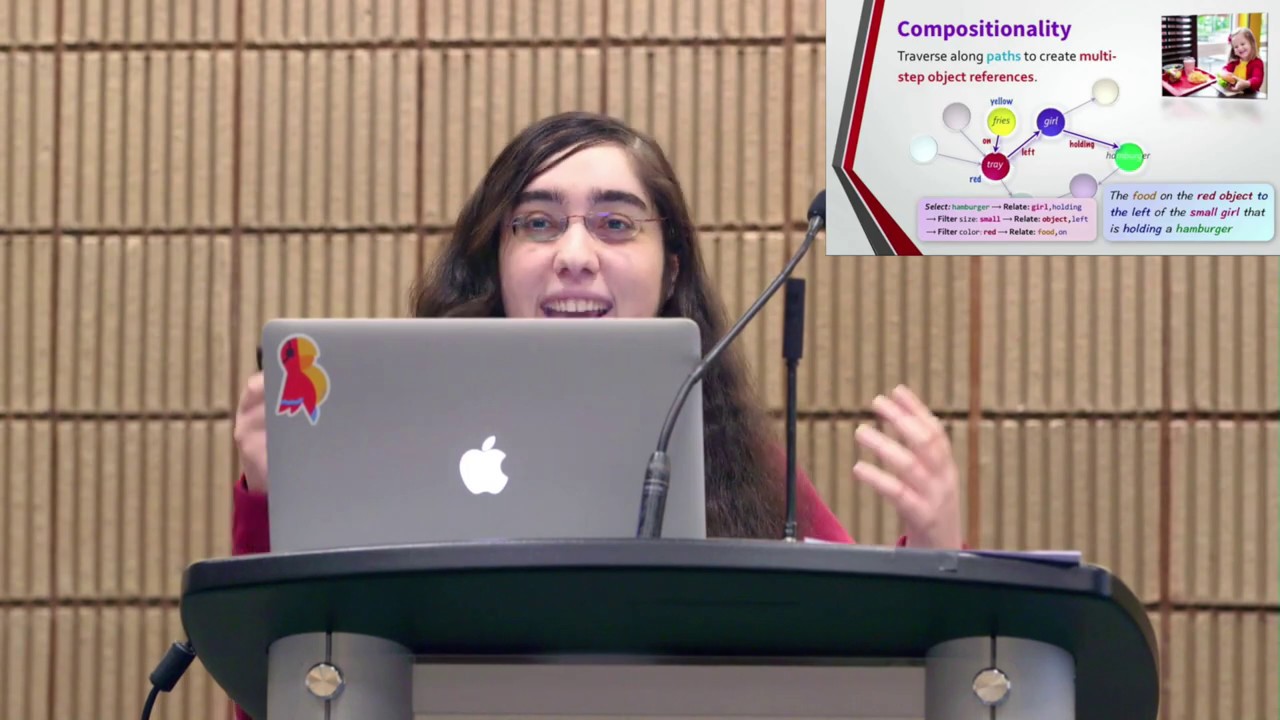
The world we live in is inherently compositional: just like a sentence is built upon phrases and words, a visual scene comprises a collection of interacting objects and entities, which in turn are derived from the sum of their parts. This compositionality plays a critical role in our ability to understand the world, organize the acquired knowledge through a rich set of concepts, and easily adapt them to novel situations and environments. Essentially, it is considered one of the fundamental building blocks of human intelligence. How to incorporate such compositionality into AI models? How can we encourage neural networks to develop semantic understanding of our surroundings? And how can we leverage the emerging structured knowledge to improve in downstream tasks such as question answering or image generation? These are the questions that will be explored in the talk, in which I will present models for multi-step synthesis of and reasoning over multi-object scenes, describe their key design principles and underlying mechanisms, and illustrate the benefits they offer in terms of enhanced controllability, increased data-efficiency, and improved interpretability of their internal representations and reasoning process.

Speakers

imgDrew A. Hudson

PhD Student in Computer Science, Stanford University

No tweets available.