Stanford
University
  • Stanford Home
  • Maps & Directions
  • Search Stanford
  • Emergency Info
  • Terms of Use
  • Privacy
  • Copyright
  • Trademarks
  • Non-Discrimination
  • Accessibility
© Stanford University.  Stanford, California 94305.
HAI Monthly Community Building Reception - AI and Ethics | Stanford HAI
Skip to content
  • About

    • About
    • People
    • Get Involved with HAI
    • Support HAI
    • Subscribe to Email
  • Research

    • Research
    • Fellowship Programs
    • Grants
    • Student Affinity Groups
    • Centers & Labs
    • Research Publications
    • Research Partners
  • Education

    • Education
    • Executive and Professional Education
    • Government and Policymakers
    • K-12
    • Stanford Students
  • Policy

    • Policy
    • Policy Publications
    • Policymaker Education
    • Student Opportunities
  • AI Index

    • AI Index
    • AI Index Report
    • Global Vibrancy Tool
    • People
  • News
  • Events
  • Industry
  • Centers & Labs
Navigate
  • About
  • Events
  • Careers
  • Search
Participate
  • Get Involved
  • Support HAI
  • Contact Us

Stay Up To Date

Get the latest news, advances in research, policy work, and education program updates from HAI in your inbox weekly.

Sign Up For Latest News

Your browser does not support the video tag.
event

HAI Monthly Community Building Reception - AI and Ethics

Status
Past
Date
Tuesday, December 10, 2019 4:00 PM - 5:00 PM PST/PDT
Topics
Ethics, Equity, Inclusion

Speakers

Rob Reich, Associate Director, HAI

Rob is professor of political science and, by courtesy, professor of philosophy and at the Graduate School of Education, at Stanford University. He is the director of the Center for Ethics in Society and faculty co-director of the Center on Philanthropy and Civil Society (publisher of the Stanford Social Innovation Review), both at Stanford University. He is also associate director of the Institute on Human-Centered Artificial Intelligence.

 He is the author or editor of several books on education and a book on the relationship between philanthropy, democracy, and justice: Just Giving: Why Philanthropy is Failing Democracy and How It Can Do Better (Princeton University Press 2018) and Philanthropy in Democratic Societies (edited with Chiara Cordelli and Lucy Bernholz). His current work focuses on ethics and technology, and he is editing a new volume called Digital Technology and Democracy (with Lucy Bernholz and Helene Landemore). He is the recipient of multiple teaching awards, including the Phi Beta Kappa Undergraduate Teaching Award and the Walter J. Gores Award, Stanford University. He is currently a University Fellow in Undergraduate Education at Stanford. He is a board member of the Spencer Foundation and the magazine Boston Review. Kate Vredenburgh, HAI-EIS Fellow Kate received Ph.D. in philosophy from Harvard University. She works mainly on questions in the philosophy of social science and political philosophy. The overarching motivation guiding her research is to understand how background commitments influence modeling in the social sciences and computer science, to reflect on how they should, and to build fairer models on that basis. She also works on political and ethical questions inspired by the use of technology and social science by corporations and by governments. For example, Kate is currently working on a project arguing for a right to explanation, inspired by recent discussions surrounding the EU's General Data Protection Regulation (GDPR) and interpretability in computer science. Kate will join the Center for Ethics as an interdisciplinary ethics fellow in partnership with the Stanford Institute for Human-Centered Artificial Intelligence. Todd Karhu, HAI-EIS Fellow Todd received his Ph.D. in philosophy from the London School of Economics. Before LSE, he completed an M.Phil. in political theory at Oxford University. His doctoral dissertation focuses on theoretical and practical issues in the ethics of killing, and a few other normative matters involving death. On the theoretical side, he has worked on the relationship between the wrongness of killing and the badness of death and about how killing and dying relate to the metaphysics of time. On the more practical side, he has worked on the question of the extent of one's right to self-defense in the context of war and the moral duties people incur in virtue of killing others.

Share
Link copied to clipboard!

Related Events

Gaidi Faraj, Lofred Madzou | Nurturing Africa’s AI Leaders through Math Olympiad
SeminarFeb 25, 202612:00 PM - 1:15 PM
February
25
2026

The African Olympiad Academy is a world-class high school dedicated to training Africa’s most promising students in mathematics, science, and artificial intelligence through olympiad-based pedagogy.

Seminar

Gaidi Faraj, Lofred Madzou | Nurturing Africa’s AI Leaders through Math Olympiad

Feb 25, 202612:00 PM - 1:15 PM

The African Olympiad Academy is a world-class high school dedicated to training Africa’s most promising students in mathematics, science, and artificial intelligence through olympiad-based pedagogy.

Dan Iancu & Antonio Skillicorn | Interpretable Machine Learning and Mixed Datasets for Predicting Child Labor in Ghana’s Cocoa Sector
SeminarMar 18, 202612:00 PM - 1:15 PM
March
18
2026

Child labor remains prevalent in Ghana’s cocoa sector and is associated with adverse educational and health outcomes for children.

Seminar

Dan Iancu & Antonio Skillicorn | Interpretable Machine Learning and Mixed Datasets for Predicting Child Labor in Ghana’s Cocoa Sector

Mar 18, 202612:00 PM - 1:15 PM

Child labor remains prevalent in Ghana’s cocoa sector and is associated with adverse educational and health outcomes for children.

Rob Reich, Associate Director, HAI

Rob is professor of political science and, by courtesy, professor of philosophy and at the Graduate School of Education, at Stanford University. He is the director of the Center for Ethics in Society and faculty co-director of the Center on Philanthropy and Civil Society (publisher of the Stanford Social Innovation Review), both at Stanford University. He is also associate director of the Institute on Human-Centered Artificial Intelligence.

 He is the author or editor of several books on education and a book on the relationship between philanthropy, democracy, and justice: Just Giving: Why Philanthropy is Failing Democracy and How It Can Do Better (Princeton University Press 2018) and Philanthropy in Democratic Societies (edited with Chiara Cordelli and Lucy Bernholz). His current work focuses on ethics and technology, and he is editing a new volume called Digital Technology and Democracy (with Lucy Bernholz and Helene Landemore). He is the recipient of multiple teaching awards, including the Phi Beta Kappa Undergraduate Teaching Award and the Walter J. Gores Award, Stanford University. He is currently a University Fellow in Undergraduate Education at Stanford. He is a board member of the Spencer Foundation and the magazine Boston Review.

Kate Vredenburgh, HAI-EIS Fellow

Kate received Ph.D. in philosophy from Harvard University. She works mainly on questions in the philosophy of social science and political philosophy. The overarching motivation guiding her research is to understand how background commitments influence modeling in the social sciences and computer science, to reflect on how they should, and to build fairer models on that basis. She also works on political and ethical questions inspired by the use of technology and social science by corporations and by governments. For example, Kate is currently working on a project arguing for a right to explanation, inspired by recent discussions surrounding the EU's General Data Protection Regulation (GDPR) and interpretability in computer science. Kate will join the Center for Ethics as an interdisciplinary ethics fellow in partnership with the Stanford Institute for Human-Centered Artificial Intelligence.


Todd Karhu, HAI-EIS Fellow 

Todd received his Ph.D. in philosophy from the London School of Economics. Before LSE, he completed an M.Phil. in political theory at Oxford University. His doctoral dissertation focuses on theoretical and practical issues in the ethics of killing, and a few other normative matters involving death. On the theoretical side, he has worked on the relationship between the wrongness of killing and the badness of death and about how killing and dying relate to the metaphysics of time. On the more practical side, he has worked on the question of the extent of one's right to self-defense in the context of war and the moral duties people incur in virtue of killing others.

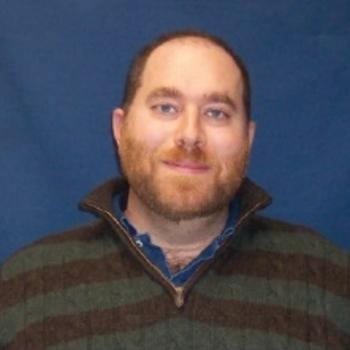
Rob Reich
Rob Reich
McGregor-Girand Professor of Social Ethics of Science and Technology | Senior Fellow, Stanford HAI | Professor, by courtesy, of Education and of Philosophy | Senior Fellow, by courtesy, at Freeman Spogli Institute for International Studies
Kate Vredenburgh
HAI-EIS Postdoctoral Fellow
Todd Karhu
HAI-EIS Postdoctoral Fellow