eventSeminar
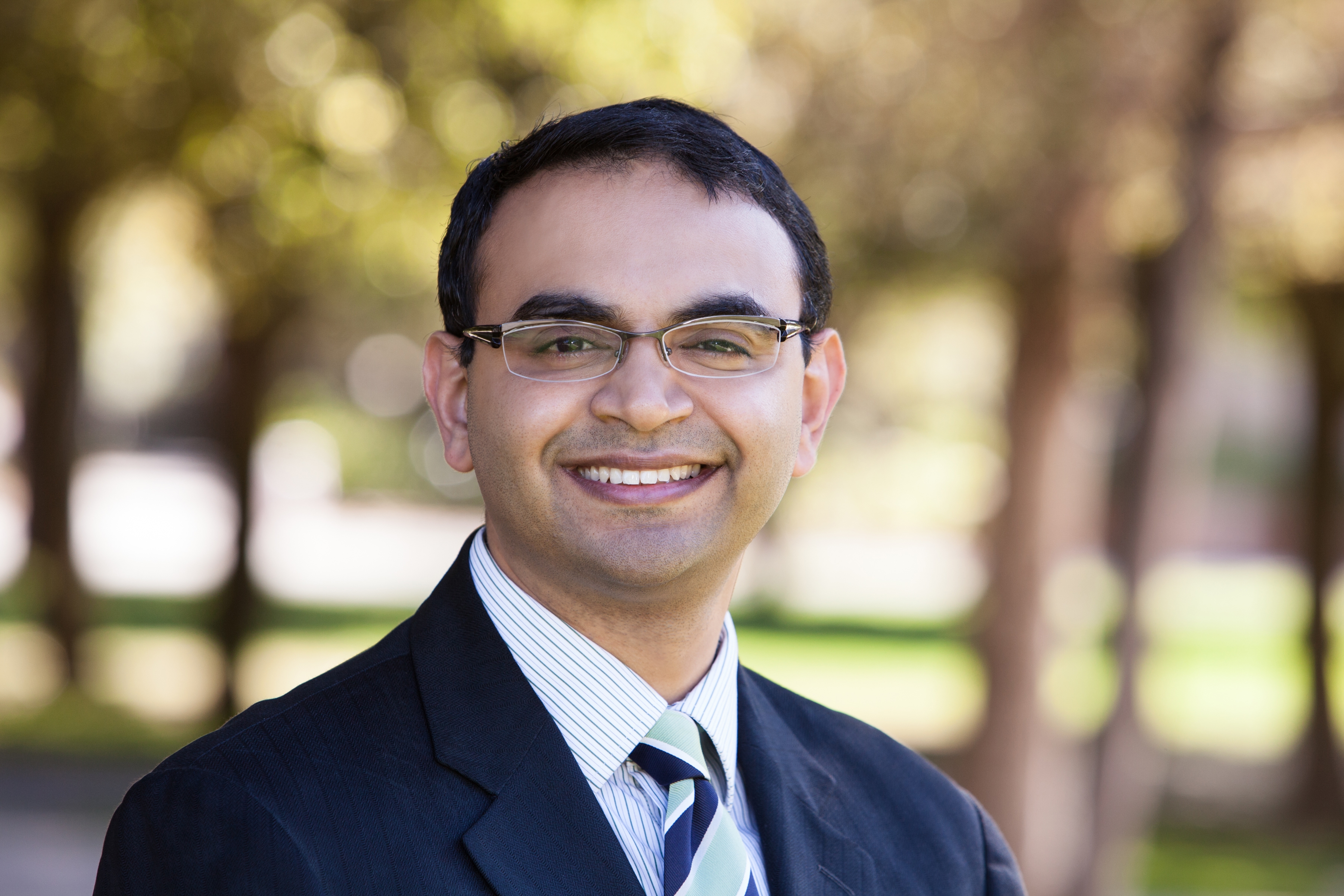
HAI Weekly Seminar with Harikesh Nair
Digital Advertising: The Golden Age of Experiments
Get the latest news, advances in research, policy work, and education program updates from HAI in your inbox weekly.
Sign Up For Latest News
Digital Advertising: The Golden Age of Experiments
Please join us for an illuminating investigation of the complex work of social media content creators—their lives, conflicts, and controversies.
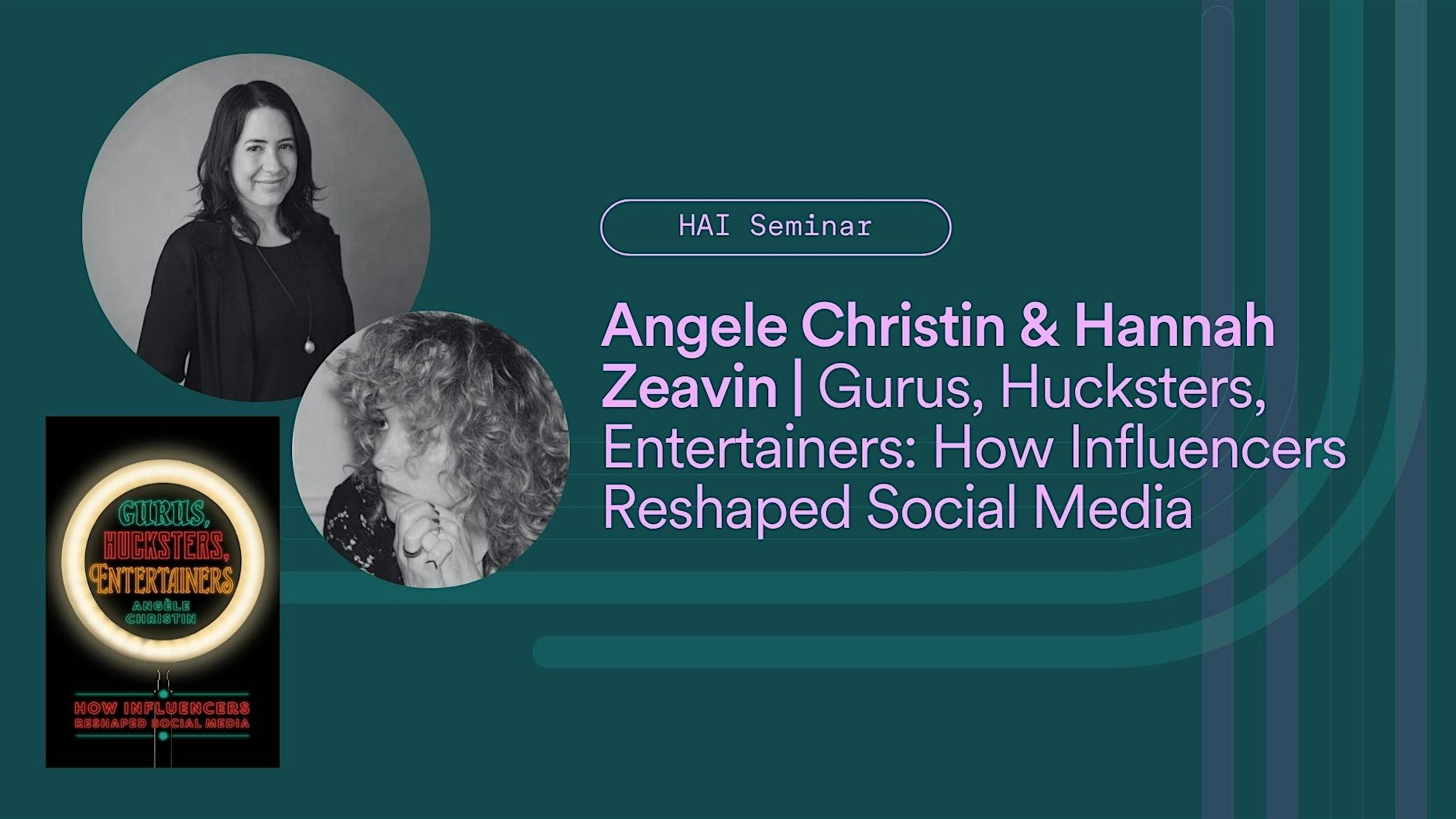
Please join us for an illuminating investigation of the complex work of social media content creators—their lives, conflicts, and controversies.
Scientific progress is a key driver of economic growth and prosperity. There is great excitement- but also concerns- about the impacts of AI on science, but so far little data. We provide early insights on this from three data sources: a sample of 15 million Gemini interactions, an inventory of over 2,600 specialized AI models across disciplines, and a survey of over 600 scientists.
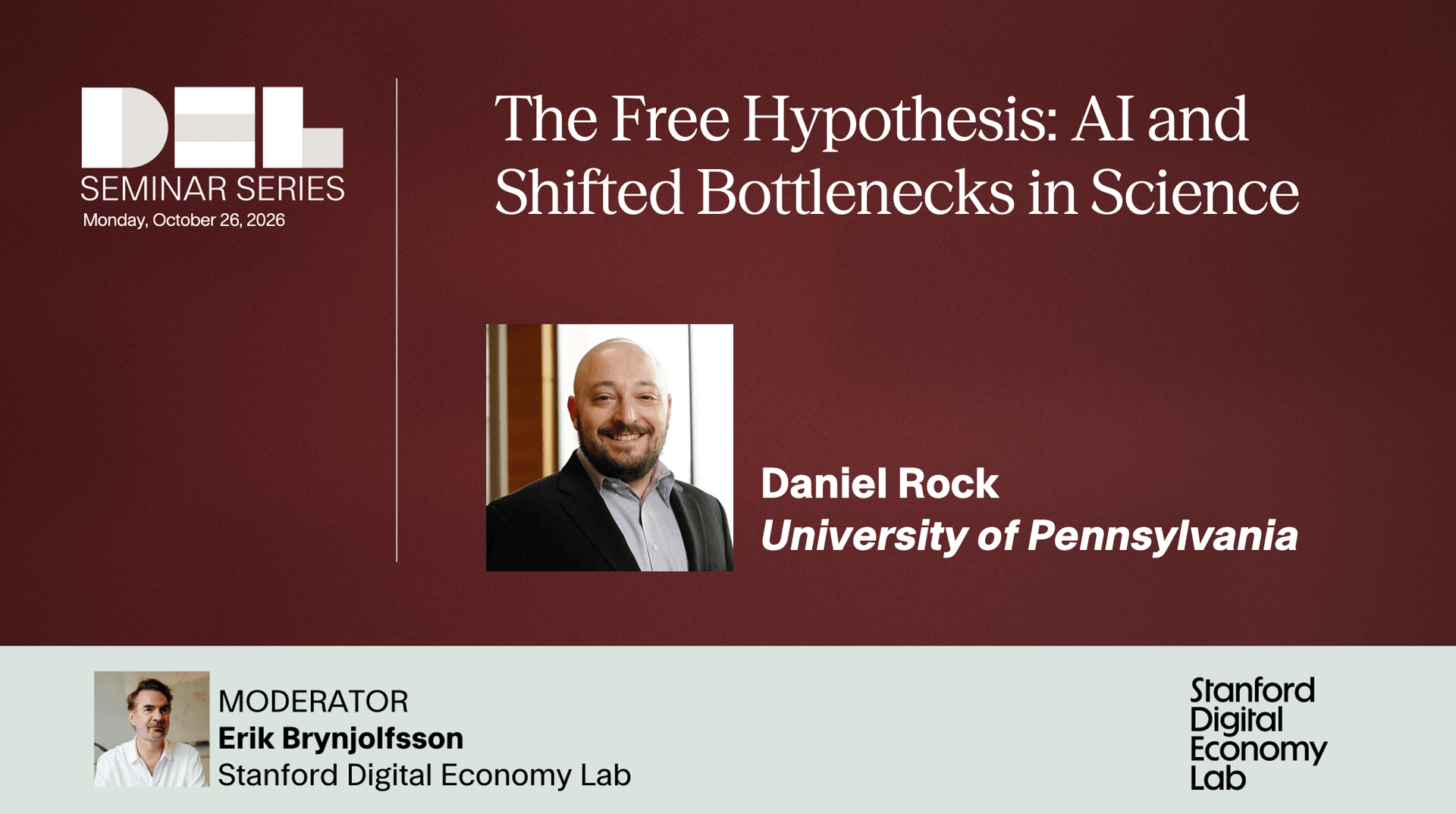
Scientific progress is a key driver of economic growth and prosperity. There is great excitement- but also concerns- about the impacts of AI on science, but so far little data. We provide early insights on this from three data sources: a sample of 15 million Gemini interactions, an inventory of over 2,600 specialized AI models across disciplines, and a survey of over 600 scientists.
The rapid acceleration of AI comes with a profound wave of anxiety. Across every sector of society, people are facing unsettling questions about their worth and their place in a shifting world.
The rapid acceleration of AI comes with a profound wave of anxiety. Across every sector of society, people are facing unsettling questions about their worth and their place in a shifting world.
Running experiments is part and parcel of science and have lead to dramatic breakthroughs in fields such as biology, medicine and physics. Compared to these, business experiments – focused on outcomes and issues of interest to firms – are a relatively newer phenomenon but are now becoming increasingly prevalent. In some areas, such as digital advertising, experimentation has become a core feature of how business is run, so much so that the current decade in computational advertising represents a golden age of experimentation in the social sciences. This talk describes how online experimentation works in modern ad-systems, and how advertising experiments differ significantly from their natural science counterparts. I also discuss practical challenges in building experimental systems within technology-driven platforms and in driving adoption of experimentation-driven tools amongst advertisers and marketers using examples from the Chinese and US markets.