Stanford
University
  • Stanford Home
  • Maps & Directions
  • Search Stanford
  • Emergency Info
  • Terms of Use
  • Privacy
  • Copyright
  • Trademarks
  • Non-Discrimination
  • Accessibility
© Stanford University.  Stanford, California 94305.
HAI Weekly Seminar with Pamela Chen | Stanford HAI

Stay Up To Date

Get the latest news, advances in research, policy work, and education program updates from HAI in your inbox weekly.

Sign Up For Latest News

Navigate
  • About
  • Events
  • AI Glossary
  • Careers
  • Search
Participate
  • Get Involved
  • Support HAI
  • Contact Us
Skip to content
  • About

    • About
    • People
    • Get Involved with HAI
    • Support HAI
    • Subscribe to Email
  • Research

    • Research
    • Research Programs
    • Grants
    • Marlowe (opens in new tab)
    • Student Affinity Groups
    • Centers & Labs
    • Research Publications
    • Research Partners
  • Education

    • Education
    • Executive and Professional Education
    • Government and Policymakers
    • K-12
    • Stanford Students
  • Policy

    • Policy
    • Policy Publications
    • Policymaker Education
    • Student Opportunities
  • AI Index

    • AI Index
    • AI Index Report
    • Global Vibrancy Tool
    • People
  • News
  • Events
  • Industry
  • Centers & Labs
Your browser does not support the video tag.
eventSeminar

HAI Weekly Seminar with Pamela Chen

Status
Past
Date
Friday, November 08, 2019 11:00 AM - 12:00 PM PST/PDT
Topics
Machine Learning

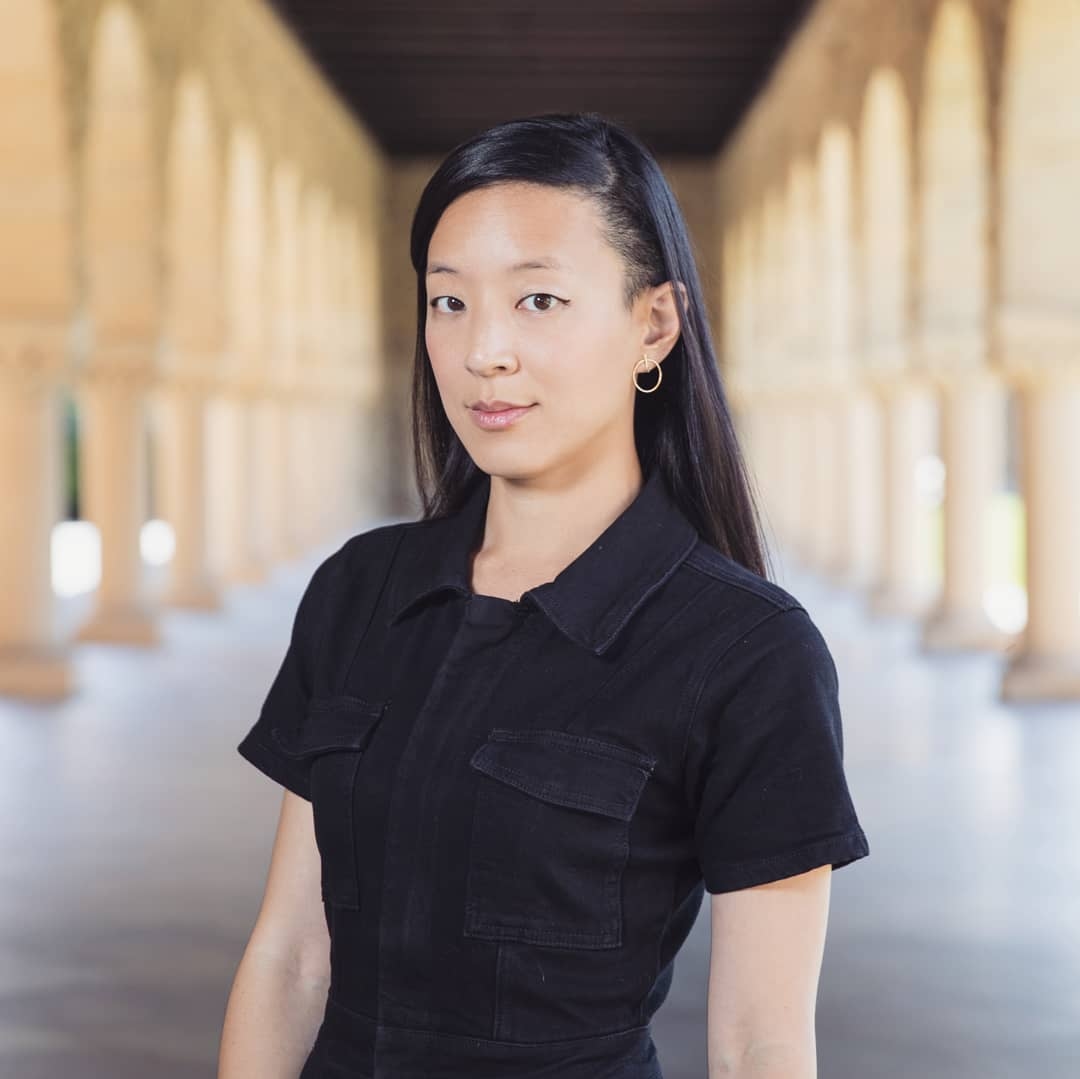
In this talk, Pamela Chen, 2020 Human-Centered AI and JSK Journalism Fellow at Stanford, shares her experiences leading an editorial team at Instagram as the company scaled content discovery to serve more than 1 billion monthly active users. Spoiler alert: it doesn’t go as planned. 

Share
Link copied to clipboard!

Related Events

Neil Thompson: Forecasting AI’s Impact on Human Expertise and the Future of Work
Oct 12, 202612:00 PM - 1:00 PM
October
12
2026

AI is advancing rapidly at the cognitive tasks that make up knowledge work, raising fears among firms, policymakers, and, not least, workers of a “China shock” for white-collar jobs. Neil Thompson will present new research on whether those fears are warranted.

Event

Neil Thompson: Forecasting AI’s Impact on Human Expertise and the Future of Work

Oct 12, 202612:00 PM - 1:00 PM

AI is advancing rapidly at the cognitive tasks that make up knowledge work, raising fears among firms, policymakers, and, not least, workers of a “China shock” for white-collar jobs. Neil Thompson will present new research on whether those fears are warranted.

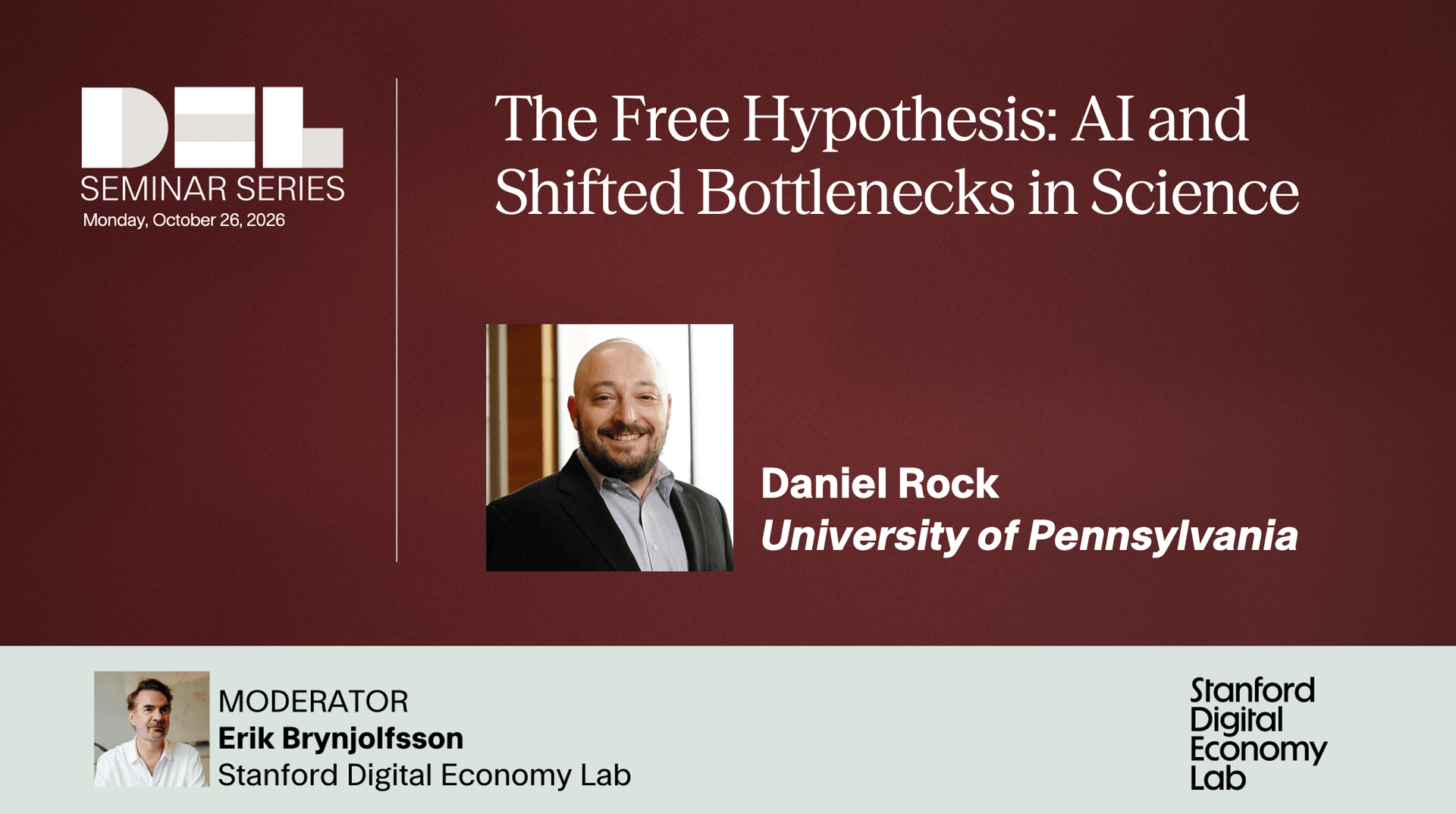
Daniel Rock | The Free Hypothesis: AI and Shifted Bottlenecks in Science
Oct 26, 202612:00 PM - 1:00 PM
October
26
2026

Scientific progress is a key driver of economic growth and prosperity. There is great excitement- but also concerns- about the impacts of AI on science, but so far little data. We provide early insights on this from three data sources: a sample of 15 million Gemini interactions, an inventory of over 2,600 specialized AI models across disciplines, and a survey of over 600 scientists.

Event

Daniel Rock | The Free Hypothesis: AI and Shifted Bottlenecks in Science

Oct 26, 202612:00 PM - 1:00 PM

Scientific progress is a key driver of economic growth and prosperity. There is great excitement- but also concerns- about the impacts of AI on science, but so far little data. We provide early insights on this from three data sources: a sample of 15 million Gemini interactions, an inventory of over 2,600 specialized AI models across disciplines, and a survey of over 600 scientists.

Andrew Shen | Unlocking LLM Creativity in Science through Analogical Reasoning
LectureOct 05, 20264:00 PM - 5:30 PM
October
05
2026

A Center for Neural Data Science Seminar Series

Event

Andrew Shen | Unlocking LLM Creativity in Science through Analogical Reasoning

Oct 05, 20264:00 PM - 5:30 PM

A Center for Neural Data Science Seminar Series

As content platforms began to rely on machine learning to personalize recommendations, they inadvertently enabled a new human creator class who specialized in going viral via the machine. The ranking algorithms got better at predicting the content we respond to, and these viral meme creators got better at achieving the response the algorithms were designed to predict. This emerging feedback loop, combined with the hard learnings of scaling content discovery, has led to new questions.

Who are the players behind “the power of memes” to both expand the global cultural zeitgeist and enable targeted disinformation campaigns at astounding scale? And how can better understanding the ecosystem change the way we approach the design of human-centered AI in content curation systems today?
Pamela Chen
HAI Network Affiliate