eventSeminar
HAI Weekly Seminar with Percy Liang
Natural language promises to be the ultimate interface for interacting with computers, allowing users to effortlessly tap into the wealth of digital information and extract insights from it.
Get the latest news, advances in research, policy work, and education program updates from HAI in your inbox weekly.
Sign Up For Latest News
Natural language promises to be the ultimate interface for interacting with computers, allowing users to effortlessly tap into the wealth of digital information and extract insights from it.
Scientific progress is a key driver of economic growth and prosperity. There is great excitement- but also concerns- about the impacts of AI on science, but so far little data. We provide early insights on this from three data sources: a sample of 15 million Gemini interactions, an inventory of over 2,600 specialized AI models across disciplines, and a survey of over 600 scientists.
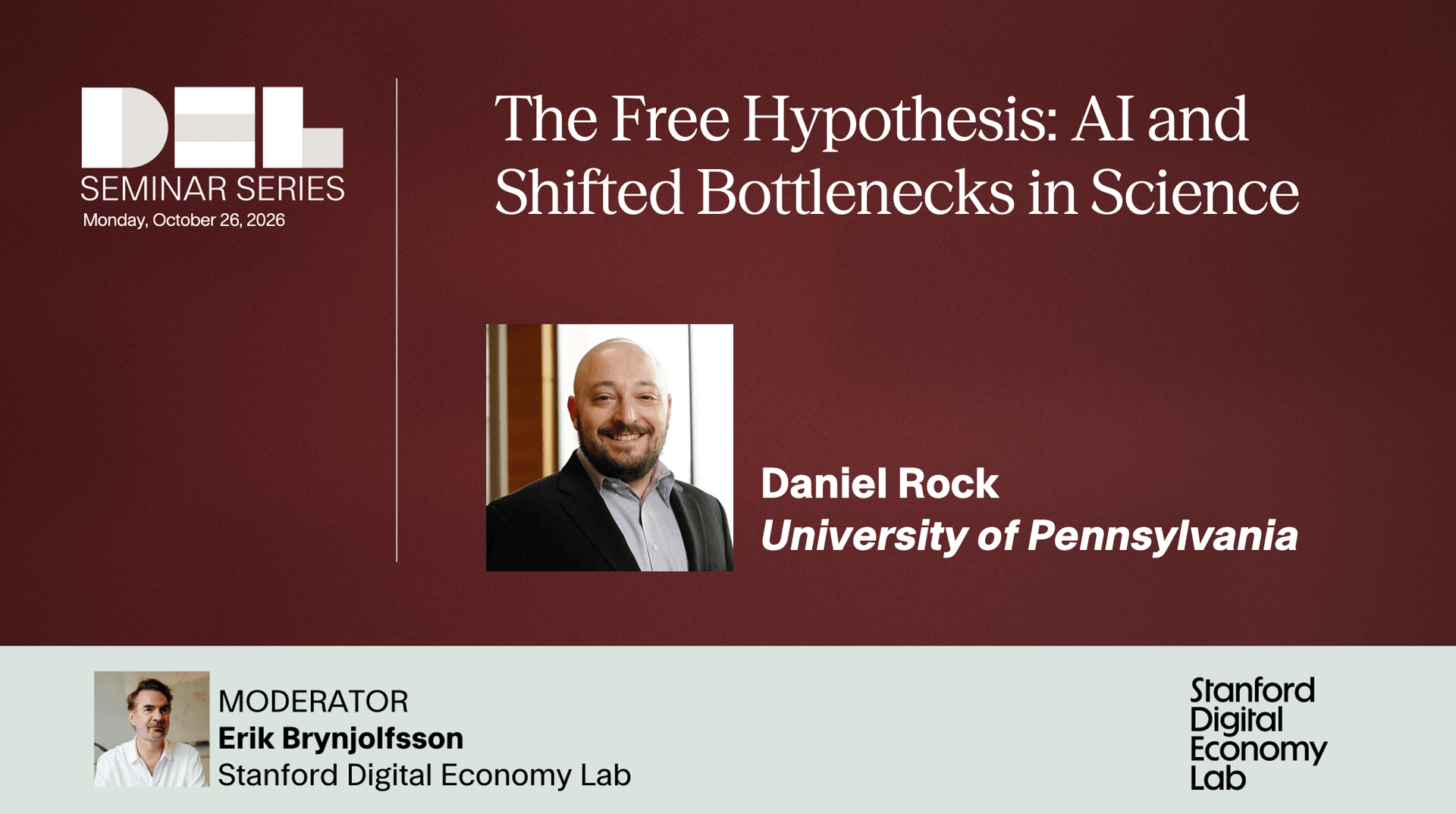
Scientific progress is a key driver of economic growth and prosperity. There is great excitement- but also concerns- about the impacts of AI on science, but so far little data. We provide early insights on this from three data sources: a sample of 15 million Gemini interactions, an inventory of over 2,600 specialized AI models across disciplines, and a survey of over 600 scientists.
The rapid acceleration of AI comes with a profound wave of anxiety. Across every sector of society, people are facing unsettling questions about their worth and their place in a shifting world.
The rapid acceleration of AI comes with a profound wave of anxiety. Across every sector of society, people are facing unsettling questions about their worth and their place in a shifting world.
Sessions run Wednesdays from 4:30–5:30 PM in CoDa E160. Each session features a different Stanford speaker; talk titles are announced by the organizers.

Sessions run Wednesdays from 4:30–5:30 PM in CoDa E160. Each session features a different Stanford speaker; talk titles are announced by the organizers.
Today, virtual assistants such as Alex, Siri, and Google Assistant have given a glimpse into how this long-standing dream can become a reality, but there is still much work to be done.
In this talk, I will discuss building natural language interfaces based on semantic parsing, which converts natural language into programs that can be executed by a computer. There are multiple challenges for building semantic parsers: how to acquire data without requiring laborious annotation, how to represent the meaning of sentences, and perhaps most importantly, how to widen the domains and capabilities of a semantic parser. Finally, I will talk about a new promising paradigm for tackling these challenges based on learning interactively from users.
.png&w=3840&q=100)