Stanford
University
  • Stanford Home
  • Maps & Directions
  • Search Stanford
  • Emergency Info
  • Terms of Use
  • Privacy
  • Copyright
  • Trademarks
  • Non-Discrimination
  • Accessibility
© Stanford University.  Stanford, California 94305.
Intersections: Does AI belong in the classroom? | Stanford HAI

Stay Up To Date

Get the latest news, advances in research, policy work, and education program updates from HAI in your inbox weekly.

Sign Up For Latest News

Navigate
  • About
  • Events
  • Careers
  • Search
Participate
  • Get Involved
  • Support HAI
  • Contact Us
Skip to content
  • About

    • About
    • People
    • Get Involved with HAI
    • Support HAI
    • Subscribe to Email
  • Research

    • Research
    • Fellowship Programs
    • Grants
    • Student Affinity Groups
    • Centers & Labs
    • Research Publications
    • Research Partners
  • Education

    • Education
    • Executive and Professional Education
    • Government and Policymakers
    • K-12
    • Stanford Students
  • Policy

    • Policy
    • Policy Publications
    • Policymaker Education
    • Student Opportunities
  • AI Index

    • AI Index
    • AI Index Report
    • Global Vibrancy Tool
    • People
  • News
  • Events
  • Industry
  • Centers & Labs
Your browser does not support the video tag.
event

Intersections: Does AI belong in the classroom?

Status
Past
Date
Wednesday, September 04, 2019 1:00 PM - 4:00 PM PST/PDT
Topics
Education, Skills

Does AI belong in the classroom? Will tomorrow’s classroom look like today’s smart home? Is AI in the classroom a boon or a curse? How can educators and technologists work together to develop tools and methods that facilitate the learning experience? Can intelligent learning promote personalized intellectual exploration? This Intersections event puts faculty from the Stanford Graduate School of Education and the Stanford School of Engineering in conversation. Join us as Laura McBain, director of the K12 Lab at Stanford University’s d.school, moderates a discussion between computer science professor James Landay and education expert Karin Forssell on the ways that AI is changing today’s classrooms and school systems. Shelley Goldman, associate dean for faculty affairs and for student affairs and professor (teaching) at the Stanford Graduate School of Education, will provide introductions. This event is open to Stanford alumni and their guests. It is co-hosted by the Stanford School of Engineering and the Stanford Graduate School of Education. Light refreshments will be served following the talk. Click here to RSVP  Faculty bios: Karin Forssell is the director of the Learning, Design and Technology (LDT) master’s program and lecturer at the Stanford Graduate School of Education. She also directs the GSE Makery, a new maker space on campus where students and faculty can explore how making things helps people learn. In her courses, students learn to use research from the learning sciences and learning-centered design processes to create effective digital tools. Her current interests include maker space education, teacher technology adoption, and parenting in a digital world. Forssell draws insights from her many years of concurrent work as a teacher on special assignment for technology in the Palo Alto Unified School District. She earned her bachelor’s degree in linguistics, master’s degree in teacher education, and doctorate in learning sciences and technology design at Stanford University. Shelley Goldman (introductions) is associate dean for faculty affairs and for student affairs and professor (teaching) at the Stanford Graduate School of Education. She is also a professor, by courtesy, at the Hasso Plattner Institute of Design at Stanford (“d.school”). Goldman is an educational anthropologist interested in the idea that learning takes place when students are actively engaged. She currently studies how families engage with mathematics in the course of everyday problem solving. Her quest to give people the tools they need to collaborate and accomplish learning has led her to study and design computer technologies. Goldman’s work focuses on creating opportunities for rich STEM learning and for understanding how design thinking and technologies can create access and be transformational. Current work includes broadening participation in STEM through family activities, design-based engagements, and empathy work with scientists doing outreach. James Landay is a professor of computer science and the Anand Rajaraman and Venky Harinarayan Professor in the School of Engineering at Stanford University. He specializes in human-computer interaction. He is the founder and co-director of the World Lab, a joint research and educational effort with Tsinghua University in Beijing. He is also the associate director of the Stanford Institute for Human-Centered Artificial Intelligence (HAI). Previously, Landay taught at Cornell Tech, the University of Washington, and the University of California, Berkeley. In the corporate world, Landay was one-time laboratory director of Intel Labs Seattle and chief scientist and co-founder of NetRaker, which was acquired by KeyNote Systems in 2004. He earned his PhD in computer science from Carnegie Mellon University in 1996. His dissertation was the first to demonstrate the use of sketching in user interface design tools. Laura McBain (moderator) is an adjunct professor at Stanford University’s Hasso Plattner Institute of Design (“d.school”) and the co-director of the K12 Lab at the d.school. Her work focuses on how human-centered design can be used to provide equitable and innovative educational experiences that will help all students thrive in a changing world. Formerly, she led adult learning graduate programs at High Tech High Graduate School of Education. She has also been a principal and taught middle and high school students.


Share
Link copied to clipboard!
Event Contact
engineering-alumni@stanford.edu

Related Events

AI+Education Summit 2026
ConferenceFeb 11, 20268:00 AM - 5:00 PM
February
11
2026

The AI Inflection Point: What, How, and Why We Learn

Conference

AI+Education Summit 2026

Feb 11, 20268:00 AM - 5:00 PM

The AI Inflection Point: What, How, and Why We Learn

Gaidi Faraj, Lofred Madzou | Nurturing Africa’s AI Leaders through Math Olympiad
SeminarFeb 25, 202612:00 PM - 1:15 PM
February
25
2026

The African Olympiad Academy is a world-class high school dedicated to training Africa’s most promising students in mathematics, science, and artificial intelligence through olympiad-based pedagogy.

Seminar

Gaidi Faraj, Lofred Madzou | Nurturing Africa’s AI Leaders through Math Olympiad

Feb 25, 202612:00 PM - 1:15 PM

The African Olympiad Academy is a world-class high school dedicated to training Africa’s most promising students in mathematics, science, and artificial intelligence through olympiad-based pedagogy.

Hari Subramonyam | Learning by Creating: A Human-Centered Vision for AI in Education
SeminarMar 11, 202612:00 PM - 1:15 PM
March
11
2026
Seminar

Hari Subramonyam | Learning by Creating: A Human-Centered Vision for AI in Education

Mar 11, 202612:00 PM - 1:15 PM

Does AI belong in the classroom? Will tomorrow’s classroom look like today’s smart home? Is AI in the classroom a boon or a curse? How can educators and technologists work together to develop tools and methods that facilitate the learning experience? Can intelligent learning promote personalized intellectual exploration? This Intersections event puts faculty from the Stanford Graduate School of Education and the Stanford School of Engineering in conversation.
Join us as Laura McBain, director of the K12 Lab at Stanford University’s d.school, moderates a discussion between computer science professor James Landay and education expert Karin Forssell on the ways that AI is changing today’s classrooms and school systems. Shelley Goldman, associate dean for faculty affairs and for student affairs and professor (teaching) at the Stanford Graduate School of Education, will provide introductions.

This event is open to Stanford alumni and their guests. It is co-hosted by the Stanford School of Engineering and the Stanford Graduate School of Education. Light refreshments will be served following the talk.

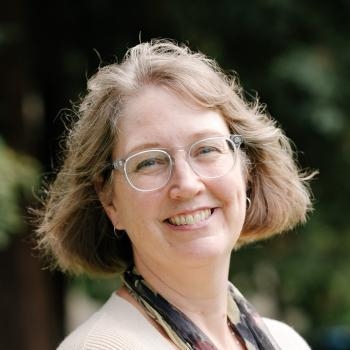
Karin Forssell
Director of the Learning Design and Technology (LDT) master's program and senior lecturer at the Stanford Graduate School of Education
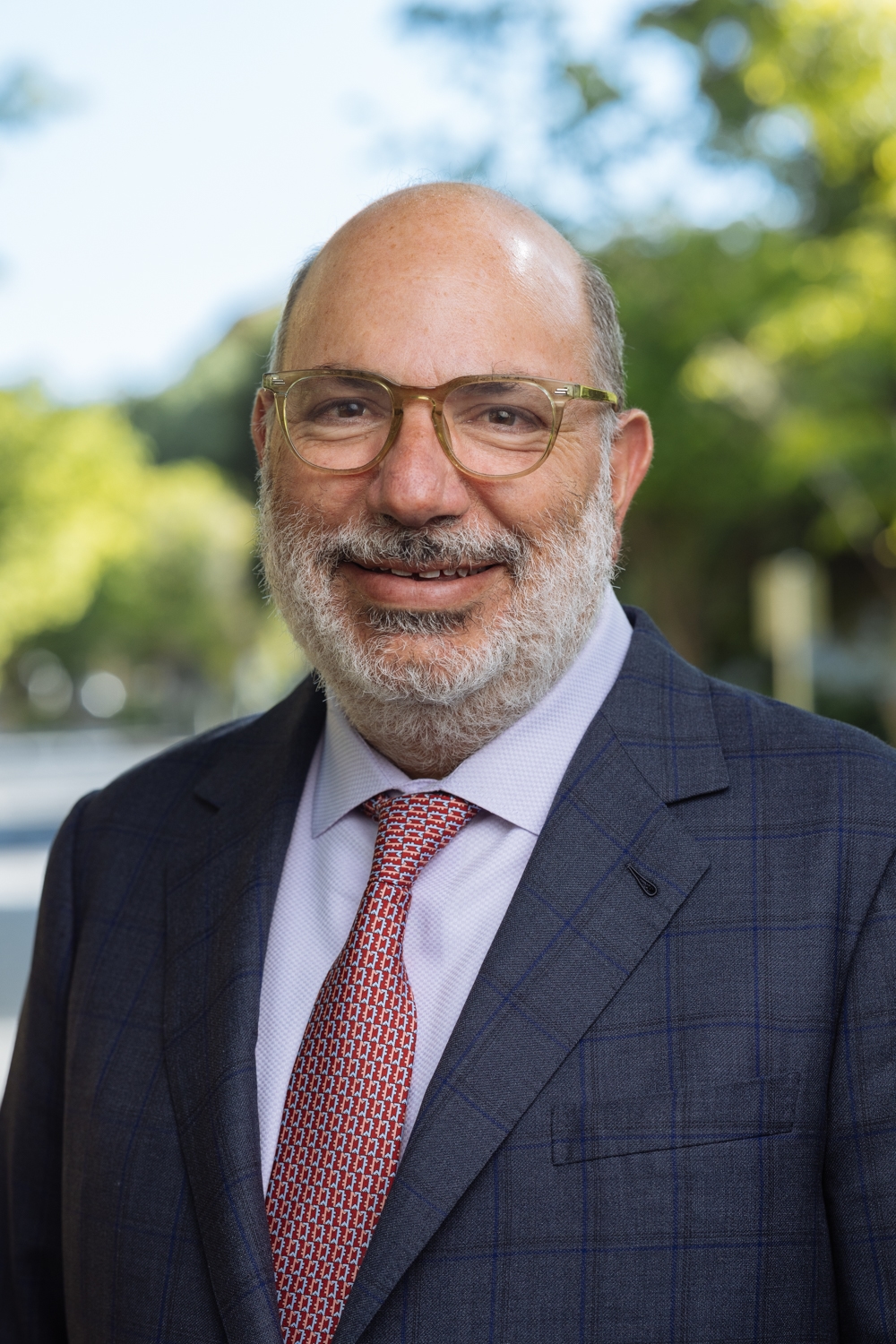
Shelley Goldman
Associate Dean for Faculty and Student Affairs, Stanford Graduate School of Education; Professor (Teaching) of Education, Emerita
James Landay
Denning Co-Director, Stanford HAI | Anand Rajaraman and Venky Harinarayan Professor of Computer Science, Stanford University