Stanford
University
  • Stanford Home
  • Maps & Directions
  • Search Stanford
  • Emergency Info
  • Terms of Use
  • Privacy
  • Copyright
  • Trademarks
  • Non-Discrimination
  • Accessibility
© Stanford University.  Stanford, California 94305.
Krish Seetah | AI, Archaeology, and Archives: How Data Science is Helping to Reveal Past Epidemics | Stanford HAI
Skip to content
  • About

    • About
    • People
    • Get Involved with HAI
    • Support HAI
    • Subscribe to Email
  • Research

    • Research
    • Fellowship Programs
    • Grants
    • Student Affinity Groups
    • Centers & Labs
    • Research Publications
    • Research Partners
  • Education

    • Education
    • Executive and Professional Education
    • Government and Policymakers
    • K-12
    • Stanford Students
  • Policy

    • Policy
    • Policy Publications
    • Policymaker Education
    • Student Opportunities
  • AI Index

    • AI Index
    • AI Index Report
    • Global Vibrancy Tool
    • People
  • News
  • Events
  • Industry
  • Centers & Labs
Navigate
  • About
  • Events
  • Careers
  • Search
Participate
  • Get Involved
  • Support HAI
  • Contact Us

Stay Up To Date

Get the latest news, advances in research, policy work, and education program updates from HAI in your inbox weekly.

Sign Up For Latest News

eventSeminar

Krish Seetah | AI, Archaeology, and Archives: How Data Science is Helping to Reveal Past Epidemics

Status
Past
Date
Wednesday, February 22, 2023 10:00 AM - 11:00 AM PST/PDT
Location
Hybrid
Topics
Sciences (Social, Health, Biological, Physical)
Healthcare
Share
Link copied to clipboard!
Event Contact
Madeleine Wright
mwright7@stanford.edu

Related Events

AI+Science: Accelerating Discovery
ConferenceMay 05, 20268:30 AM - 5:00 PM
May
05
2026

AI+Science: Accelerating Discovery is an interdisciplinary conference bringing together researchers across physics, mathematics, chemistry, biology, neuroscience, and more to examine how AI is reshaping scientific discovery. Experts will separate hype from reality, spotlighting where AI is already enabling genuine breakthroughs and where its limits and risks remain.

Conference

AI+Science: Accelerating Discovery

May 05, 20268:30 AM - 5:00 PM

AI+Science: Accelerating Discovery is an interdisciplinary conference bringing together researchers across physics, mathematics, chemistry, biology, neuroscience, and more to examine how AI is reshaping scientific discovery. Experts will separate hype from reality, spotlighting where AI is already enabling genuine breakthroughs and where its limits and risks remain.

Zoë Hitzig | How People Use ChatGPT
Mar 09, 202612:00 PM - 1:00 PM
March
09
2026

Despite the rapid adoption of LLM chatbots, little is known about how they are used. We approach this question theoretically and empirically, modeling a user who chooses whether to complete a task herself, ask the chatbot for information that reduces decision noise, or delegate execution to the chatbot...

Event

Zoë Hitzig | How People Use ChatGPT

Mar 09, 202612:00 PM - 1:00 PM

Despite the rapid adoption of LLM chatbots, little is known about how they are used. We approach this question theoretically and empirically, modeling a user who chooses whether to complete a task herself, ask the chatbot for information that reduces decision noise, or delegate execution to the chatbot...

Hari Subramonyam | Learning by Creating: A Human-Centered Vision for AI in Education
SeminarMar 11, 202612:00 PM - 1:15 PM
March
11
2026
Seminar

Hari Subramonyam | Learning by Creating: A Human-Centered Vision for AI in Education

Mar 11, 202612:00 PM - 1:15 PM

At no time in recent memory has the impact of disease on society been more palpable. But how do we study the nexus between society, ecology, and disease? Our team utilizes a precise and novel integration of archaeological, historical, anthropological, climatic, and ancient human and pathogen genetic datasets, using a longitudinal lens to achieve a better understanding of disease impact- specifically malaria - over time. Rich, robust, and large datasets are drawn from two regional contexts capturing critical periods in global disease transformations. Data science approaches are used to extricate critical features of the human-malaria relationship over the last 300 years, and despite the research being in the early stages of development, have already revealed key aspects of how socio-political factors influenced the impact of the disease on human lives.

Speaker
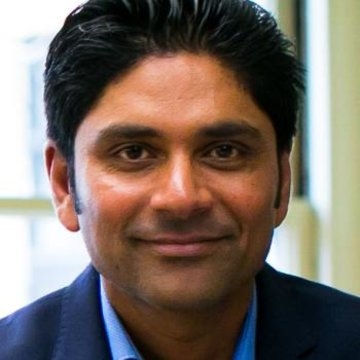
Krish Seetah
Associate Professor, Stanford Doerr School of Sustainability, of Oceans, of Anthropology; Senior Fellow, Woods Institute for the Environment, Stanford University