OffScript with Ge Wang | What Do We (Really) Want from AI in the Research World? | Stanford HAI
Stanford
University
  • Stanford Home
  • Maps & Directions
  • Search Stanford
  • Emergency Info
  • Terms of Use
  • Privacy
  • Copyright
  • Trademarks
  • Non-Discrimination
  • Accessibility
© Stanford University.  Stanford, California 94305.
Skip to content
  • About

    • About
    • People
    • Get Involved with HAI
    • Support HAI
    • Subscribe to Email
  • Research

    • Research
    • Fellowship Programs
    • Grants
    • Student Affinity Groups
    • Centers & Labs
    • Research Publications
    • Research Partners
  • Education

    • Education
    • Executive and Professional Education
    • Government and Policymakers
    • K-12
    • Stanford Students
  • Policy

    • Policy
    • Policy Publications
    • Policymaker Education
    • Student Opportunities
  • AI Index

    • AI Index
    • AI Index Report
    • Global Vibrancy Tool
    • People
  • News
  • Events
  • Industry
  • Centers & Labs
Navigate
  • About
  • Events
  • AI Glossary
  • Careers
  • Search
Participate
  • Get Involved
  • Support HAI
  • Contact Us

Stay Up To Date

Get the latest news, advances in research, policy work, and education program updates from HAI in your inbox weekly.

Sign Up For Latest News

eventSeminar

OffScript with Ge Wang | What Do We (Really) Want from AI in the Research World?

Status
Past
Date
Wednesday, November 08, 2023 10:00 AM - 11:00 AM PST/PDT
Location
Hybrid

What do we (really) want from artificial intelligence? We live in a time when advancements in AI technology is shaping our world, while critically outpacing our understanding of this technology in various humanistic contexts (cultural, social, ethical, historical).

Look at us, we are Stanford, one of the most powerful academic institutions, located in the heart of Silicon Valley. And yet it is all too easy to be in a profound bubble. Much of the world knows and cares about AI far less than we might assume. It is all too easy, also, to be sure of ourselves, as the technology creators, while remaining out of touch with the rest of the world. We tell ourselves that more technology is the solution—for technology is what we know, and we are eager to apply our craft. Unfortunately, it is all too easy to do so with a shallow understanding of the social, cultural, historical contexts—while not even considering the possibility that problems in the world are seldom “lack-of-technology” problems, but entrenched humanproblems (including technology itself). But of course, we keep moving fast because that is good for business. Even when we “design tech for social good”, we too often just end up making something slightly more convenient, because slightly more convenient fits the prevailing economic narrative. This is the bubble, the technology cave we don’t know we are living in.

We need to interrogate ourselves to better understand how we as individuals and as communities would want to live with AI technology—and through our creations how we would want to live with one another. We will seek distinctions between intelligence and wisdom. (working definitions: “Intelligence—having the means to achieve what you desire. Wisdom—having  the capacity to assess your desires in the first place, and to assess the means to achieve them.”) So we ask again: what do we (really) want from it all?

And above all, what does it mean to do AI with heart and compassion?

We will be looking forward to discussion with the live audience to address: 

  • What do you (really) want from AI in the real world? —In your world?

  • How do we want to live with our technologies?

  • Through our technologies, how do we want to live with one another?

  • What are the foregone premises in AI that we could re-think?
Speakers
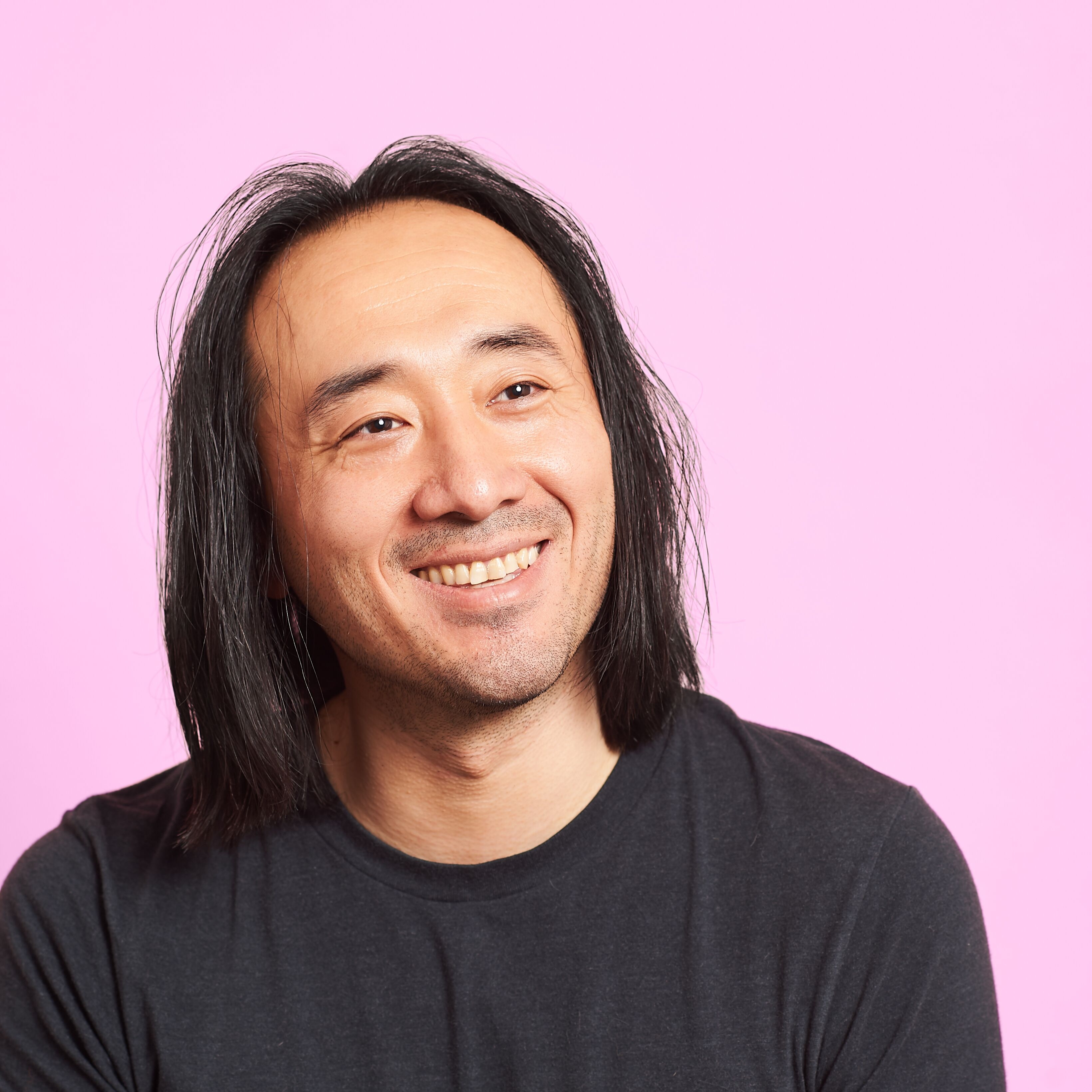
Ge Wang
Associate Professor of Music and Associate Professor, by courtesy, of Computer Science, Stanford | Associate Director and Senior Fellow, Stanford HAI
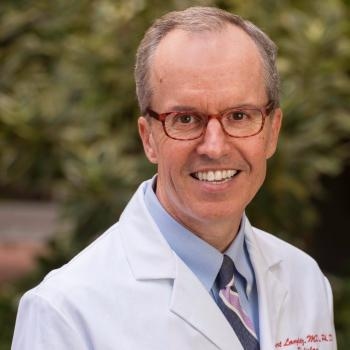
James Landay
Denning Co-Director, Stanford HAI | Anand Rajaraman and Venky Harinarayan Professor of Computer Science, Stanford University
Vanessa Parli
Managing Director of Programs and External Engagement
Jessica Riskin
Frances and Charles Field Professor of History; Director, Graduate Teaching, Stanford University

Watch Event Recording

Share
Link copied to clipboard!
Event Contact
Madeleine Wright
mwright7@stanford.edu
Related
  • Ge Wang
    Associate Professor of Music and Associate Professor, by courtesy, of Computer Science, Stanford | Associate Director and Senior Fellow, Stanford HAI

Related Events

Ashesh Rambachan | From Next-Token Prediction to Automatic Induction of Automata
Apr 13, 202612:00 PM - 1:00 PM
April
13
2026

Sequence data is ubiquitous in economics — job histories in labor economics, diagnosis and treatment sequences in health economics, strategic interactions in game theory. Generative sequence models can learn to predict these sequences well, but their complexity makes it hard to extract interpretable economic insights from their predictions.

Event

Ashesh Rambachan | From Next-Token Prediction to Automatic Induction of Automata

Apr 13, 202612:00 PM - 1:00 PM

Sequence data is ubiquitous in economics — job histories in labor economics, diagnosis and treatment sequences in health economics, strategic interactions in game theory. Generative sequence models can learn to predict these sequences well, but their complexity makes it hard to extract interpretable economic insights from their predictions.

Caroline Meinhardt, Thomas Mullaney, Juan N. Pava, and Diyi Yang | How Can AI Support Language Digitization and Digital Inclusion?
SeminarApr 15, 202612:00 PM - 1:15 PM
April
15
2026

What does digital inclusion look like in the age of AI? Over 6,000 of the world’s 7,000-plus living languages remain digitally disadvantaged.

Seminar

Caroline Meinhardt, Thomas Mullaney, Juan N. Pava, and Diyi Yang | How Can AI Support Language Digitization and Digital Inclusion?

Apr 15, 202612:00 PM - 1:15 PM

What does digital inclusion look like in the age of AI? Over 6,000 of the world’s 7,000-plus living languages remain digitally disadvantaged.

Matt Beane | Precision Proactivity: Measuring Cognitive Load in Real-World AI-Assisted Work
Apr 20, 202612:00 PM - 1:00 PM
April
20
2026

Systems like ChatGPT and Claude assist billions through proactive dialogue—offering unsolicited, task-relevant information. Drawing on Cognitive Load Theory, we study how cognitive load shapes performance in AI assisted knowledge work.

Event

Matt Beane | Precision Proactivity: Measuring Cognitive Load in Real-World AI-Assisted Work

Apr 20, 202612:00 PM - 1:00 PM

Systems like ChatGPT and Claude assist billions through proactive dialogue—offering unsolicited, task-relevant information. Drawing on Cognitive Load Theory, we study how cognitive load shapes performance in AI assisted knowledge work.