Stanford
University
  • Stanford Home
  • Maps & Directions
  • Search Stanford
  • Emergency Info
  • Terms of Use
  • Privacy
  • Copyright
  • Trademarks
  • Non-Discrimination
  • Accessibility
© Stanford University.  Stanford, California 94305.
How Artificial Intelligence Could Keep Seniors Safe During a Pandemic | Stanford HAI
Skip to content
  • About

    • About
    • People
    • Get Involved with HAI
    • Support HAI
    • Subscribe to Email
  • Research

    • Research
    • Fellowship Programs
    • Grants
    • Student Affinity Groups
    • Centers & Labs
    • Research Publications
    • Research Partners
  • Education

    • Education
    • Executive and Professional Education
    • Government and Policymakers
    • K-12
    • Stanford Students
  • Policy

    • Policy
    • Policy Publications
    • Policymaker Education
    • Student Opportunities
  • AI Index

    • AI Index
    • AI Index Report
    • Global Vibrancy Tool
    • People
  • News
  • Events
  • Industry
  • Centers & Labs
Navigate
  • About
  • Events
  • Careers
  • Search
Participate
  • Get Involved
  • Support HAI
  • Contact Us

Stay Up To Date

Get the latest news, advances in research, policy work, and education program updates from HAI in your inbox weekly.

Sign Up For Latest News

news

How Artificial Intelligence Could Keep Seniors Safe During a Pandemic

Date
April 05, 2020
Topics
Healthcare
Your browser does not support the video tag.

New technologies offer the elderly independence while still monitoring their illnesses.

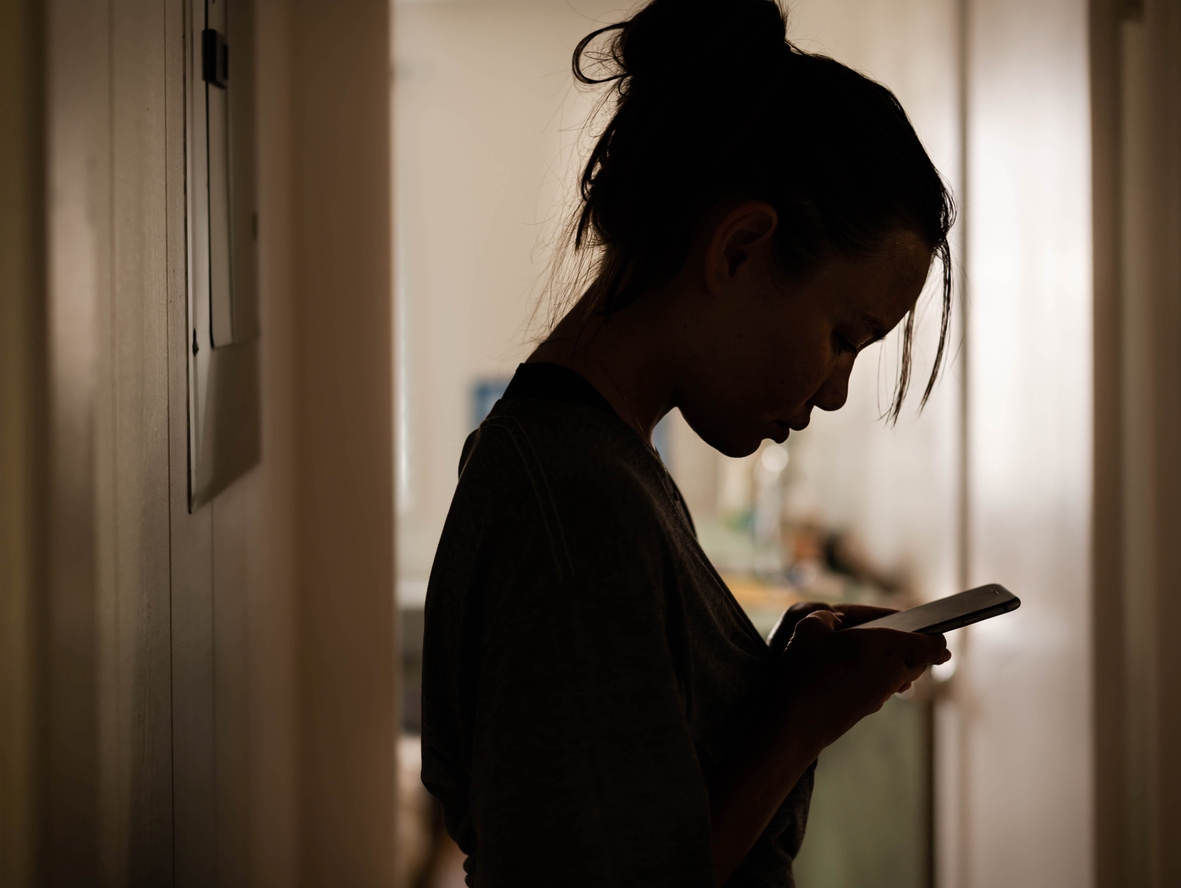
While we don’t know everything about COVID-19, we know it hits older populations harder than younger ones. “How can we take care of seniors while keeping them safe?” asks Stanford HAI Denning Family co-director Fei-Fei Li. “Nowhere is safer than home if one doesn’t need to be in a hospital.”One solution could help protect seniors against COVID-19 while managing chronic illness: in-home sensors and cameras combined with AI-assisted technologies that can gather and analyze information as varied as fevers and sleep patterns. The privacy-protected information can then be shared with clinicians and family, keeping seniors safe while maintaining their independence.Of course, ethics, privacy, and security are paramount in this system; the research process needs to be HIPAA-compliant and approved by the Institutional Review Board for human subjects. “This is not a technology in which we want to see unintended adversarial consequences for our vulnerable population,” Li says. And to ensure that, our team of technologists is working closely with geriatricians, clinical researchers, bioethicists, legal scholars, security researchers and multi-stakers.Li spoke during Stanford HAI’s COVID-19 and AI virtual conference. Watch her session here, and view the full conference here. 

Share
Link copied to clipboard!
Authors
  • headshot
    Shana Lynch

Related News

AI Reveals How Brain Activity Unfolds Over Time
Andrew Myers
Jan 21, 2026
News
Medical Brain Scans on Multiple Computer Screens. Advanced Neuroimaging Technology Reveals Complex Neural Pathways, Display Showing CT Scan in a Modern Medical Environment

Stanford researchers have developed a deep learning model that transforms overwhelming brain data into clear trajectories, opening new possibilities for understanding thought, emotion, and neurological disease.

News
Medical Brain Scans on Multiple Computer Screens. Advanced Neuroimaging Technology Reveals Complex Neural Pathways, Display Showing CT Scan in a Modern Medical Environment

AI Reveals How Brain Activity Unfolds Over Time

Andrew Myers
HealthcareSciences (Social, Health, Biological, Physical)Jan 21

Stanford researchers have developed a deep learning model that transforms overwhelming brain data into clear trajectories, opening new possibilities for understanding thought, emotion, and neurological disease.

Why 'Zero-Shot' Clinical Predictions Are Risky
Suhana Bedi, Jason Alan Fries, and Nigam H. Shah
Jan 07, 2026
News
Doctor reviews a tablet in the foreground while other doctors and nurses stand over a medical bed in the background

These models generate plausible timelines from historical patterns; without calibration and auditing, their “probabilities” may not reflect reality.

News
Doctor reviews a tablet in the foreground while other doctors and nurses stand over a medical bed in the background

Why 'Zero-Shot' Clinical Predictions Are Risky

Suhana Bedi, Jason Alan Fries, and Nigam H. Shah
HealthcareFoundation ModelsJan 07

These models generate plausible timelines from historical patterns; without calibration and auditing, their “probabilities” may not reflect reality.

Stanford Researchers: AI Reality Check Imminent
Forbes
Dec 23, 2025
Media Mention

Shana Lynch, HAI Head of Content and Associate Director of Communications, pointed out the "'era of AI evangelism is giving way to an era of AI evaluation,'" in her AI predictions piece, where she interviewed several Stanford AI experts on their insights for AI impacts in 2026.

Media Mention
Your browser does not support the video tag.

Stanford Researchers: AI Reality Check Imminent

Forbes
Generative AIEconomy, MarketsHealthcareCommunications, MediaDec 23

Shana Lynch, HAI Head of Content and Associate Director of Communications, pointed out the "'era of AI evangelism is giving way to an era of AI evaluation,'" in her AI predictions piece, where she interviewed several Stanford AI experts on their insights for AI impacts in 2026.