Get the latest news, advances in research, policy work, and education program updates from HAI in your inbox weekly.
Sign Up For Latest News
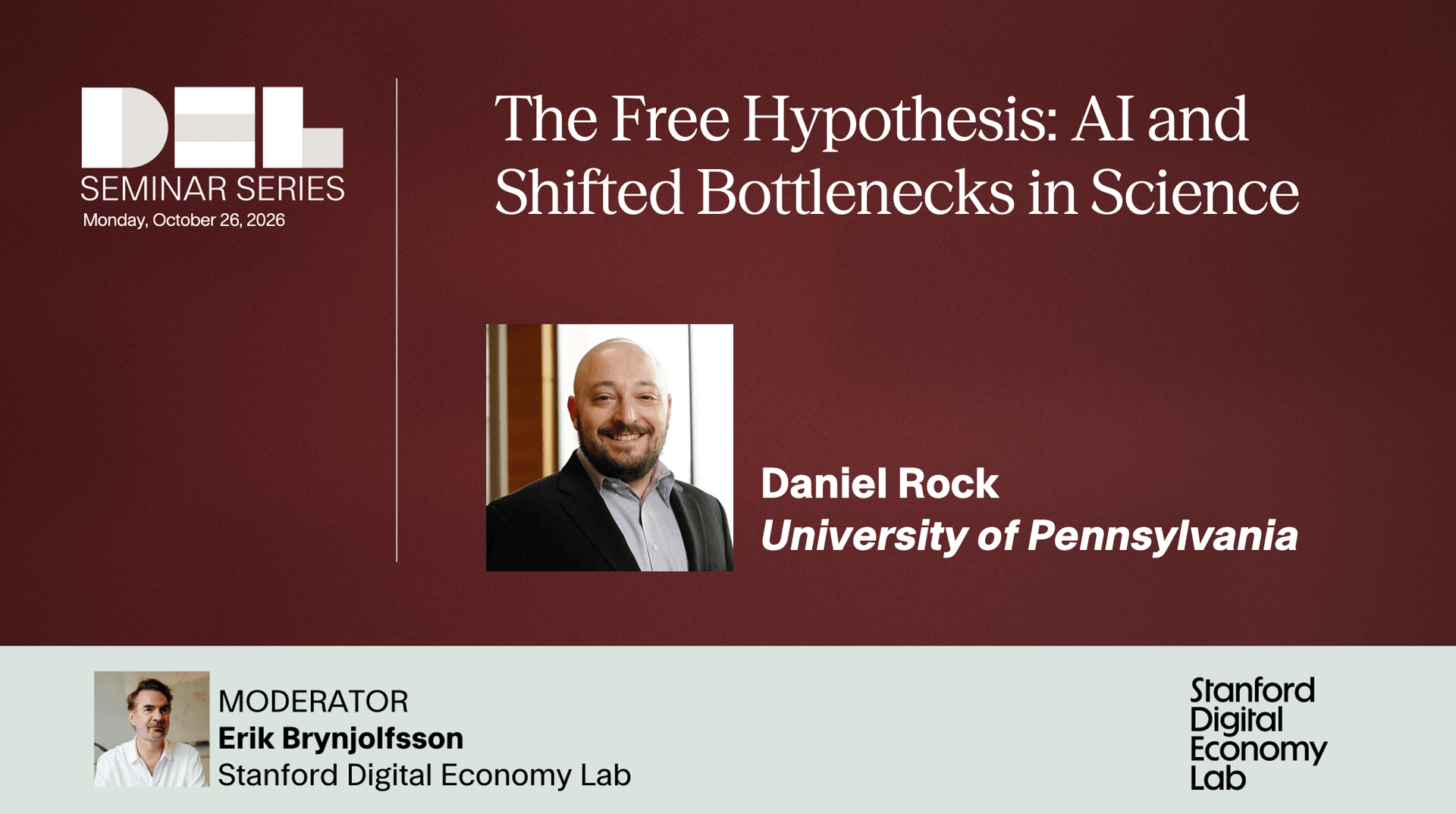
How do AI agents influence knowledge work? This paper finds that agents shift worker effort from implementation to supervision, which especially benefits verifiable work and expert workers. I use data from the coding platform Cursor to study agents in software production.
.png&w=1920&q=100)
How do AI agents influence knowledge work? This paper finds that agents shift worker effort from implementation to supervision, which especially benefits verifiable work and expert workers. I use data from the coding platform Cursor to study agents in software production.
What does digital inclusion look like in the age of AI? Over 6,000 of the world’s 7,000-plus living languages remain digitally disadvantaged.

What does digital inclusion look like in the age of AI? Over 6,000 of the world’s 7,000-plus living languages remain digitally disadvantaged.
Artificial intelligence has come a long way in a short time. No longer relegated to only outwitting humans in chess matches, AI now powers virtual assistants like Siri and self-driving cars testing their way through our neighborhoods. But if AI is getting more ingrained in society, why has it not boosted economic growth — as technological innovations like electricity or computers have done in the past?
Erik Brynjolfsson, a leading economist in AI, says it’s only a matter of time.
Brynjolfsson, Director of the MIT Initiative on the Digital Economy, spoke Tuesday at the Stanford Institute for Economic Policy Research (SIEPR), on “The AI Awakening and the Coming Productivity Boom.” The event was co-hosted by SIEPR and the Stanford Institute for Human-Centered Artificial Intelligence (HAI), where Brynjolfsson is a distinguished fellow. Read the full article.