Get the latest news, advances in research, policy work, and education program updates from HAI in your inbox weekly.
Sign Up For Latest News
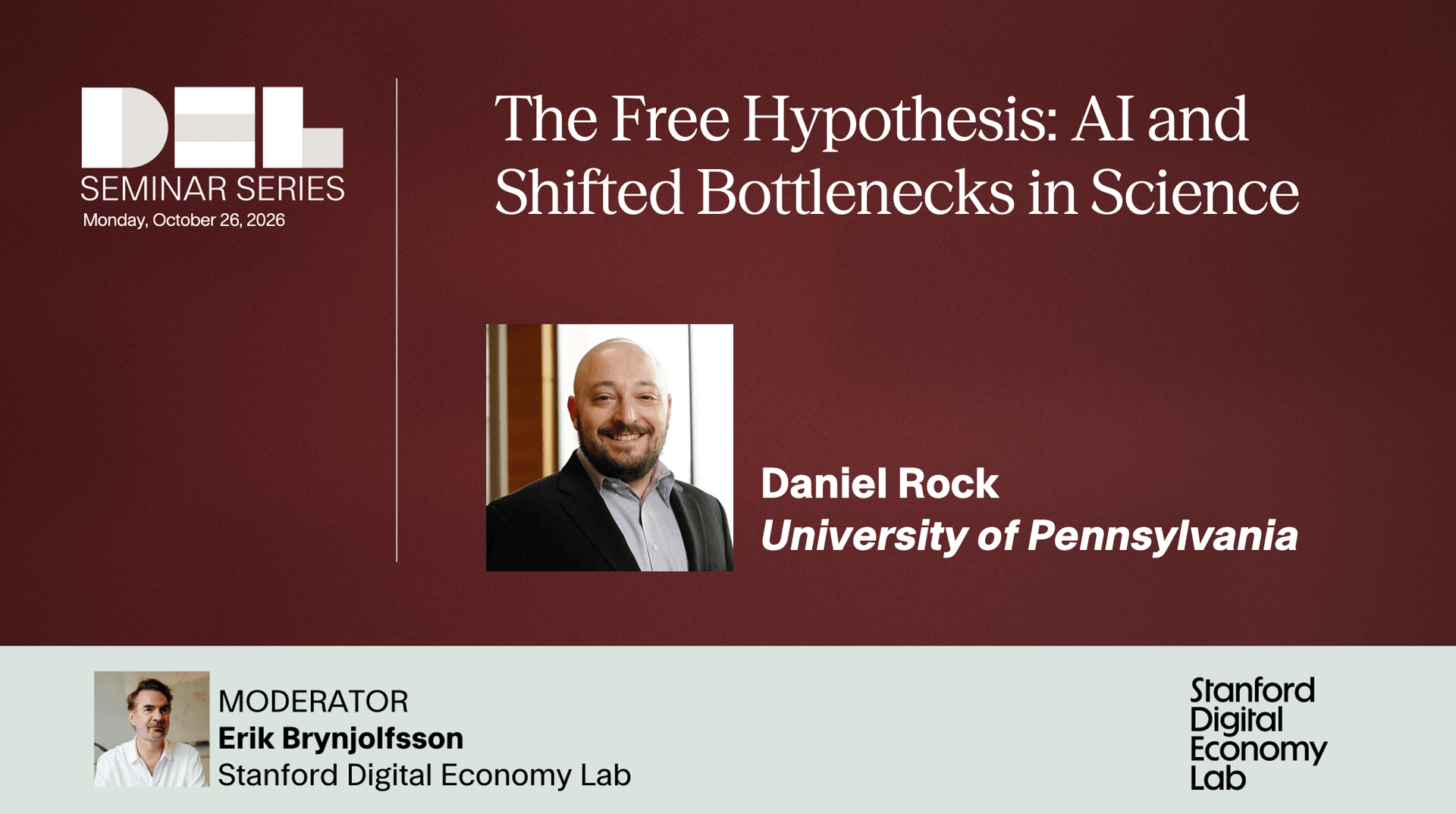
The possibility that AI will automate most cognitive labor is worth taking seriously. How should we adapt to this transformation? I start from the perspective, articulated in the essay “AI as normal technology”, that the true bottlenecks lie downstream of capabilities and that AI’s impacts will unfold gradually over decades. If this is true, there are major gaps in our current evidence infrastructure, because it over-emphasizes the capability layer.
.png&w=1920&q=100)
The possibility that AI will automate most cognitive labor is worth taking seriously. How should we adapt to this transformation? I start from the perspective, articulated in the essay “AI as normal technology”, that the true bottlenecks lie downstream of capabilities and that AI’s impacts will unfold gradually over decades. If this is true, there are major gaps in our current evidence infrastructure, because it over-emphasizes the capability layer.
The AI Index, currently in its ninth year, tracks, collates, distills, and visualizes data relating to artificial intelligence.

The AI Index, currently in its ninth year, tracks, collates, distills, and visualizes data relating to artificial intelligence.
Strategic stability exists when neither side thinks it can improve its strategic outcome by striking first.

Strategic stability exists when neither side thinks it can improve its strategic outcome by striking first.
We will provide an update on HAI's progress since the spring and preview upcoming activities and opportunities to get involved. HAI Associate Director James Landay will share highlights from HAI grant programs as well as details on upcoming opportunities, including the Hoffman-Yee program providing grants of up to $2.5m over three years, and tips for submitting a successful proposal. In addition, Percy Liang, Associate Professor of Computer Science and Faculty Director of HAI's new Center for Research on Foundation Models (CRFM) will provide an overview of the center’s efforts and opportunities to get involved. There will also be an opportunity for faculty to ask questions and give feedback.
The Town Hall is open to all members of the Stanford Faculty.