Stanford
University
  • Stanford Home
  • Maps & Directions
  • Search Stanford
  • Emergency Info
  • Terms of Use
  • Privacy
  • Copyright
  • Trademarks
  • Non-Discrimination
  • Accessibility
© Stanford University.  Stanford, California 94305.
2027 Conference on Physics and AI (PhyStat 2027) | Stanford HAI
Skip to content
  • About

    • About
    • People
    • Get Involved with HAI
    • Support HAI
    • Subscribe to Email
  • Research

    • Research
    • Research Programs
    • Grants
    • Marlowe (opens in new tab)
    • Student Affinity Groups
    • Centers & Labs
    • Research Publications
    • Research Partners
  • Education

    • Education
    • Executive and Professional Education
    • Government and Policymakers
    • K-12
    • Stanford Students
  • Policy

    • Policy
    • Policy Publications
    • Policymaker Education
    • Student Opportunities
  • AI Index

    • AI Index
    • AI Index Report
    • Global Vibrancy Tool
    • People
  • News
  • Events
  • Industry
  • Centers & Labs
Navigate
  • About
  • Events
  • AI Glossary
  • Careers
  • Search
Participate
  • Get Involved
  • Support HAI
  • Contact Us

Stay Up To Date

Get the latest news, advances in research, policy work, and education program updates from HAI in your inbox weekly.

Sign Up For Latest News

Your browser does not support the video tag.
eventConference

2027 Conference on Physics and AI (PhyStat 2027)

Status
Upcoming
Date
Monday, May 24, 2027 - Wednesday, May 26, 2027
Location
Simonyi Conference Center, 389 Jane Stanford Way, Stanford, CA 94305
Topics
Data Science

The Center for Decoding the Universe brings together researchers across scientific disciplines to answer the biggest questions about our Universe by leveraging complex data with the most advanced statistical and computational methods. 

Share
Link copied to clipboard!
Event Contact
Stanford HAI
datascience@stanford.edu

Related Events

Marlowe | AI + Data for Science with Andreas Tolias
SeminarNov 18, 20264:30 PM - 5:30 PM
November
18
2026

Sessions run Wednesdays from 4:30–5:30 PM in CoDa E160. Each session features a different Stanford speaker; talk titles are announced by the organizers.

Event

Marlowe | AI + Data for Science with Andreas Tolias

Nov 18, 20264:30 PM - 5:30 PM

Sessions run Wednesdays from 4:30–5:30 PM in CoDa E160. Each session features a different Stanford speaker; talk titles are announced by the organizers.

Marlowe | AI + Data for Science with Leonidas Guibas
SeminarDec 02, 20264:30 PM - 5:30 PM
December
02
2026

Sessions run Wednesdays from 4:30–5:30 PM in CoDa E160. Each session features a different Stanford speaker; talk titles are announced by the organizers.

Event

Marlowe | AI + Data for Science with Leonidas Guibas

Dec 02, 20264:30 PM - 5:30 PM

Sessions run Wednesdays from 4:30–5:30 PM in CoDa E160. Each session features a different Stanford speaker; talk titles are announced by the organizers.

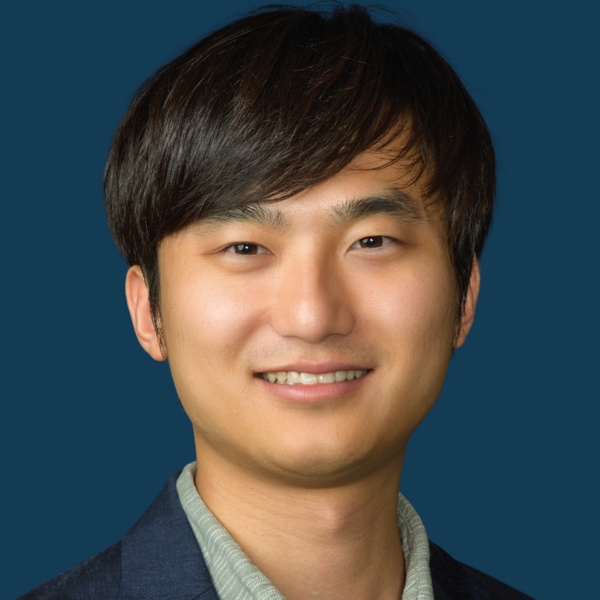
YoungJu Jo | Data-driven Discovery and Control of Neural Computations
SeminarDec 14, 20264:00 PM - 5:30 PM
December
14
2026

A Center for Neural Data Science Seminar Series

Event

YoungJu Jo | Data-driven Discovery and Control of Neural Computations

Dec 14, 20264:00 PM - 5:30 PM

A Center for Neural Data Science Seminar Series

Advanced statistical and computational insights are transforming all aspects of physics. The goal of PhyStat 2027: statistical inference from physics data in the age of AI is to bring together physics/statistics/data science/computer science researchers, practitioners, and educators who are interacting with physics data using modern tools.  Physics here is broadly defined and includes related fields within the physical sciences. The conference will include both methodology and applications addressing complex statistical challenges.

Why Physics?

Many areas of physics have been in a big-data, precision era for decades. As such, they were early adopters of AI tools. The deep learning revolution of the last decade has transformative potential in physics, especially given the field’s culture of developing and using advanced statistical and computational techniques. Physics also has unique challenges that necessitate dedicated research and pedagogy. For example, the largest scientific datasets are not always images or text. Additionally, ab initio simulations often play a key role in physics research, leading to the rise of simulation-based inference. These and other aspects of physics have led to a growing research area at the intersection of physics and AI—with data physicists and phystatistians emerging as researchers at the forefront of novel methodology. 

Conference Structure

This Conference is modeled after the Machine Learning and Physical Sciences Workshop (MLPS) at NeurIPS. We welcome short research papers that will be peer reviewed and then ranked for impact by area chairs. Accepted papers will be published, and authors will be invited to present a poster. A small number of accepted papers will be selected for spotlight talks. The rest of the program will include invited talks and panels. Paper submission is open to all. 

Call for Papers

Details will be announced soon. Please check back for updates.

Organizing Committee

  • Olaf Behnke / DESY + CERN PhyStat

  • Lydia Brenner / Nihef + CERN PhyStat

  • Ioana Ciuca / Stanford C4DU

  • Yang Chen / U. Michigan Stats + ASA AIG

  • Susan Clark / Stanford C4DU

  • Louis Lyons / Oxford + CERN PhyStat

  • Simon Mak / Duke Stats + ASA SPES

  • Michael Mahoney / LBNL SDD + UCB Stats

  • Benjamin Nachman / Stanford + SLAC C4DU

  • Michelle Ntampaka / Space Science Telescope + AAS WGAA

  • Philip Stark / UCB Stats

  • Guenther Walther / Stanford Stats

  • Risa Wechsler / Stanford + SLAC C4DU