event
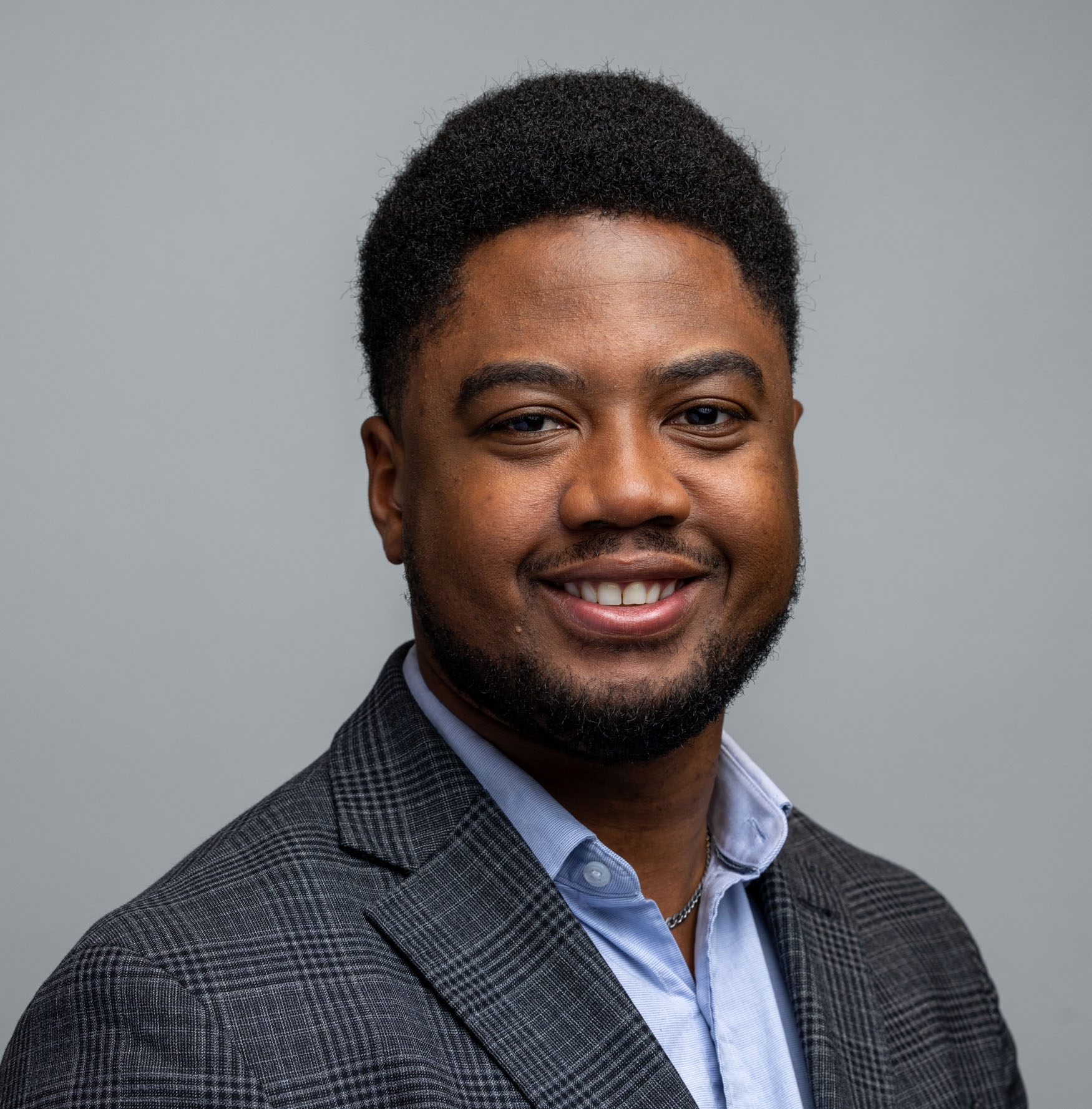
Ellen Zhong (Princeton)
Status
Past
Date
Wednesday, January 08, 2025 4:00 PM - 5:30 PM PST/PDT
Location
John A. and Cynthia Fry Gunn Rotunda, E241, ChEM-H & Neurosciences Building, 290 Jane Stanford Way, 2nd floor, Stanford, CA 94305
Get the latest news, advances in research, policy work, and education program updates from HAI in your inbox weekly.
Sign Up For Latest News
The rapid acceleration of AI comes with a profound wave of anxiety. Across every sector of society, people are facing unsettling questions about their worth and their place in a shifting world.
The rapid acceleration of AI comes with a profound wave of anxiety. Across every sector of society, people are facing unsettling questions about their worth and their place in a shifting world.
Sessions run Wednesdays from 4:30–5:30 PM in CoDa E160. Each session features a different Stanford speaker; talk titles are announced by the organizers.
Sessions run Wednesdays from 4:30–5:30 PM in CoDa E160. Each session features a different Stanford speaker; talk titles are announced by the organizers.
An AI Measurement Science (AIMS) Seminar Series
An AI Measurement Science (AIMS) Seminar Series
Structural biology has been transformed by breakthroughs in deep learning methods for protein structure prediction. In parallel, advances in cryo-electron microscopy and tomography have produced new opportunities to study the dynamics and interactions of biomolecular complexes. In this seminar, I will describe the algorithmic challenges at the frontier of structure determination via cryo-EM. I will overview cryoDRGN, a machine learning system for heterogeneous cryo-EM and cryo-ET reconstruction. Along the way, I will overview recent progress in our group on reconstructing complex mixtures, developing a challenging benchmark for structural heterogeneity, and visualizing dynamic biomolecular complexes in situ
Ellen Zhong is an Assistant Professor of Computer Science at Princeton University where she is also affiliated with the Princeton Laboratory for Artificial Intelligence, the Center for Statistics and Machine Learning, and the Omenn-Darling Bioengineering Institute. Her group’s research spans methodological research in AI and computer vision, as well as close collaboration with experimentalists in molecular and structural biology. Previously, she has worked on the AlphaFold team at Google DeepMind and at D. E. Shaw Research on molecular dynamics for drug discovery. She obtained her B.S. from the University of Virginia in 2014 and her Ph.D. from MIT in 2022 before joining the Princeton faculty.
The last few years have seen a substantial increase in the reported success of machine learning (ML), and generative artificial intelligence (AI). These impact practices in delivering services from financial institutions to entertainment and medicine. However scientific research also increasingly relies on large data sets, whose analysis leverages ML/AI. This seminar series aims to investigate if and how the paradigm for scientific research has changed or should change to incorporate these new tools and the possibilities they open.
A diverse group of scholars engaged in scientific research, method development, and historical and epistemological investigations will give a 50-minute presentation, followed by discussion.
The event is open to all. Stanford students and postdocs have the opportunity to engage more directly with speakers and topics by enrolling in the Canvas course here.