Stanford
University
  • Stanford Home
  • Maps & Directions
  • Search Stanford
  • Emergency Info
  • Terms of Use
  • Privacy
  • Copyright
  • Trademarks
  • Non-Discrimination
  • Accessibility
© Stanford University.  Stanford, California 94305.
Serena Wang: From Metric Selection to Metric Discovery in AI Evaluation | Stanford HAI
Navigate
  • About
  • Events
  • AI Glossary
  • Careers
  • Search
Participate
  • Get Involved
  • Support HAI
  • Contact Us

Stay Up To Date

Get the latest news, advances in research, policy work, and education program updates from HAI in your inbox weekly.

Sign Up For Latest News

Skip to content
  • About

    • About
    • People
    • Get Involved with HAI
    • Support HAI
    • Subscribe to Email
  • Research

    • Research
    • Research Programs
    • Grants
    • Marlowe (opens in new tab)
    • Student Affinity Groups
    • Centers & Labs
    • Research Publications
    • Research Partners
  • Education

    • Education
    • Executive and Professional Education
    • Government and Policymakers
    • K-12
    • Stanford Students
  • Policy

    • Policy
    • Policy Publications
    • Policymaker Education
    • Student Opportunities
  • AI Index

    • AI Index
    • AI Index Report
    • Global Vibrancy Tool
    • People
  • News
  • Events
  • Industry
  • Centers & Labs
Your browser does not support the video tag.
eventSeminar

Serena Wang: From Metric Selection to Metric Discovery in AI Evaluation

Status
Past
Date
Friday, October 16, 2026 1:00 PM - 2:15 PM US/Pacific
Attend Virtually
Share
Link copied to clipboard!

Related Events

Richard Socher | The Eureka Machine: Why AI is the Key to Unlocking a New Era of Scientific Discoveries
SeminarNov 30, 202612:00 PM - 1:00 PM
November
30
2026

The next, maybe final, frontier of AI research is automating the process of knowledge discovery. By pointing AI first at itself and then at the R&D process of all scientific domains, we can far exceed where human-led research can take us. Richard Socher argues the current pace of scientific discovery has slowed significantly over the past several decades as the fields of science fragment and the number of researchers focused on any one continues to shrink.

Event
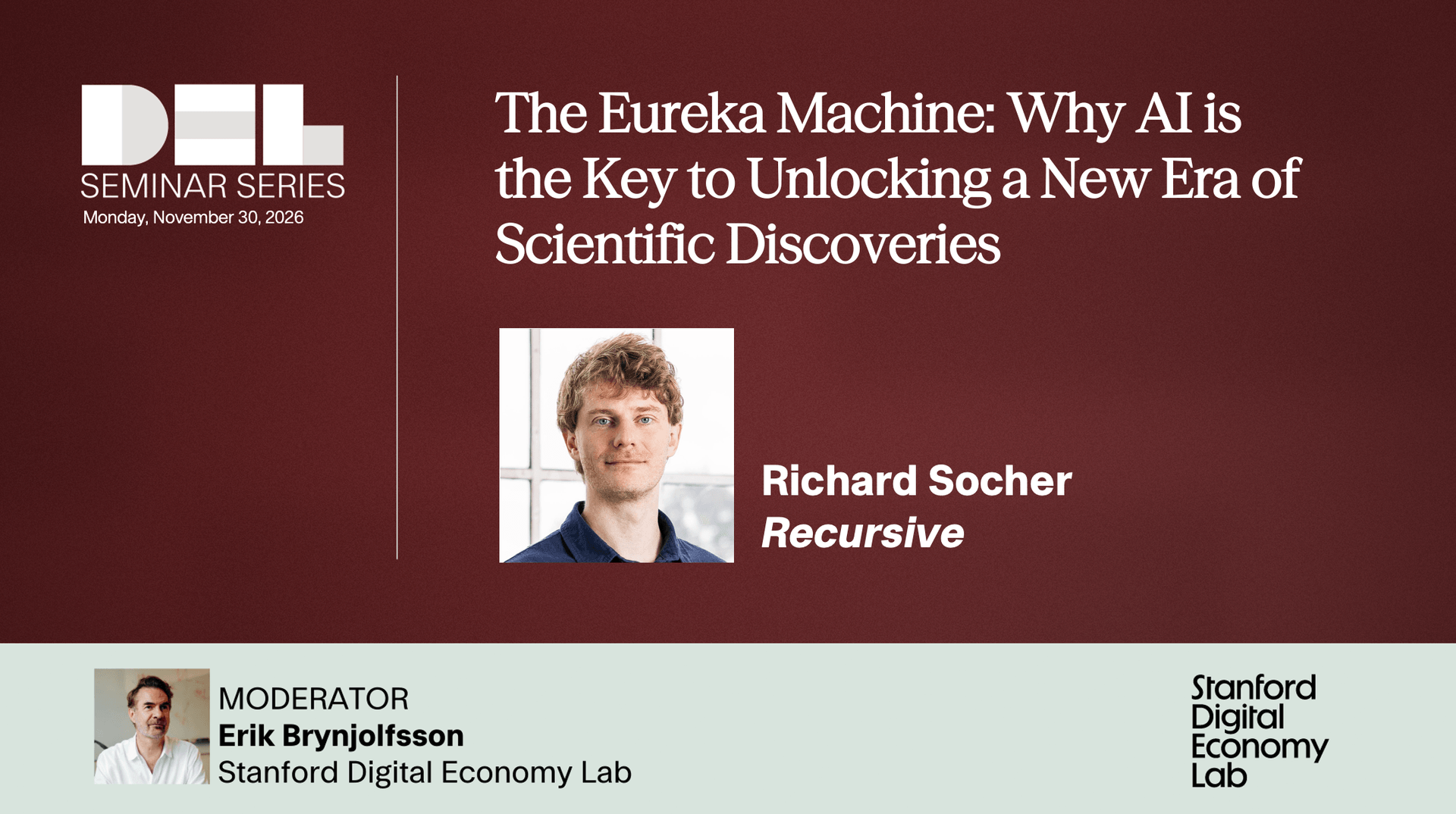
Richard Socher | The Eureka Machine: Why AI is the Key to Unlocking a New Era of Scientific Discoveries

Nov 30, 202612:00 PM - 1:00 PM

The next, maybe final, frontier of AI research is automating the process of knowledge discovery. By pointing AI first at itself and then at the R&D process of all scientific domains, we can far exceed where human-led research can take us. Richard Socher argues the current pace of scientific discovery has slowed significantly over the past several decades as the fields of science fragment and the number of researchers focused on any one continues to shrink.
NVIDIA & Marlowe | Accelerating Biological Discovery with AI — Youssef Nashed
Dec 02, 2026
December
02
2026

This talk will explore the latest advances in computational protein design and structure prediction, highlighting NVIDIA technologies such as cuEquivariance and the Proteína family of models, including the latest RFdiffusion4 (RFD4)–Proteína developments. We will discuss how accelerated geometric deep learning and generative AI are enabling scalable, high-performance protein modeling and the design of novel proteins with tailored structures and functions.

Bio:
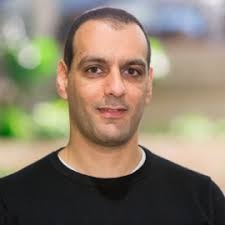
Youssef Nashed is a Senior Solutions Architect on NVIDIA's Healthcare and Life Sciences team. He joined NVIDIA from Bristol Myers Squibb (BMS), where he was a Senior Principal Scientist focused on machine learning and computational protein design. At BMS, Youssef led a team developing and deploying AI models for antibody discovery and development. He previously served as an Assistant Professor at Northwestern University and conducted research in structural biology at SLAC National Accelerator Laboratory at Stanford. Youssef began his career in high-performance and large-scale GPU computing at Argonne National Laboratory. His background spans computer science, mathematics, structural biology, and AI-driven protein engineering.

Location: CoDa W401

Event

NVIDIA & Marlowe | Accelerating Biological Discovery with AI — Youssef Nashed

Dec 02, 2026

This talk will explore the latest advances in computational protein design and structure prediction, highlighting NVIDIA technologies such as cuEquivariance and the Proteína family of models, including the latest RFdiffusion4 (RFD4)–Proteína developments. We will discuss how accelerated geometric deep learning and generative AI are enabling scalable, high-performance protein modeling and the design of novel proteins with tailored structures and functions.

Bio:
Youssef Nashed is a Senior Solutions Architect on NVIDIA's Healthcare and Life Sciences team. He joined NVIDIA from Bristol Myers Squibb (BMS), where he was a Senior Principal Scientist focused on machine learning and computational protein design. At BMS, Youssef led a team developing and deploying AI models for antibody discovery and development. He previously served as an Assistant Professor at Northwestern University and conducted research in structural biology at SLAC National Accelerator Laboratory at Stanford. Youssef began his career in high-performance and large-scale GPU computing at Argonne National Laboratory. His background spans computer science, mathematics, structural biology, and AI-driven protein engineering.

Location: CoDa W401

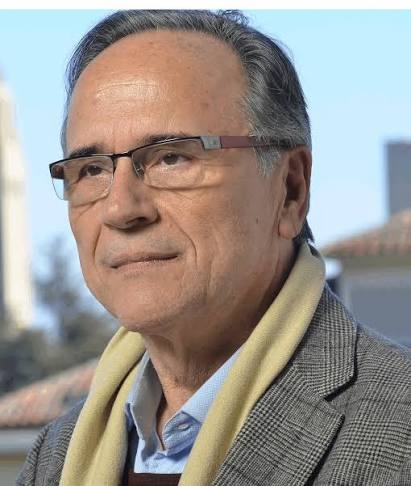
Marlowe | AI + Data for Science with Leonidas Guibas
SeminarDec 02, 20264:30 PM - 5:30 PM
December
02
2026

Sessions run Wednesdays from 4:30–5:30 PM in CoDa E160. Each session features a different Stanford speaker; talk titles are announced by the organizers.

Event

Marlowe | AI + Data for Science with Leonidas Guibas

Dec 02, 20264:30 PM - 5:30 PM

Sessions run Wednesdays from 4:30–5:30 PM in CoDa E160. Each session features a different Stanford speaker; talk titles are announced by the organizers.

Evaluation metrics are a cornerstone of the AI ecosystem, driving the decisions of developers, consumers, and investors alike. From Metric Selection to Metric Discovery in AI Evaluation will address two challenges in evaluation that are exacerbated in the development of AI systems. First is a computational challenge: the explosion of metrics to measure complex and hard-to-define capabilities in AI systems has led to rapidly increasing computational costs to evaluation. To mitigate this, we'll discuss metric selection, with algorithms for efficient and provably representative selection of metrics based in social choice theory. Second is an informational challenge: evaluators continue to face a fundamental information problem of not knowing whether they could be missing some important metrics entirely. Thus, moving beyond selection, we'll then discuss metric discovery through an economic model of incentives for agents to reveal unknown unknown metrics under information asymmetry.

Speaker
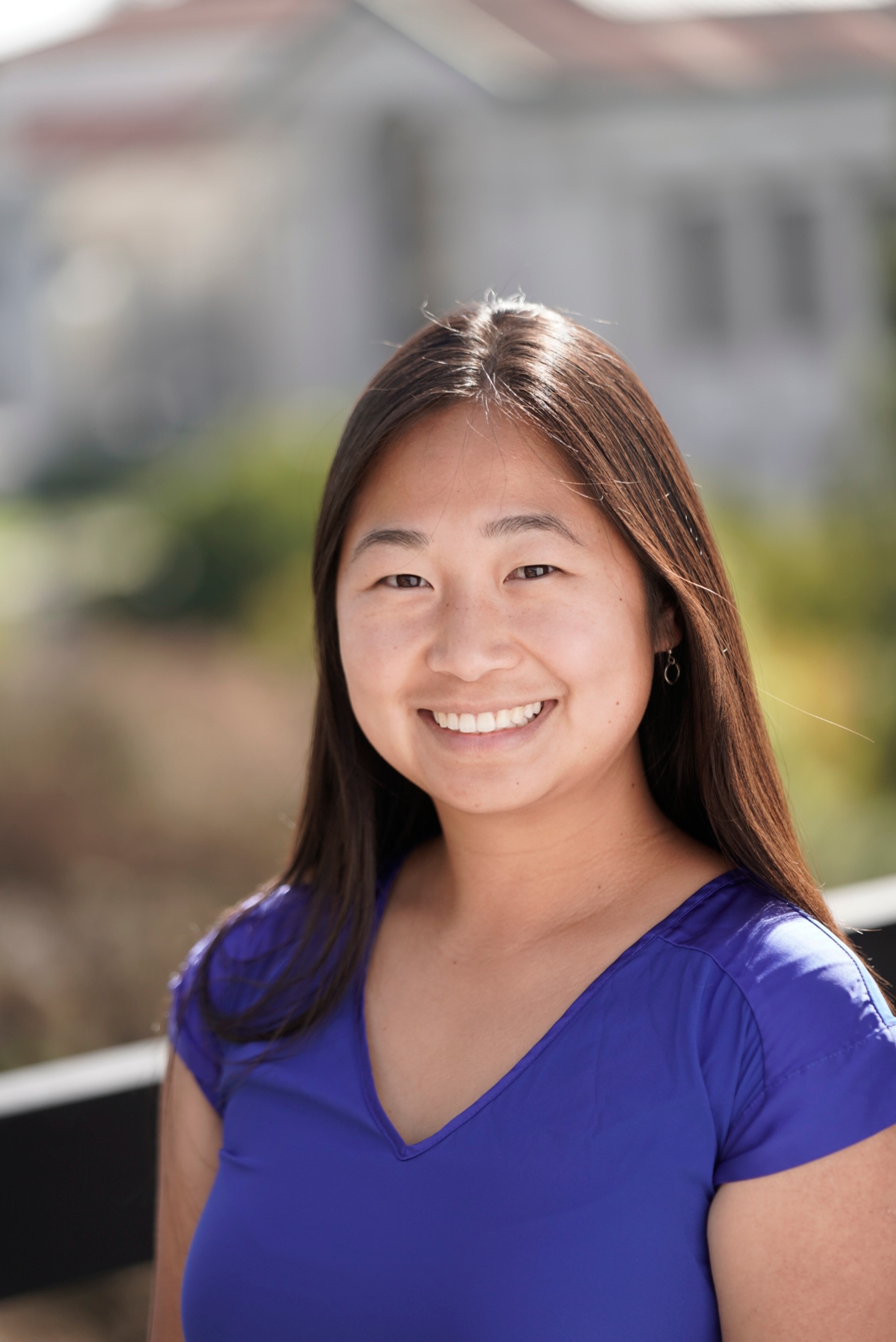
Serena Wang
Serena Wang | Assistant Professor in Computer Science, University of British Columbia, and Canada CIFAR AI Chair