HAI Monthly Community Building Reception: AI and Refugee Integration | Stanford HAI
Stanford
University
  • Stanford Home
  • Maps & Directions
  • Search Stanford
  • Emergency Info
  • Terms of Use
  • Privacy
  • Copyright
  • Trademarks
  • Non-Discrimination
  • Accessibility
© Stanford University.  Stanford, California 94305.
Skip to content
  • About

    • About
    • People
    • Get Involved with HAI
    • Support HAI
    • Subscribe to Email
  • Research

    • Research
    • Fellowship Programs
    • Grants
    • Student Affinity Groups
    • Centers & Labs
    • Research Publications
    • Research Partners
  • Education

    • Education
    • Executive and Professional Education
    • Government and Policymakers
    • K-12
    • Stanford Students
  • Policy

    • Policy
    • Policy Publications
    • Policymaker Education
    • Student Opportunities
  • AI Index

    • AI Index
    • AI Index Report
    • Global Vibrancy Tool
    • People
  • News
  • Events
  • Industry
  • Centers & Labs
Navigate
  • About
  • Events
  • AI Glossary
  • Careers
  • Search
Participate
  • Get Involved
  • Support HAI
  • Contact Us

Stay Up To Date

Get the latest news, advances in research, policy work, and education program updates from HAI in your inbox weekly.

Sign Up For Latest News

Your browser does not support the video tag.
event

HAI Monthly Community Building Reception: AI and Refugee Integration

Status
Past
Date
Tuesday, October 08, 2019 4:00 PM - 5:00 PM PST/PDT
Topics
Government, Public Administration

Jens Hainmueller is a Professor in the Department of Political Science at Stanford University and holds a courtesy appointment in the Stanford Graduate School of Business. He is also the Faculty Co-Director of the Stanford Immigration Policy Lab that is focused on the design and evaluation of immigration and integration policies and programs.

Share
Link copied to clipboard!

Related Events

Arvind Narayanan | Adapting to the Transformation of Knowledge Work
May 18, 202612:00 PM - 1:00 PM
May
18
2026

The possibility that AI will automate most cognitive labor is worth taking seriously. How should we adapt to this transformation? I start from the perspective, articulated in the essay “AI as normal technology”, that the true bottlenecks lie downstream of capabilities and that AI’s impacts will unfold gradually over decades. If this is true, there are major gaps in our current evidence infrastructure, because it over-emphasizes the capability layer.

Event

Arvind Narayanan | Adapting to the Transformation of Knowledge Work

May 18, 202612:00 PM - 1:00 PM

The possibility that AI will automate most cognitive labor is worth taking seriously. How should we adapt to this transformation? I start from the perspective, articulated in the essay “AI as normal technology”, that the true bottlenecks lie downstream of capabilities and that AI’s impacts will unfold gradually over decades. If this is true, there are major gaps in our current evidence infrastructure, because it over-emphasizes the capability layer.

Inside the 2026 AI Index Report | Stanford HAI
SeminarMay 20, 202612:00 PM - 1:15 PM
May
20
2026

The AI Index, currently in its ninth year, tracks, collates, distills, and visualizes data relating to artificial intelligence.

Seminar

Inside the 2026 AI Index Report | Stanford HAI

May 20, 202612:00 PM - 1:15 PM

The AI Index, currently in its ninth year, tracks, collates, distills, and visualizes data relating to artificial intelligence.

Eyck Freymann | AI and Strategic Stability: A Framework for U.S.–China Technology Competition
SeminarMay 27, 202612:00 PM - 1:15 PM
May
27
2026

Strategic stability exists when neither side thinks it can improve its strategic outcome by striking first.

Seminar

Eyck Freymann | AI and Strategic Stability: A Framework for U.S.–China Technology Competition

May 27, 202612:00 PM - 1:15 PM

Strategic stability exists when neither side thinks it can improve its strategic outcome by striking first.

His research interests include immigration, statistical methods, political economy, and political behavior. He has published over 40 articles, many of them in top general science journals and top field journals in political science, statistics, economics, and business. He has also published three open source software packages and his research has received awards and funding from the Carnegie Corporation, the Russell Sage Foundation, the Robin Hood Foundation, the National Science Foundation, the Swiss SNF, the American Political Science Association, Schmidt Futures, the Society of Political Methodology, the National Bureau of Economic Research, and the Midwest Political Science Association.

Hainmueller received his PhD from Harvard University and also studied at the London School of Economics, Brown University, and the University of Tübingen. Before joining Stanford, he served on the faculty of the Massachusetts Institute of Technology.

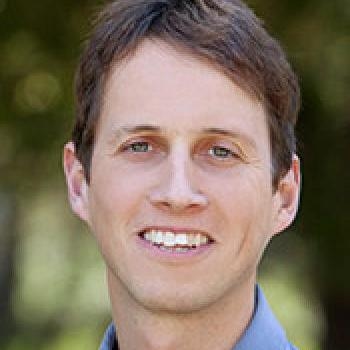
Jens Hainmueller
Professor of Political Science and, by Courtesy, of Political Economics at the Graduate School of Business