Stanford
University
  • Stanford Home
  • Maps & Directions
  • Search Stanford
  • Emergency Info
  • Terms of Use
  • Privacy
  • Copyright
  • Trademarks
  • Non-Discrimination
  • Accessibility
© Stanford University.  Stanford, California 94305.
HAI Weekly Seminar with Irene Lo | Stanford HAI
Skip to content
  • About

    • About
    • People
    • Get Involved with HAI
    • Support HAI
    • Subscribe to Email
  • Research

    • Research
    • Fellowship Programs
    • Grants
    • Student Affinity Groups
    • Centers & Labs
    • Research Publications
    • Research Partners
  • Education

    • Education
    • Executive and Professional Education
    • Government and Policymakers
    • K-12
    • Stanford Students
  • Policy

    • Policy
    • Policy Publications
    • Policymaker Education
    • Student Opportunities
  • AI Index

    • AI Index
    • AI Index Report
    • Global Vibrancy Tool
    • People
  • News
  • Events
  • Industry
  • Centers & Labs
Navigate
  • About
  • Events
  • Careers
  • Search
Participate
  • Get Involved
  • Support HAI
  • Contact Us

Stay Up To Date

Get the latest news, advances in research, policy work, and education program updates from HAI in your inbox weekly.

Sign Up For Latest News

Your browser does not support the video tag.
eventSeminar

HAI Weekly Seminar with Irene Lo

Status
Past
Date
Wednesday, May 04, 2022 10:00 AM - 11:00 AM PST/PDT
Location
Virtual
Share
Link copied to clipboard!
Event Contact
Kaci Peel
kpeel@stanford.edu

Related Events

Gaidi Faraj, Lofred Madzou | Nurturing Africa’s AI Leaders through Math Olympiad
SeminarFeb 25, 202612:00 PM - 1:15 PM
February
25
2026

The African Olympiad Academy is a world-class high school dedicated to training Africa’s most promising students in mathematics, science, and artificial intelligence through olympiad-based pedagogy.

Seminar

Gaidi Faraj, Lofred Madzou | Nurturing Africa’s AI Leaders through Math Olympiad

Feb 25, 202612:00 PM - 1:15 PM

The African Olympiad Academy is a world-class high school dedicated to training Africa’s most promising students in mathematics, science, and artificial intelligence through olympiad-based pedagogy.

Zoë Hitzig | How People Use ChatGPT
Mar 09, 202612:00 PM - 1:00 PM
March
09
2026

Despite the rapid adoption of LLM chatbots, little is known about how they are used. We approach this question theoretically and empirically, modeling a user who chooses whether to complete a task herself, ask the chatbot for information that reduces decision noise, or delegate execution to the chatbot...

Event

Zoë Hitzig | How People Use ChatGPT

Mar 09, 202612:00 PM - 1:00 PM

Despite the rapid adoption of LLM chatbots, little is known about how they are used. We approach this question theoretically and empirically, modeling a user who chooses whether to complete a task herself, ask the chatbot for information that reduces decision noise, or delegate execution to the chatbot...

Hari Subramonyam | Learning by Creating: A Human-Centered Vision for AI in Education
SeminarMar 11, 202612:00 PM - 1:15 PM
March
11
2026
Seminar

Hari Subramonyam | Learning by Creating: A Human-Centered Vision for AI in Education

Mar 11, 202612:00 PM - 1:15 PM

Designing School Choice for Diversity in the San Francisco Unified School District

More than 65 years after the "Brown v. Board of Education" ruling that school segregation is unconstitutional, public schools across the U.S. are resegregating. In attempts to disentangle school segregation from neighborhood segregation, many cities have adopted policies for district-wide choice. However, these policies have largely not improved patterns of segregation. From 2018-2020, we worked with the San Francisco Unified School District (SFUSD) to design a new policy for student assignment system that meets the district's goals of diversity, predictability, and proximity. To develop potential policies, we used optimization techniques to augment and operationalize the district's proposal of restricting choice to zones. We compared these to approaches typically suggested by the school choice literature. Using predictive choice models developed using historical choice data, we find that appropriately-designed zones with minority reserves can achieve all the district's goals, at the expense of choice, and choice can resegregate diverse zones. A zone-based policy can decrease the percentage of racial minorities in high-poverty schools from 29% to 11%, decrease the average travel distance from 1.39 miles to 1.29 miles, and improve predictability, but reduce the percentage of students assigned to one of their top 3 programs from 80% to 59%. Existing approaches in the school choice literature can improve diversity at lesser expense to choice, and present a trade-off between improvements to diversity, proximity, and equity of access. Our work informed the design and approval of a zone-based policy for use starting the 2024-25 school year.

Speaker
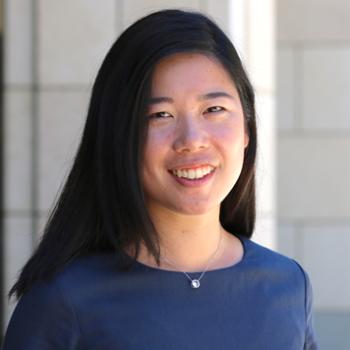
ireneIrene Lo

Assistant Professor of Management Science and Engineering, Stanford University

Irene is an assistant professor in Management Science and Engineering at Stanford University. Her research is on designing matching markets and assignment processes to improve market outcomes, with a focus on public sector applications and socially responsible operations research.

No tweets available.