eventSeminar
HAI Weekly Seminar with Jiajun Wu
Learning to See the Physical World
Get the latest news, advances in research, policy work, and education program updates from HAI in your inbox weekly.
Sign Up For Latest News
Learning to See the Physical World
Scientific progress is a key driver of economic growth and prosperity. There is great excitement- but also concerns- about the impacts of AI on science, but so far little data. We provide early insights on this from three data sources: a sample of 15 million Gemini interactions, an inventory of over 2,600 specialized AI models across disciplines, and a survey of over 600 scientists.
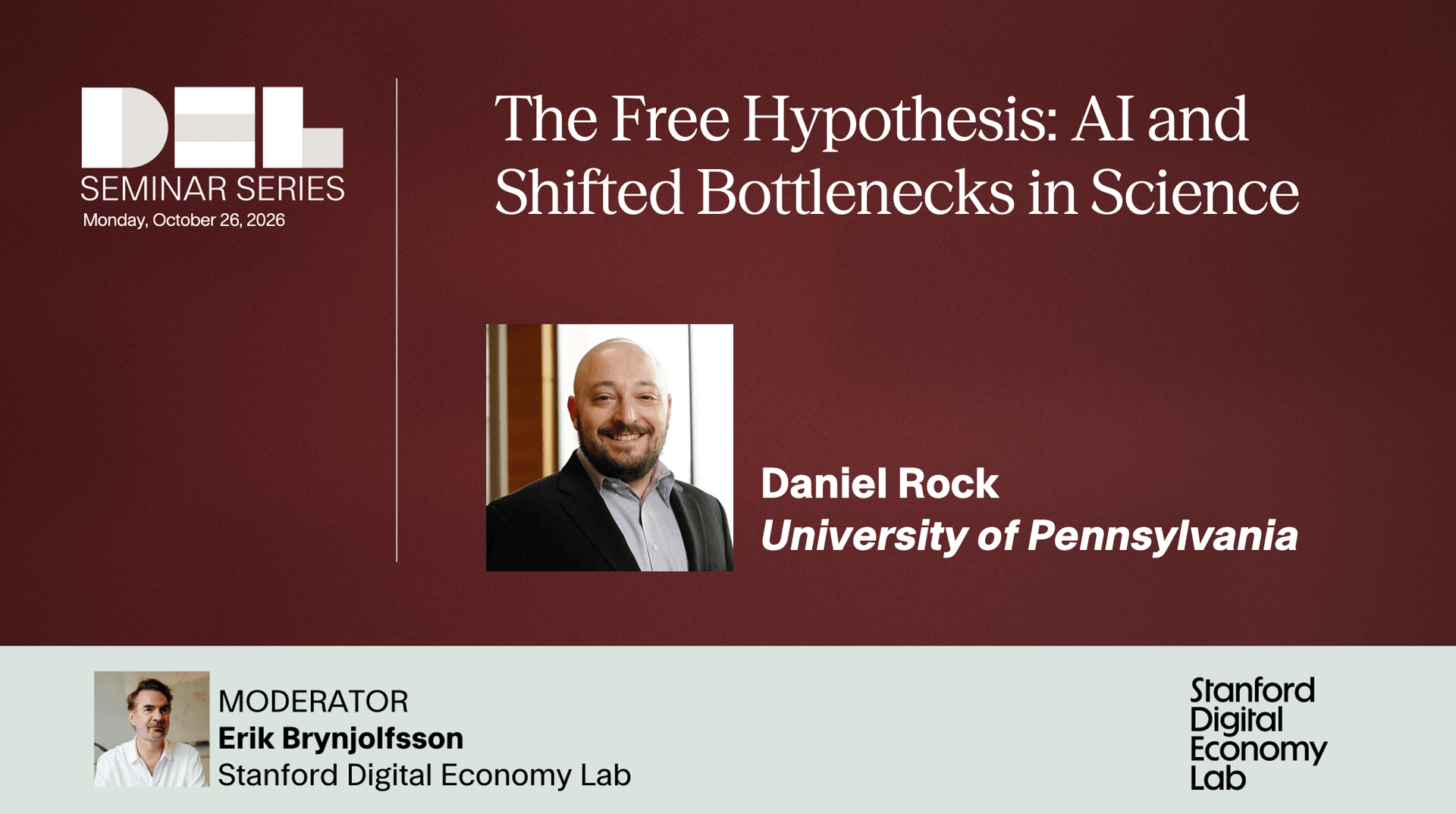
Scientific progress is a key driver of economic growth and prosperity. There is great excitement- but also concerns- about the impacts of AI on science, but so far little data. We provide early insights on this from three data sources: a sample of 15 million Gemini interactions, an inventory of over 2,600 specialized AI models across disciplines, and a survey of over 600 scientists.
The rapid acceleration of AI comes with a profound wave of anxiety. Across every sector of society, people are facing unsettling questions about their worth and their place in a shifting world.
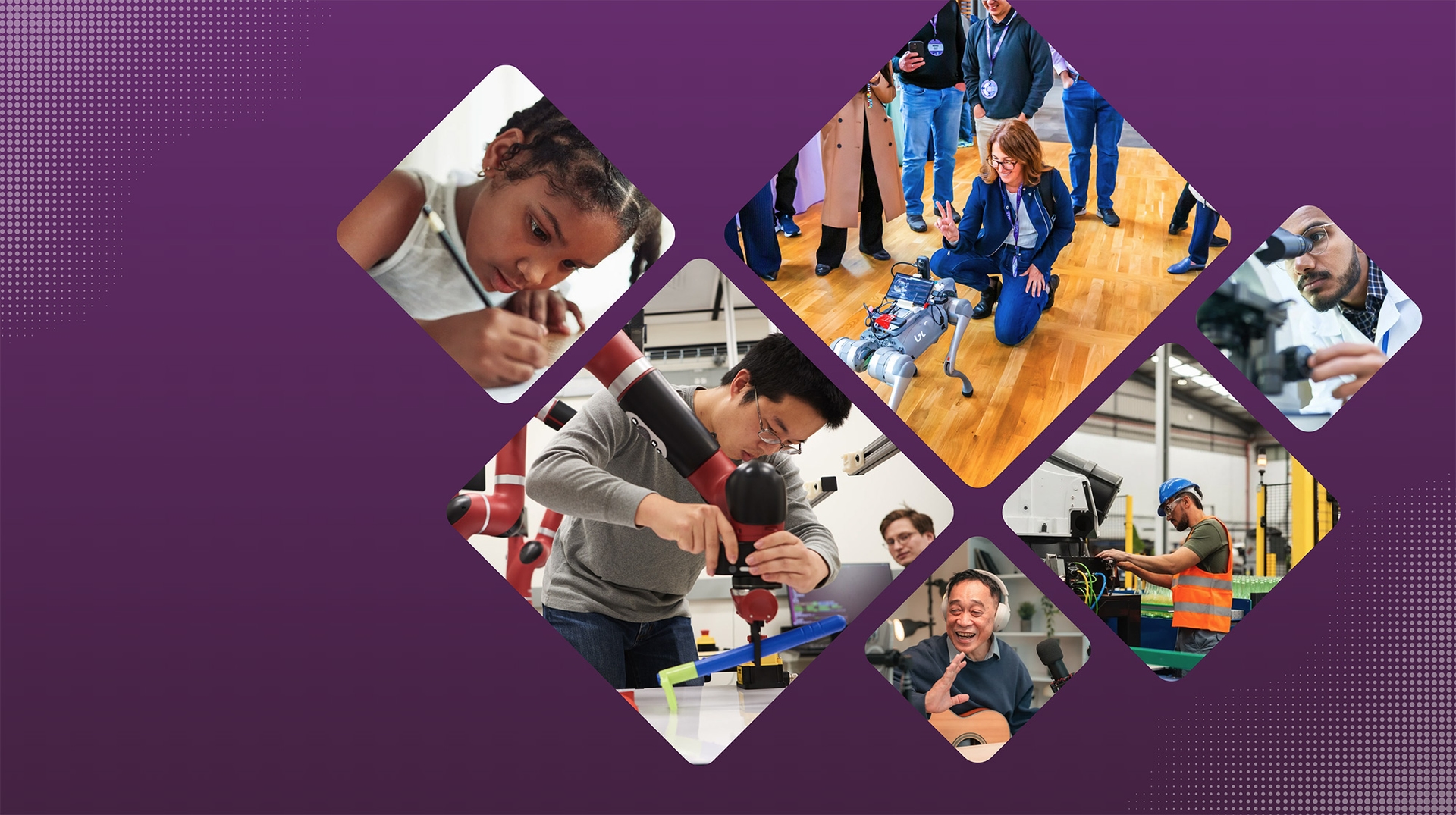
The rapid acceleration of AI comes with a profound wave of anxiety. Across every sector of society, people are facing unsettling questions about their worth and their place in a shifting world.
Sessions run Wednesdays from 4:30–5:30 PM in CoDa E160. Each session features a different Stanford speaker; talk titles are announced by the organizers.
Sessions run Wednesdays from 4:30–5:30 PM in CoDa E160. Each session features a different Stanford speaker; talk titles are announced by the organizers.
Human intelligence is beyond pattern recognition. From a single image, we're able to explain what we see, reconstruct the scene in 3D, predict what's going to happen, and plan our actions accordingly. In this talk, I will present our recent work on physical scene understanding---building versatile, data-efficient, and generalizable machines that learn to see, reason about, and interact with the physical world. The core idea is to exploit the generic, causal structure behind the world, including knowledge from computer graphics, physics, and language, in the form of approximate simulation engines, and to integrate them with deep learning. Here, deep learning plays two major roles: first, it learns to invert simulation engines for efficient inference; second, it learns to augment simulation engines for constructing powerful forward models. I'll focus on a few topics to demonstrate this idea: building scene representation for both object geometry and physics; learning expressive dynamics models for planning and control; perception and reasoning beyond vision.