event
A Symbolic Systems Distinguished Speaker Event - Ted Chiang on Magic vs. Imaginary Science
What is the difference between magic and imaginary science in fiction? How can they shed light on the way we understand the real world?
Get the latest news, advances in research, policy work, and education program updates from HAI in your inbox weekly.
Sign Up For Latest News
What is the difference between magic and imaginary science in fiction? How can they shed light on the way we understand the real world?
Scientific progress is a key driver of economic growth and prosperity. There is great excitement- but also concerns- about the impacts of AI on science, but so far little data. We provide early insights on this from three data sources: a sample of 15 million Gemini interactions, an inventory of over 2,600 specialized AI models across disciplines, and a survey of over 600 scientists.
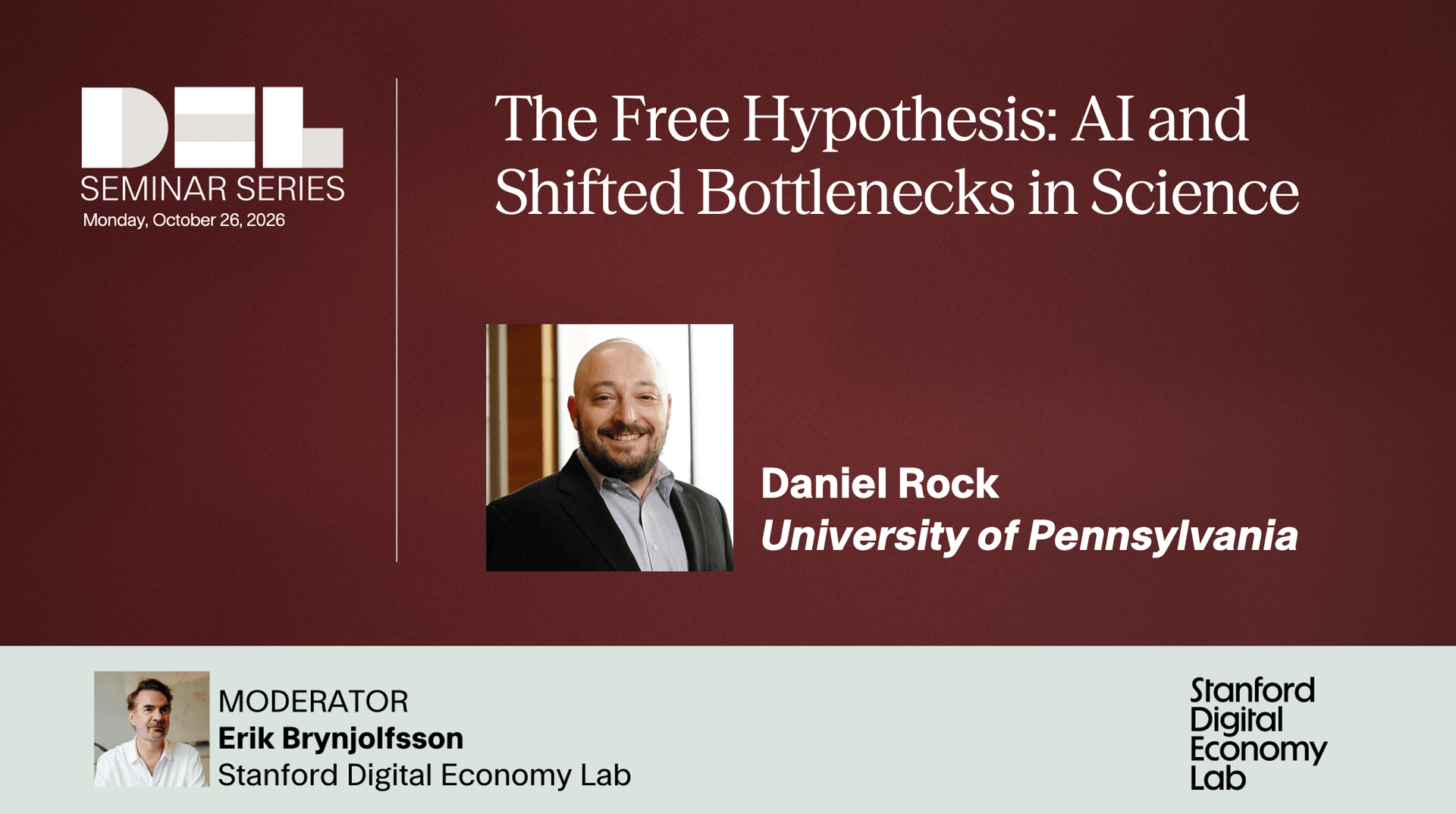
Scientific progress is a key driver of economic growth and prosperity. There is great excitement- but also concerns- about the impacts of AI on science, but so far little data. We provide early insights on this from three data sources: a sample of 15 million Gemini interactions, an inventory of over 2,600 specialized AI models across disciplines, and a survey of over 600 scientists.
The rapid acceleration of AI comes with a profound wave of anxiety. Across every sector of society, people are facing unsettling questions about their worth and their place in a shifting world.
The rapid acceleration of AI comes with a profound wave of anxiety. Across every sector of society, people are facing unsettling questions about their worth and their place in a shifting world.
Sessions run Wednesdays from 4:30–5:30 PM in CoDa E160. Each session features a different Stanford speaker; talk titles are announced by the organizers.
Sessions run Wednesdays from 4:30–5:30 PM in CoDa E160. Each session features a different Stanford speaker; talk titles are announced by the organizers.
Join us as we hear from Ted Chiang, American speculative fiction writer and author of Exhalation and “Story of Your Life,” the short story that was the basis of the 2016 film Arrival. Chiang's work has received four Nebula awards, four Hugo awards, the John W. Campbell Award for Best New Writer, and four Locus awards.
Presented by the Symbolic Systems Program. Co-sponsored by the English Department, Symbolic Systems Society, and Creative Writing Program.
_(cropped).jpg&w=3840&q=100)