The mission of the AI Index is to provide unbiased, rigorously vetted, and globally sourced data for policymakers, researchers, journalists, executives, and the general public to develop a deeper understanding of the complex field of AI. To achieve this, we track, collate, distill, and visualize data relating to artificial intelligence.
Get the latest news, advances in research, policy work, and education program updates from HAI in your inbox weekly.
Sign Up For Latest News

This year's Index reveals a widening gap between what AI can do and how prepared we are to manage it. While AI continues its rapid integration into the global economy – with technical capabilities improving, investment accelerating, and adoption spreading – the frameworks needed to govern, evaluate, and understand this technology are falling behind. In a field where data transparency is declining, independent, rigorous measurement has never been more critical. This report provides the most comprehensive analysis of AI's trajectory available.

At Stanford HAI, we believe AI is poised to be the most transformative technology of the 21st century. But its benefits won’t be evenly distributed unless we guide its development thoughtfully. The AI Index offers one of the most comprehensive, data-driven views of artificial intelligence. Recognized as a trusted resource by global media, governments, and leading companies, the AI Index equips policymakers, business leaders, and the public with rigorous, objective insights into AI’s technical progress, economic influence, and societal impact.
The AI Index is recognized globally as one of the most credible and authoritative sources for data and insights on artificial intelligence.
Previous editions have been cited in major newspapers, including the The New York Times, Bloomberg, and The Guardian, have amassed hundreds of academic citations, and been referenced by high-level policymakers in the United States, the United Kingdom, and the European Union, among other places. This year’s edition surpasses all previous ones in size, scale, and scope, reflecting the growing significance that AI is coming to hold in all of our lives.


(1).png&w=3840&q=75)



The AI Index program is an independent initiative at the Stanford HAI. The program is a collaborative effort led by the AI Index Steering Committee, an interdisciplinary group of experts from across academia and industry. See All People


We write about the progress and impact of artificial intelligence through a cross-sector lens, from research and development to technical performance, the economy, education, policy, and more.
As artificial intelligence increasingly influences our world, it becomes crucial to assess its technical progress and societal impact. This paper surveys problems and opportunities in the measurement of AI systems and their impact, based on a workshop held at Stanford University in the fall of 2019. We identify six summary challenges inherent to measuring the progress and impact of AI, and summarize over 40 presentations and associated discussions from the workshop. We hope this can inspire research agendas in this crucial area.
Read More
On a research project regarding the application of AI-relevant regulatory frameworks, the AI Index is collaborating with Dr. Elif Kiesow Cortez who founded and leads the AI & LegTech Lab of The Hague University of Applied Sciences. The project aims to improve predictability and legal certainty for providers and users of AI technology via a judicial decision database.
Read Bio
Stanford HAI relies on philanthropic support as it pursues its mission. Unrestricted gifts and pledges to support Stanford HAI, including AI Index, may be made online.
We welcome feedback and new ideas for our annual reports and the Global AI Vibrancy Tool at shahed@stanford.edu
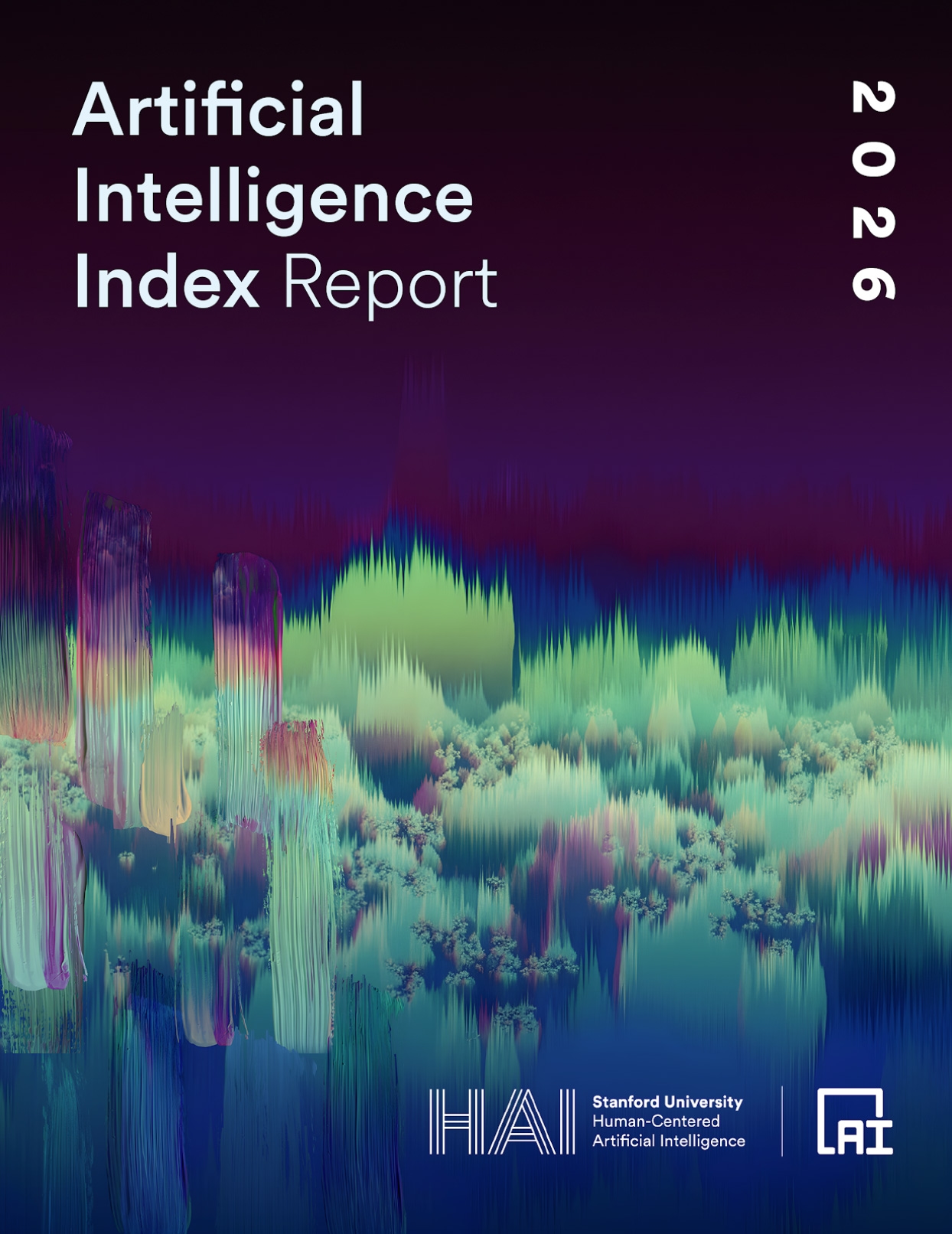
"If you’re following AI news, you’re probably getting whiplash. AI is a gold rush. AI is a bubble. AI is taking your job. AI can’t even read a clock. The 2026 AI Index from Stanford University’s Institute for Human-Centered Artificial Intelligence, AI’s annual report card, comes out today and cuts through some of that noise."

The annual report reveals a field hitting breakthrough capabilities while raising urgent questions about environmental costs, transparency, and who benefits from the technology.

Renowned leaders in AI, medicine, and ethics join interdisciplinary committee guiding the world’s leading resource on AI trends.
In this podcast, HAI Executive Director Russell Wald explores how universities, policymakers, and industry must collaborate to keep AI human-centered. Wald shares takeaways from the AI Index, explains how China is narrowing the performance gap, and outlines why academic institutions are vital to ethical AI leadership.
Sha Sajadieh, AI Index Lead, comments on HAI's 2026 AI Index findings.