eventWorkshop
Advancing Technology for a Sustainable Planet
The First Meeting of the IEEE Planet Positive 2030 Community: Advancing Technology for a Sustainable Planet
Get the latest news, advances in research, policy work, and education program updates from HAI in your inbox weekly.
Sign Up For Latest News
The First Meeting of the IEEE Planet Positive 2030 Community: Advancing Technology for a Sustainable Planet
AI is advancing rapidly at the cognitive tasks that make up knowledge work, raising fears among firms, policymakers, and, not least, workers of a “China shock” for white-collar jobs. Neil Thompson will present new research on whether those fears are warranted.
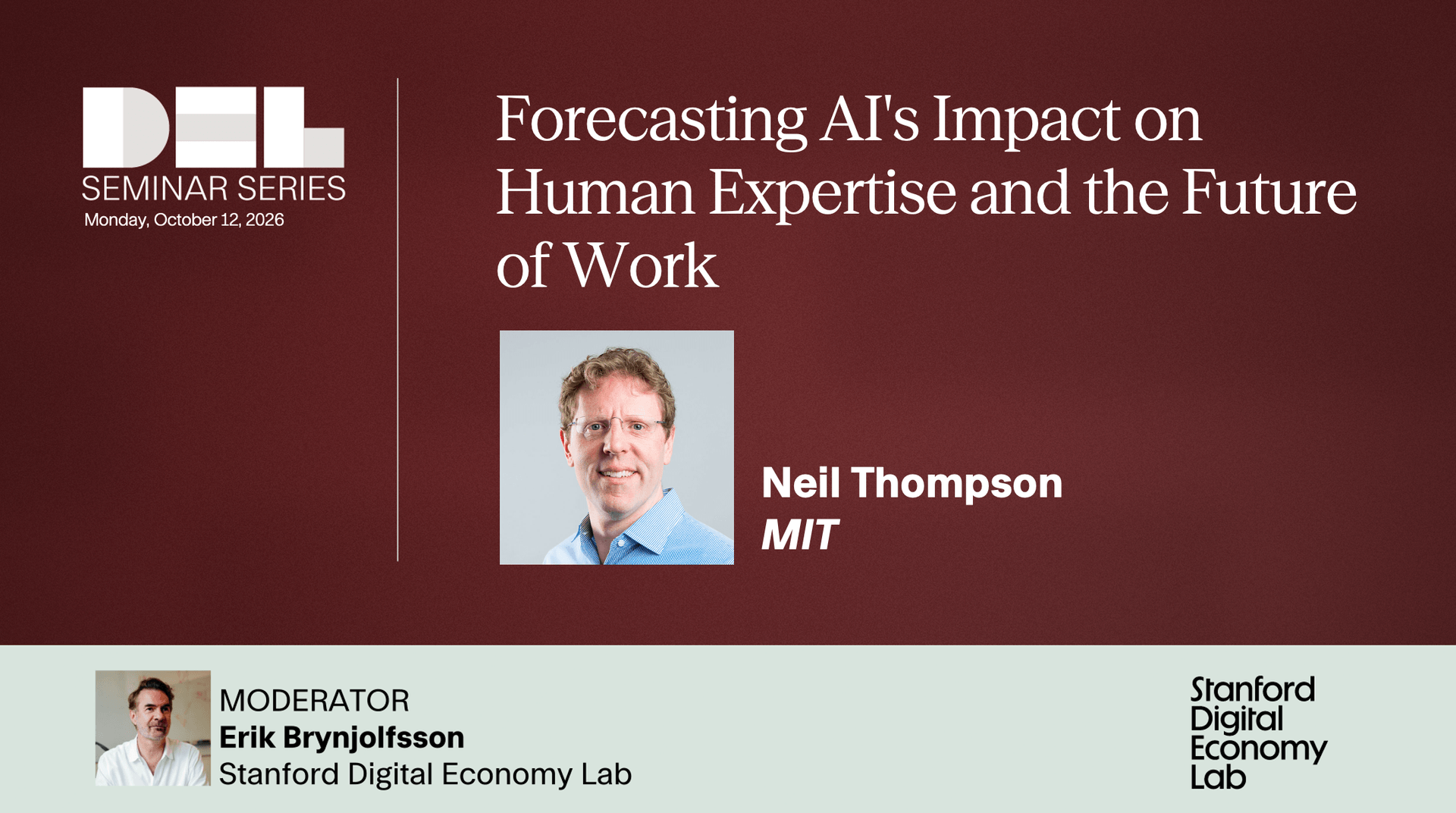
AI is advancing rapidly at the cognitive tasks that make up knowledge work, raising fears among firms, policymakers, and, not least, workers of a “China shock” for white-collar jobs. Neil Thompson will present new research on whether those fears are warranted.
Sessions run Wednesdays from 4:30–5:30 PM in CoDa E160. Each session features a different Stanford speaker; talk titles are announced by the organizers.

Sessions run Wednesdays from 4:30–5:30 PM in CoDa E160. Each session features a different Stanford speaker; talk titles are announced by the organizers.
Planet Positive 2030 is an initiative supported by IEEE SA.
The Workshop at StanfordAchieving a sustainable, net-zero-emissions future will require the acceleration of technology development and deployment. Measurable and meaningful ESG (environmental, social, and governance) metrics, together with other private and public-sector initiatives and policies, will help advance technology for sustainability.
Hosted by IEEE in partnership with the Stanford Institute for Human-Centered Artificial Intelligence and the Stanford Woods Institute for the Environment, this explored regulatory, policy, and financial frameworks critical to advancing technology which prioritizes people, planet, and purpose-driven progress. Keynotes and panels were followed by workshop writing sessions, led by the Planet Positive 2030 Community.
The writing sessions worked to progress a Compendium document, Strong Sustainability by Design, which will address various climate change issues with recommendations and practical approaches. If you would like to participate in the community and contribute to the work, please click here to learn how you can get involved. If you plan to attend this event virtually and would like to contribute to the writing sessions via zoom, you must sign up for a committee before July 18.
Panel TopicsClimate Change: Impacts, Adaptation, and Mitigation
Environmental AI Technology & ESG Regulations
The Value of an Equitable, Flourishing Planet
 John C. Havens
Sustainability Practice Lead, IEEE Standards Association; Staff Lead, Planet Positive 2030; Executive Director, The IEEE Global Initiative on Ethics of Autonomous and Intelligent Systems
 Vanessa Parli
Director of Research
 Kaci Peel
Events Manager
 Lea Rosenbohm
Associate Director of Policy and Engagement, Stanford Woods Institute for the Environment
No tweets available.