Get the latest news, advances in research, policy work, and education program updates from HAI in your inbox weekly.
Sign Up For Latest News
This talk will cover key insights from the third AI100 report, AI Goes Mainstream: The Scaling Era and the Rise of Generative AI, set for release in November 2026. The report was commissioned by the AI100 standing committee and led by study panel chair Michael Wooldridge.
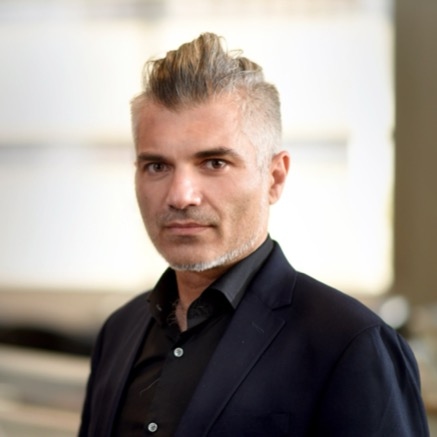
This talk will cover key insights from the third AI100 report, AI Goes Mainstream: The Scaling Era and the Rise of Generative AI, set for release in November 2026. The report was commissioned by the AI100 standing committee and led by study panel chair Michael Wooldridge.
Sessions run Wednesdays from 4:30–5:30 PM in CoDa E160. Each session features a different Stanford speaker; talk titles are announced by the organizers.

Sessions run Wednesdays from 4:30–5:30 PM in CoDa E160. Each session features a different Stanford speaker; talk titles are announced by the organizers.
This talk will explore the latest advances in computational protein design and structure prediction, highlighting NVIDIA technologies such as cuEquivariance and the Proteína family of models, including the latest RFdiffusion4 (RFD4)–Proteína developments. We will discuss how accelerated geometric deep learning and generative AI are enabling scalable, high-performance protein modeling and the design of novel proteins with tailored structures and functions.
Bio:
Youssef Nashed is a Senior Solutions Architect on NVIDIA's Healthcare and Life Sciences team. He joined NVIDIA from Bristol Myers Squibb (BMS), where he was a Senior Principal Scientist focused on machine learning and computational protein design. At BMS, Youssef led a team developing and deploying AI models for antibody discovery and development. He previously served as an Assistant Professor at Northwestern University and conducted research in structural biology at SLAC National Accelerator Laboratory at Stanford. Youssef began his career in high-performance and large-scale GPU computing at Argonne National Laboratory. His background spans computer science, mathematics, structural biology, and AI-driven protein engineering.
Location: CoDa W401
The Center for Decoding the Universe brings together researchers across scientific disciplines to answer the biggest questions about our Universe by leveraging complex data with the most advanced computational methods.
| Time | Session | Speaker(s) |
| 12:00 - 1:00 PM | Lunch & Discussion | |
| 1:00 - 1:15 PM | Center for Decoding the Universe Updates and Key Projects | Risa Wechsler, Susan Clark, Ben Nachman |
| 1:15 - 2:50 PM | Session 1: Forward Modeling the Universe | |
| 1:15 - 1:40 PM | Symmetry Breaking in Transformers for Efficient and Interpretable Training | Eva Silverstein |
| 1:40 - 2:05 PM | Rubin data preparation for multi-modal analysis | Adam Bolton |
| 2:05 - 2:15 PM | GraphGP: Scalable Gaussian Processes with Vecchia’s Approximation | Benjamin Dodge |
| 2:15 - 2:25 PM | Anomaly Detection in the Presence of Known Signals | Dennis Noll |
| 2:25 - 2:50 PM | Discussion | |
| 2:50 - 3:20 PM | Break | |
| 3:20 - 5:00 PM | Session 2: Agentically Discovering the Universe | |
| 3:20 - 3:45 PM | Infrastructure for agentic workflows | Tom Abel |
| 3:45 - 4:10 PM | Progress in agentic workflows | Jo Ciucǎ & Marcelo Alvarez |
| 4:10 - 4:20 PM | Terminal-Bench-Science: Evaluating AI Agents on Complex, Real-World Scientific Workflows in Terminal Environments | Steven Dillmann |
| 4:20 - 4:30 PM | Learning IRC-Safe Jet Clustering with Geometric Algebra Transformers | Gregor Krzmanc |
| 4:30 - 5:00 PM | Discussion | |
| 5:00 - 6:00 PM | Reception |