Get the latest news, advances in research, policy work, and education program updates from HAI in your inbox weekly.
Sign Up For Latest News
The next, maybe final, frontier of AI research is automating the process of knowledge discovery. By pointing AI first at itself and then at the R&D process of all scientific domains, we can far exceed where human-led research can take us. Richard Socher argues the current pace of scientific discovery has slowed significantly over the past several decades as the fields of science fragment and the number of researchers focused on any one continues to shrink.
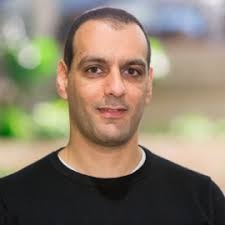
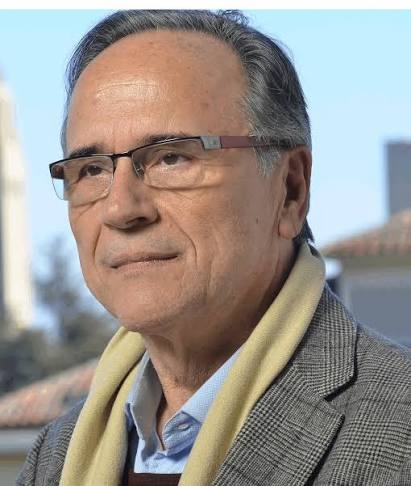
The next, maybe final, frontier of AI research is automating the process of knowledge discovery. By pointing AI first at itself and then at the R&D process of all scientific domains, we can far exceed where human-led research can take us. Richard Socher argues the current pace of scientific discovery has slowed significantly over the past several decades as the fields of science fragment and the number of researchers focused on any one continues to shrink.
This talk will explore the latest advances in computational protein design and structure prediction, highlighting NVIDIA technologies such as cuEquivariance and the Proteína family of models, including the latest RFdiffusion4 (RFD4)–Proteína developments. We will discuss how accelerated geometric deep learning and generative AI are enabling scalable, high-performance protein modeling and the design of novel proteins with tailored structures and functions.
Bio:
Youssef Nashed is a Senior Solutions Architect on NVIDIA's Healthcare and Life Sciences team. He joined NVIDIA from Bristol Myers Squibb (BMS), where he was a Senior Principal Scientist focused on machine learning and computational protein design. At BMS, Youssef led a team developing and deploying AI models for antibody discovery and development. He previously served as an Assistant Professor at Northwestern University and conducted research in structural biology at SLAC National Accelerator Laboratory at Stanford. Youssef began his career in high-performance and large-scale GPU computing at Argonne National Laboratory. His background spans computer science, mathematics, structural biology, and AI-driven protein engineering.
Location: CoDa W401
Sessions run Wednesdays from 4:30–5:30 PM in CoDa E160. Each session features a different Stanford speaker; talk titles are announced by the organizers.

Sessions run Wednesdays from 4:30–5:30 PM in CoDa E160. Each session features a different Stanford speaker; talk titles are announced by the organizers.
The 6th Annual CORES Symposium will focus on AI and Scientific Reproducibility, convening researchers, data scientists, and practitioners to explore how artificial intelligence can enhance the reliability, transparency, and efficiency of scientific research. This half-day event will feature keynote talks, technical presentations, and panel discussions that examine recent innovations in AI-driven reproducibility tools, agentic reproducibility systems, and benchmark frameworks; address key challenges in automating replication workflows; and discuss best practices for integrating AI into scientific pipelines in a trustworthy way.
Highlights include keynotes by Yiqing Xu, Ludwig Schmidt, and Steffen Bollman, and a panel on AI Trustworthiness featuring Sanmi Koyejo, Rob Reich, and Risa Wechsler, along with lightning talks showcasing ongoing work from Stanford scholars. We will also announce the winners of several prizes for Open Science, Open Source Software, and Data Sharing.
12:00pm-1:00pm | Registration and Light Lunch |
1:00pm-1:30pm | Opening Remarks: James Landay, Stanford Institute for Human-Centered AI, Faculty Director, & Russ Poldrack, CORES Faculty Director |
1:30pm- 2:00pm | Keynote: Yiqing Xu - Scaling Reproducibility: An AI-Assisted Workflow for Large-Scale Replication and Reanalysis |
2:00pm-2:30pm | Keynote: Steffen Bollmann - Automating Neuroimaging Workflows Using AI Coding Agents in the Neurodesk Environment |
2:30pm-3:00pm | Lightning Talks:
|
3:00pm-3:15pm | Break |
3:15pm-4:00pm | Is AI Trustworthy Enough? |
4:00pm-4:15pm | Robert Rosenkranz (Rosenkranz Foundation) - Better Quality Control for Science: AI Enhanced Peer Review |
4:15pm-4:45pm | Keynote: Ludwig Schmidt - Reproducibility in AI and AI for Reproducibility: ImageNetV2 and Terminal-Bench Science |
4:45pm-5:00pm | Awards Presented by Russ Poldrack |
5:00pm-6:00pm | Networking Reception |