Stanford
University
  • Stanford Home
  • Maps & Directions
  • Search Stanford
  • Emergency Info
  • Terms of Use
  • Privacy
  • Copyright
  • Trademarks
  • Non-Discrimination
  • Accessibility
© Stanford University.  Stanford, California 94305.
Eva Dyer: Towards robust representations of neural activity: Why do we need them and how do we build them | Stanford HAI
Navigate
  • About
  • Events
  • AI Glossary
  • Careers
  • Search
Participate
  • Get Involved
  • Support HAI
  • Contact Us

Stay Up To Date

Get the latest news, advances in research, policy work, and education program updates from HAI in your inbox weekly.

Sign Up For Latest News

Skip to content
  • About

    • About
    • People
    • Get Involved with HAI
    • Support HAI
    • Subscribe to Email
  • Research

    • Research
    • Marlowe (opens in new tab)
    • Research Programs
    • Grants
    • Student Affinity Groups
    • Centers & Labs
    • Research Publications
    • Research Partners
  • Education

    • Education
    • Executive and Professional Education
    • Government and Policymakers
    • K-12
    • Stanford Students
  • Policy

    • Policy
    • Policy Publications
    • Policymaker Education
    • Student Opportunities
  • AI Index

    • AI Index
    • AI Index Report
    • Global Vibrancy Tool
    • People
  • News
  • Events
  • Industry
  • Centers & Labs
Your browser does not support the video tag.
eventSeminar

Eva Dyer: Towards robust representations of neural activity: Why do we need them and how do we build them

Status
Past
Date
Tuesday, January 18, 2022 10:00 AM - 11:00 AM PST/PDT
Location
Stanford Neurosciences Building, Gunn Rotunda (E241) & via Zoom
Attend Virtually
Share
Link copied to clipboard!
Event Contact
neuroscience@stanford.edu
650-723-3573

Related Events

Alexandr Lenk & Arvind Karunakaran | Industry Conversation with Instacart
SeminarSep 23, 202612:00 PM - 1:15 PM
September
23
2026

This seminar pairs a case study of AI diffusion with an organizational approach to technological changes in the workplace.

Seminar

Alexandr Lenk & Arvind Karunakaran | Industry Conversation with Instacart

Sep 23, 202612:00 PM - 1:15 PM

This seminar pairs a case study of AI diffusion with an organizational approach to technological changes in the workplace.

Marlowe | AI + Data for Science with Stephen Baccus
SeminarSep 23, 2026
September
23
2026

Sessions run Wednesdays from 4:30–5:30 PM in CoDa E160. Each session features a different Stanford speaker; talk titles are announced by the organizers.

Event

Marlowe | AI + Data for Science with Stephen Baccus

Sep 23, 2026

Sessions run Wednesdays from 4:30–5:30 PM in CoDa E160. Each session features a different Stanford speaker; talk titles are announced by the organizers.

World Development Report 2026: The Promise of Artificial Intelligence
Sep 24, 20269:00 AM - 4:15 PM
September
24
2026
Event

World Development Report 2026: The Promise of Artificial Intelligence

Sep 24, 20269:00 AM - 4:15 PM

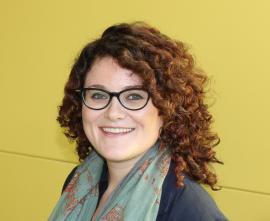
Dyer Headshot

Abstract

Understanding how neural circuits coordinate to drive behavior and decision making is a fundamental challenge in neuroscience. Unfortunately, finding a stable link between the brain and behavior has been difficult--even when behavior is consistent, neural activity can appear highly variable. In this talk, I will discuss ways that my lab is tackling this challenge to form more robust and interpretable readouts from neural circuits. The talk will focus on our recent efforts to use self-supervised learning (SSL) to decode and disentangle neural states. In SSL, invariances are achieved by encouraging “augmentations” (transformations) of the input to be mapped to similar points in the latent space. We demonstrate how this guiding principle can be used to model populations of neurons in diverse brain regions in both macaques and rodents, and disentangle different sources of information in the neural representation of movement. Our work shows that by establishing a more stable link between the brain and behavior, we can build better brain decoders and find common neural representations of behavior across individuals.

Bio

Eva L. Dyer is an Assistant Professor in the Department of Biomedical Engineering at the Georgia Institute of Technology. Dr. Dyer’s research cuts across machine learning and neuroscience to understand how neural activity can be linked to behavior and build biomarkers of disease. Dr. Dyer’s lab derives insights from the structure and function of the brain to design new artificial intelligence systems that can learn from fewer labels and adapt to changing inputs over time.