Stanford
University
  • Stanford Home
  • Maps & Directions
  • Search Stanford
  • Emergency Info
  • Terms of Use
  • Privacy
  • Copyright
  • Trademarks
  • Non-Discrimination
  • Accessibility
© Stanford University.  Stanford, California 94305.
HAI Weekly Seminar with Subutai Ahmad - Sparsity in the neocortex, and its implications for machine learning | Stanford HAI
Skip to content
  • About

    • About
    • People
    • Get Involved with HAI
    • Support HAI
    • Subscribe to Email
  • Research

    • Research
    • Fellowship Programs
    • Grants
    • Student Affinity Groups
    • Centers & Labs
    • Research Publications
    • Research Partners
  • Education

    • Education
    • Executive and Professional Education
    • Government and Policymakers
    • K-12
    • Stanford Students
  • Policy

    • Policy
    • Policy Publications
    • Policymaker Education
    • Student Opportunities
  • AI Index

    • AI Index
    • AI Index Report
    • Global Vibrancy Tool
    • People
  • News
  • Events
  • Industry
  • Centers & Labs
Navigate
  • About
  • Events
  • Careers
  • Search
Participate
  • Get Involved
  • Support HAI
  • Contact Us

Stay Up To Date

Get the latest news, advances in research, policy work, and education program updates from HAI in your inbox weekly.

Sign Up For Latest News

Your browser does not support the video tag.
eventSeminar

HAI Weekly Seminar with Subutai Ahmad - Sparsity in the neocortex, and its implications for machine learning

Status
Past
Date
Friday, January 10, 2020 11:00 AM - 12:00 PM PST/PDT

Most deep learning networks today rely on dense representations. This is in stark contrast to our brains which are extremely sparse.

Share
Link copied to clipboard!
Event Contact
rlsharma@stanford.edu

Related Events

Joel Becker | Reconciling Impressive AI Benchmark Performance with Limited Developer Productivity Impacts
Mar 16, 202612:00 PM - 1:00 PM
March
16
2026

AI coding agents now complete multi-hour coding benchmarks with roughly 50% reliability, yet a randomized trial found experienced open-source developers took about 19% longer when allowed frontier AI tools than when tools were disallowed...

Event

Joel Becker | Reconciling Impressive AI Benchmark Performance with Limited Developer Productivity Impacts

Mar 16, 202612:00 PM - 1:00 PM

AI coding agents now complete multi-hour coding benchmarks with roughly 50% reliability, yet a randomized trial found experienced open-source developers took about 19% longer when allowed frontier AI tools than when tools were disallowed...

Dan Iancu & Antonio Skillicorn | Interpretable Machine Learning and Mixed Datasets for Predicting Child Labor in Ghana’s Cocoa Sector
SeminarMar 18, 202612:00 PM - 1:15 PM
March
18
2026

Child labor remains prevalent in Ghana’s cocoa sector and is associated with adverse educational and health outcomes for children.

Seminar

Dan Iancu & Antonio Skillicorn | Interpretable Machine Learning and Mixed Datasets for Predicting Child Labor in Ghana’s Cocoa Sector

Mar 18, 202612:00 PM - 1:15 PM

Child labor remains prevalent in Ghana’s cocoa sector and is associated with adverse educational and health outcomes for children.

Caroline Meinhardt, Thomas Mullaney, Juan N. Pava, and Diyi Yang | How Can AI Support Language Digitization and Digital Inclusion?
SeminarApr 15, 202612:00 PM - 1:15 PM
April
15
2026

What does digital inclusion look like in the age of AI? Over 6,000 of the world’s 7,000-plus living languages remain digitally disadvantaged.

Seminar

Caroline Meinhardt, Thomas Mullaney, Juan N. Pava, and Diyi Yang | How Can AI Support Language Digitization and Digital Inclusion?

Apr 15, 202612:00 PM - 1:15 PM

What does digital inclusion look like in the age of AI? Over 6,000 of the world’s 7,000-plus living languages remain digitally disadvantaged.

In this talk, Subutai will first discuss what is known about the sparsity of activations and connectivity in the neocortex. He will also summarize new experimental data around active dendrites, branch-specific plasticity, and structural plasticity, each of which has surprising implications for how we think about sparsity. In the second half of the talk, Subutai will discuss how these insights from the brain can be applied to practical machine learning applications. He will show how sparse representations can give rise to improved robustness, continuous learning, powerful unsupervised learning rules, and improved computational efficiency.
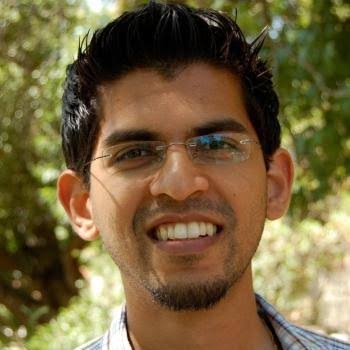
Subutai Ahmad