event
James Zou (Stanford)
Status
Past
Date
Wednesday, November 13, 2024 4:00 PM - 5:30 PM PST/PDT
Location
S360, Clark Center, 3rd floor, 318 Campus Drive, Stanford, CA 94305
Get the latest news, advances in research, policy work, and education program updates from HAI in your inbox weekly.
Sign Up For Latest News
This talk will cover key insights from the third AI100 report, AI Goes Mainstream: The Scaling Era and the Rise of Generative AI, set for release in November 2026. The report was commissioned by the AI100 standing committee and led by study panel chair Michael Wooldridge.
This talk will cover key insights from the third AI100 report, AI Goes Mainstream: The Scaling Era and the Rise of Generative AI, set for release in November 2026. The report was commissioned by the AI100 standing committee and led by study panel chair Michael Wooldridge.
Sessions run Wednesdays from 4:30–5:30 PM in CoDa E160. Each session features a different Stanford speaker; talk titles are announced by the organizers.
Sessions run Wednesdays from 4:30–5:30 PM in CoDa E160. Each session features a different Stanford speaker; talk titles are announced by the organizers.
This talk will explore the latest advances in computational protein design and structure prediction, highlighting NVIDIA technologies such as cuEquivariance and the Proteína family of models, including the latest RFdiffusion4 (RFD4)–Proteína developments. We will discuss how accelerated geometric deep learning and generative AI are enabling scalable, high-performance protein modeling and the design of novel proteins with tailored structures and functions.
Bio:
Youssef Nashed is a Senior Solutions Architect on NVIDIA's Healthcare and Life Sciences team. He joined NVIDIA from Bristol Myers Squibb (BMS), where he was a Senior Principal Scientist focused on machine learning and computational protein design. At BMS, Youssef led a team developing and deploying AI models for antibody discovery and development. He previously served as an Assistant Professor at Northwestern University and conducted research in structural biology at SLAC National Accelerator Laboratory at Stanford. Youssef began his career in high-performance and large-scale GPU computing at Argonne National Laboratory. His background spans computer science, mathematics, structural biology, and AI-driven protein engineering.
Location: CoDa W401
This talk will explore the latest advances in computational protein design and structure prediction, highlighting NVIDIA technologies such as cuEquivariance and the Proteína family of models, including the latest RFdiffusion4 (RFD4)–Proteína developments. We will discuss how accelerated geometric deep learning and generative AI are enabling scalable, high-performance protein modeling and the design of novel proteins with tailored structures and functions.
Bio:
Youssef Nashed is a Senior Solutions Architect on NVIDIA's Healthcare and Life Sciences team. He joined NVIDIA from Bristol Myers Squibb (BMS), where he was a Senior Principal Scientist focused on machine learning and computational protein design. At BMS, Youssef led a team developing and deploying AI models for antibody discovery and development. He previously served as an Assistant Professor at Northwestern University and conducted research in structural biology at SLAC National Accelerator Laboratory at Stanford. Youssef began his career in high-performance and large-scale GPU computing at Argonne National Laboratory. His background spans computer science, mathematics, structural biology, and AI-driven protein engineering.
Location: CoDa W401
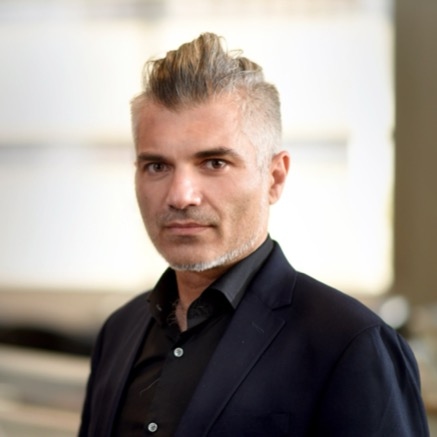
This talk will explore how generative AI agents can enable scientific discoveries through three interconnected vignettes. First, James Zou will discuss how generative AI can expand researchers' creativity by designing and experimentally validating new small-molecule drugs. Next, he'll introduce the Virtual Lab—a collaborative team of AI agents conducting in silico research meetings, supported by real-world experiments, to design new nanobodies. Finally, Zou will investigate how language model agents can provide constructive feedback on research projects and peer reviews.
James Zou is an associate professor of Biomedical Data Science and, by courtesy, of CS and EE at Stanford University. He works on advancing the foundations of ML and in-depth scientific and clinical applications. Many of his innovations are widely used in tech and biotech industries. He has received a Sloan Fellowship, an NSF CAREER Award, two Chan-Zuckerberg Investigator Awards, a Top Ten Clinical Achievement Award, several best paper awards, and faculty awards from Google, Amazon, and Adobe. His research has also been profiled in popular press including the NY Times, WSJ, and WIRED.
About the Seminar Series
The last few years have seen a substantial increase in the reported success of machine learning (ML), and generative artificial intelligence (AI). These impact practices in delivering services from financial institutions to entertainment and medicine. However scientific research also increasingly relies on large data sets, whose analysis leverages ML/AI. This seminar series aims to investigate if and how the paradigm for scientific research has changed or should change to incorporate these new tools and the possibilities they open.
A diverse group of scholars engaged in scientific research, method development, and historical and epistemological investigations will give a 50-minute presentation, followed by discussion.
The event is open to all. Stanford students and postdocs have the opportunity to engage more directly with speakers and topics by enrolling in the Canvas course here.