Get the latest news, advances in research, policy work, and education program updates from HAI in your inbox weekly.
Sign Up For Latest News
This talk will cover key insights from the third AI100 report, AI Goes Mainstream: The Scaling Era and the Rise of Generative AI, set for release in November 2026. The report was commissioned by the AI100 standing committee and led by study panel chair Michael Wooldridge.
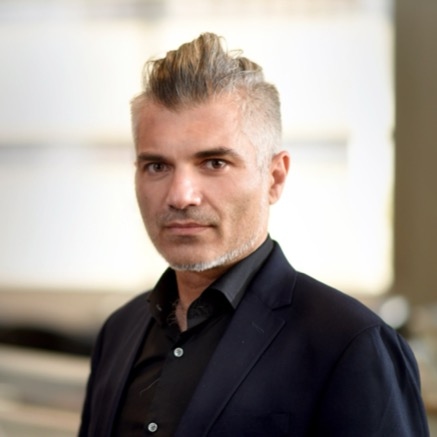
This talk will cover key insights from the third AI100 report, AI Goes Mainstream: The Scaling Era and the Rise of Generative AI, set for release in November 2026. The report was commissioned by the AI100 standing committee and led by study panel chair Michael Wooldridge.
Sessions run Wednesdays from 4:30–5:30 PM in CoDa E160. Each session features a different Stanford speaker; talk titles are announced by the organizers.

Sessions run Wednesdays from 4:30–5:30 PM in CoDa E160. Each session features a different Stanford speaker; talk titles are announced by the organizers.
This talk will explore the latest advances in computational protein design and structure prediction, highlighting NVIDIA technologies such as cuEquivariance and the Proteína family of models, including the latest RFdiffusion4 (RFD4)–Proteína developments. We will discuss how accelerated geometric deep learning and generative AI are enabling scalable, high-performance protein modeling and the design of novel proteins with tailored structures and functions.
Bio:
Youssef Nashed is a Senior Solutions Architect on NVIDIA's Healthcare and Life Sciences team. He joined NVIDIA from Bristol Myers Squibb (BMS), where he was a Senior Principal Scientist focused on machine learning and computational protein design. At BMS, Youssef led a team developing and deploying AI models for antibody discovery and development. He previously served as an Assistant Professor at Northwestern University and conducted research in structural biology at SLAC National Accelerator Laboratory at Stanford. Youssef began his career in high-performance and large-scale GPU computing at Argonne National Laboratory. His background spans computer science, mathematics, structural biology, and AI-driven protein engineering.
Location: CoDa W401
We're pleased to invite you to the inaugural data science for sustainability series event! This session is a Lunch & Learn on Data Fusion for Sustainability, an informal gathering to discuss methodologies for combining heterogeneous data sources and their applications to sustainability challenges. Please register here!
This session will cover:
Current data fusion techniques and emerging approaches
Case studies: remote sensing + ground truth validation, ML + physics-based models, multi-sensor integration
Applications across climate, energy, agriculture, and conservation research
Opportunities for cross-disciplinary collaboration
Why this matters: Many of us work with incomplete datasets or face challenges in model validation. This session will explore how data fusion approaches are addressing these gaps and may offer relevant methods for your own research.
Event details:
Date: January 22, 2026
Time: 12:00 - 1:30 pm
Location: E365 Conference Room, CoDa Building
Lunch provided!