Stanford
University
  • Stanford Home
  • Maps & Directions
  • Search Stanford
  • Emergency Info
  • Terms of Use
  • Privacy
  • Copyright
  • Trademarks
  • Non-Discrimination
  • Accessibility
© Stanford University.  Stanford, California 94305.
Marlowe GPU Computing Foundations: Architecture, Applications, and Acceleration | Stanford HAI
Navigate
  • About
  • Events
  • AI Glossary
  • Careers
  • Search
Participate
  • Get Involved
  • Support HAI
  • Contact Us

Stay Up To Date

Get the latest news, advances in research, policy work, and education program updates from HAI in your inbox weekly.

Sign Up For Latest News

Skip to content
  • About

    • About
    • People
    • Get Involved with HAI
    • Support HAI
    • Subscribe to Email
  • Research

    • Research
    • Research Programs
    • Grants
    • Marlowe (opens in new tab)
    • Student Affinity Groups
    • Centers & Labs
    • Research Publications
    • Research Partners
  • Education

    • Education
    • Executive and Professional Education
    • Government and Policymakers
    • K-12
    • Stanford Students
  • Policy

    • Policy
    • Policy Publications
    • Policymaker Education
    • Student Opportunities
  • AI Index

    • AI Index
    • AI Index Report
    • Global Vibrancy Tool
    • People
  • News
  • Events
  • Industry
  • Centers & Labs
Your browser does not support the video tag.
eventWorkshop

Marlowe GPU Computing Foundations: Architecture, Applications, and Acceleration

Status
Past
Date
Wednesday, April 23, 2025 2:00 PM - 3:30 PM PST/PDT
Location
Computing and Data Science (CoDa), 389 Jane Stanford Way, Rm E401, 4th Floor, Stanford, CA 94305
Attend Virtually
Share
Link copied to clipboard!
Event Contact
datascience@stanford.edu

Related Events

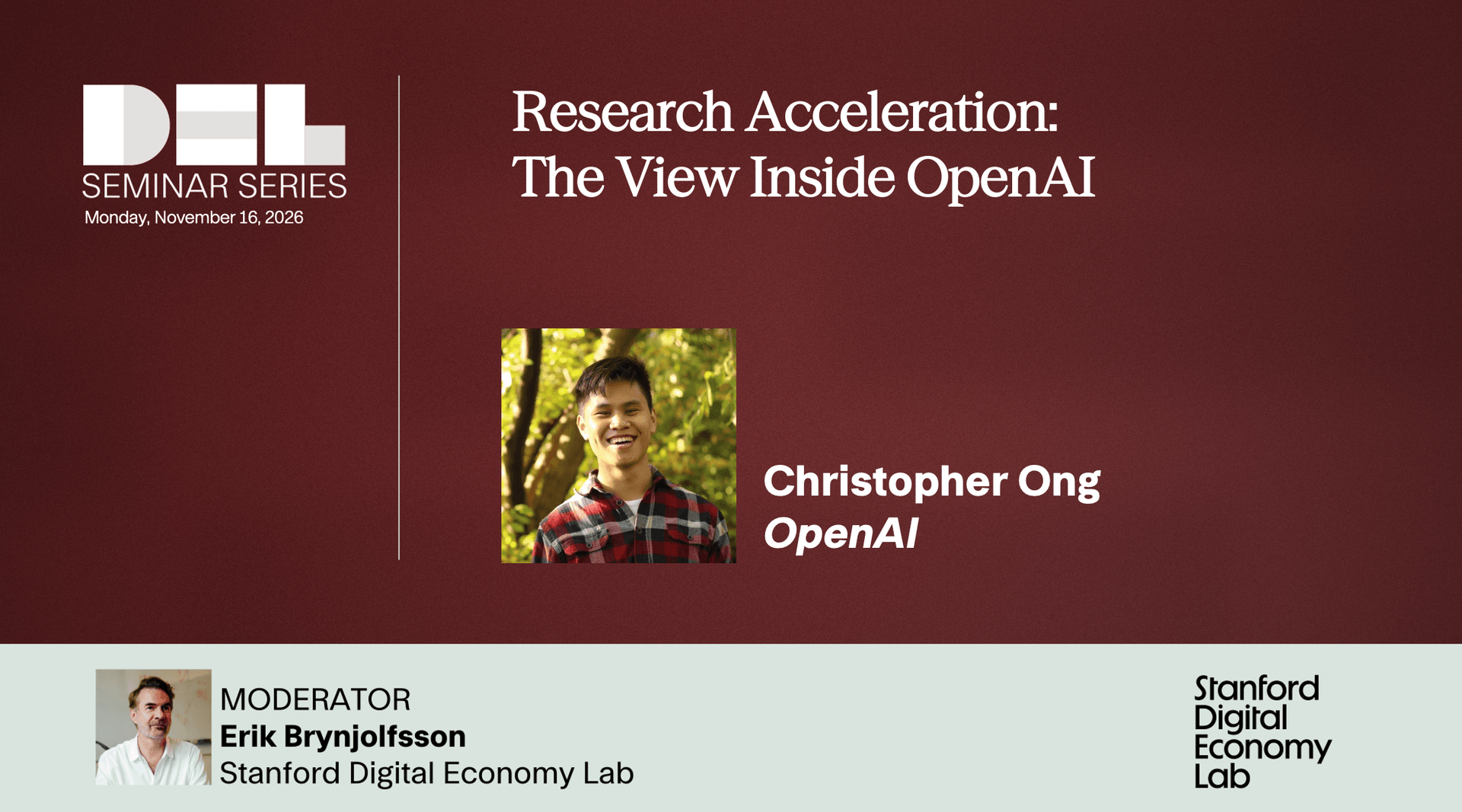
Christopher Ong | Research Acceleration: The View Inside OpenAI
Nov 16, 202612:00 PM - 1:00 PM
November
16
2026

In the last year, AI models have rapidly improved on public benchmarks measuring their ability to carry out research tasks autonomously. Such performance suggests that models may be capable of automating parts of the AI R&D process itself, thereby accelerating the pace of AI progress.

Event
Christopher Ong | Research Acceleration: The View Inside OpenAI

Nov 16, 202612:00 PM - 1:00 PM

In the last year, AI models have rapidly improved on public benchmarks measuring their ability to carry out research tasks autonomously. Such performance suggests that models may be capable of automating parts of the AI R&D process itself, thereby accelerating the pace of AI progress.
AI100 | AI Goes Mainstream: The Scaling Era and the Rise of Generative AI
SeminarNov 18, 202612:00 PM - 1:15 PM
November
18
2026

This talk will cover key insights from the third AI100 report, AI Goes Mainstream: The Scaling Era and the Rise of Generative AI, set for release in November 2026. The report was commissioned by the AI100 standing committee and led by study panel chair Michael Wooldridge.

Seminar

AI100 | AI Goes Mainstream: The Scaling Era and the Rise of Generative AI

Nov 18, 202612:00 PM - 1:15 PM

This talk will cover key insights from the third AI100 report, AI Goes Mainstream: The Scaling Era and the Rise of Generative AI, set for release in November 2026. The report was commissioned by the AI100 standing committee and led by study panel chair Michael Wooldridge.

Marlowe | AI + Data for Science with Andreas Tolias
SeminarNov 18, 20264:30 PM - 5:30 PM
November
18
2026

Sessions run Wednesdays from 4:30–5:30 PM in CoDa E160. Each session features a different Stanford speaker; talk titles are announced by the organizers.

Event

Marlowe | AI + Data for Science with Andreas Tolias

Nov 18, 20264:30 PM - 5:30 PM

Sessions run Wednesdays from 4:30–5:30 PM in CoDa E160. Each session features a different Stanford speaker; talk titles are announced by the organizers.

GPU Computing Foundations: Architecture, Applications, and Acceleration

Abstract: This session covers the foundational knowledge of GPUs, including their architecture, functionality, and applications in computing. It provides an introduction to GPU computing through the lens of the Marlowe SuperPod and prepares learners for advanced topics such as GPU-accelerated data science and machine learning. 

Speaker: Zoe Ryan is a Solutions Architect at NVIDIA, working on the Higher Education and Research team. She works with researchers to GPU accelerate their numerical computing codes, build out robotic simulations, and optimize their code for large scale runs. She spends one day a week on the Stanford campus, find her on Slack to talk about your own research!

About the NVIDIA GPU Computing Workshop Series 

We are excited to announce a series of NVIDIA-led workshops designed to enhance your expertise in GPU computing. Whether you're a beginner or looking to deepen your skills, these sessions offer valuable insights and hands-on learning opportunities. Workshops are expected to be held on a monthly basis.  

NOTE: This event is open to Stanford and NVIDIA affiliates only.