This lecture was recorded and is now live on our YouTube channel
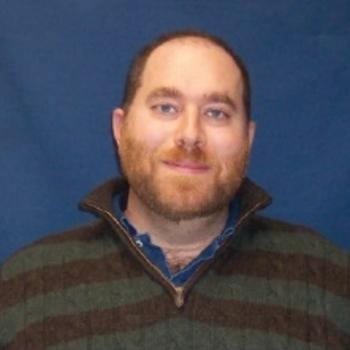
Stanford Data Science is pleased to host our Winter Distinguished Lecture on February 5th, 2025. Our speaker is Tom Griffiths, Henry R. Luce Professor of Information Technology, Consciousness and Culture in the Departments of Psychology and Computer Science at Princeton University.
Tom Griffiths' talk is titled: Using machine learning and psychology to predict and understand human decisions
We welcome you to join us at 6:30pm for a dinner reception and an opportunity to engage with others in the Stanford Data Science community, followed by the lecture at 7:30pm.
Abstract
Machine learning methods provide increasingly powerful tools for generating predictions about human behavior. However, simply using off the shelf methods to generate predictions potentially misses opportunities to benefit from and contribute to the psychological literature. In this talk, Professor Griffiths will discuss three ways in which theory and data can interact through machine learning: using theories to pretrain machine learning models; using theories to constrain machine learning models; and using unconstrained machine learning models to critique explanatory theories. He will illustrate these cases with examples from the study of human decision-making, discussing risky choice, moral judgments, behavioral game theory, and open-ended decision-making, and also highlight some recent work using large language models to predict human decisions.
Tom Griffiths is the Henry R. Luce Professor of Information Technology, Consciousness and Culture in the Departments of Psychology and Computer Science at Princeton University. His research explores connections between human and machine learning, using ideas from statistics and artificial intelligence to understand how people solve the challenging computational problems they encounter in everyday life. Tom completed his PhD in Psychology at Stanford in 2005, and taught at Brown University and the University of California, Berkeley before moving to Princeton. He has received awards for his research from organizations ranging from the American Psychological Association to the National Academy of Sciences and is a co-author of the book Algorithms to Live By, introducing ideas from computer science and cognitive science to a general audience.
About the Seminar Series
The last few years have seen a substantial increase in the reported success of machine learning (ML), and generative artificial intelligence (AI). These impact practices in delivering services from financial institutions to entertainment and medicine. However scientific research also increasingly relies on large data sets, whose analysis leverages ML/AI. This seminar series aims to investigate if and how the paradigm for scientific research has changed or should change to incorporate these new tools and the possibilities they open.
The event is open to all. Stanford students and postdocs have the opportunity to engage more directly with speakers and topics by enrolling in the Canvas course here.
About the Distinguished Lectures
Stanford Data Science brings world-class researchers to campus every quarter in our Distinguished Lecture series. These speakers build and apply modern data science, machine learning, and artificial intelligence techniques and tools to accelerate data-driven discoveries across all fields. Lectures are free for the whole community and include an informal reception beforehand. Spend an evening with creative thought leaders on the Stanford campus. Past lecture recordings are available on our YouTube channel