Get the latest news, advances in research, policy work, and education program updates from HAI in your inbox weekly.
Sign Up For Latest News
The TEP fellowship also provides 20-25 Stanford undergraduate students the opportunity to engage in the technology field as it intersects with public policy and social impact.
Learn more at the Tech Ethics and Policy Fellowship for Undergraduate Students webpage

For more information, contact hai-policy@stanford.edu.

HAI and the McCoy Family Center for Ethics in Society are offering a 10 week fellowship for Stanford undergraduate and graduate students to engage in the technology ethics and policy field as it intersects with public policy and social impact.
HAI manages the graduate track of this fellowship open to current Stanford graduate students and co-terms only. Please visit the Tech Ethics and Policy Summer Fellowships for Undergraduate Students, if you are looking for undergraduate student summer opportunities.
Submit your application
Learn more about the program at our Info Sessions!
Session 1: 11/05, 12:00-1:00 PM (Crown 320F) FREE PIZZA
RSVP to Session 1
Session 2: 11/19, 3:00-4:00 PM (Gates 403) FREE BOBA
RSVP to Session 2
The policy ecosystem lacks the technical expertise needed to make informed decisions on AI policy. As AI continues to increase in importance and impact, the need for technical talent in government is becoming more urgent. Meanwhile, Stanford is host to thousands of qualified graduate students studying technical fields such as computer science, electrical engineering, data science, symbolic systems, and more.
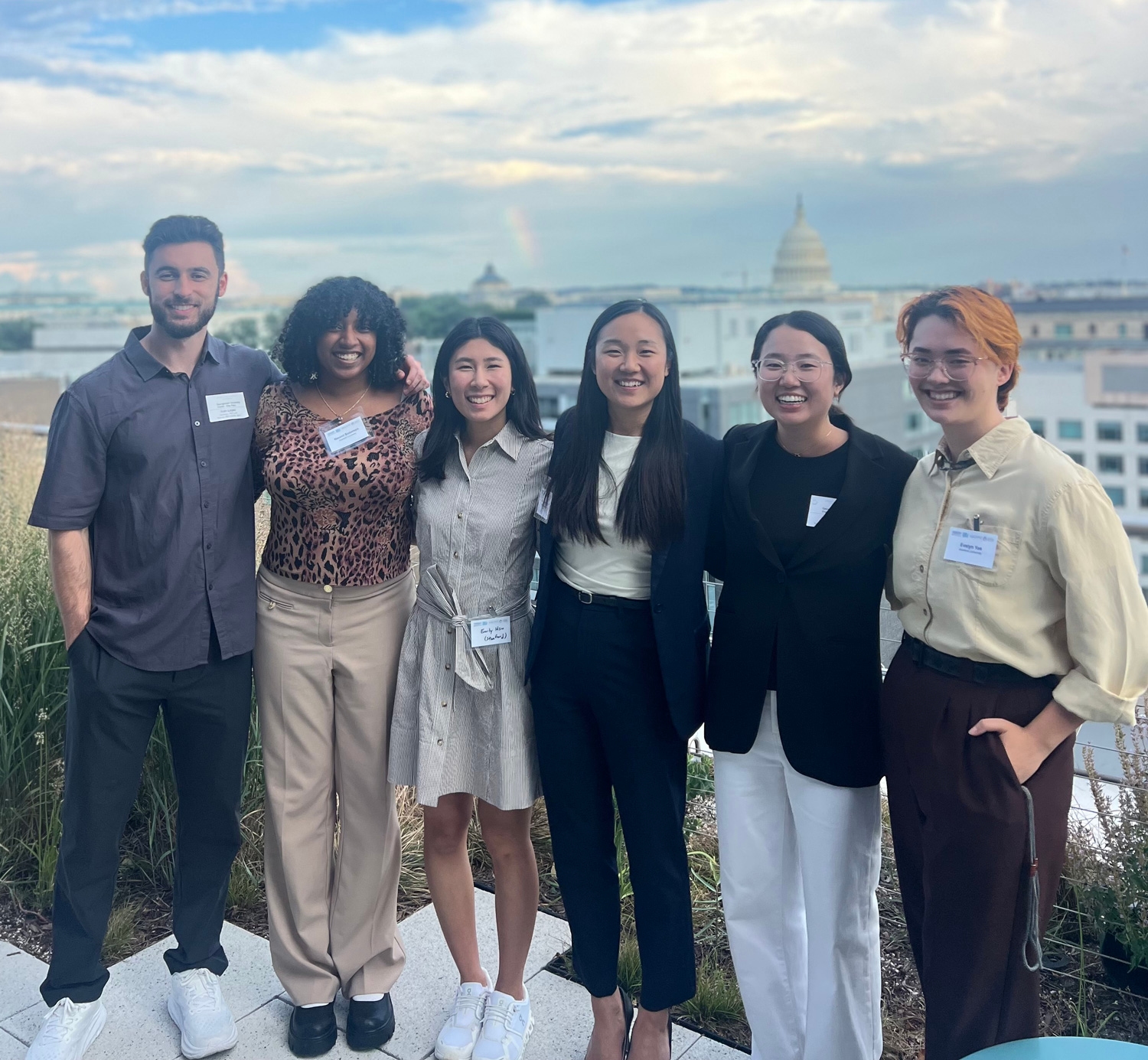
To fill this gap, HAI funds a cohort of Stanford students in fellowship positions in government and civil society. In past years, fellows have worked in Washington, DC, serving in Congress, think tanks, and federal agencies. This year, we are expanding the program to include California, with new opportunities in Sacramento and the Bay Area at government agencies and civil society organizations.
These fellowships are made possible in part by Frank McCourt in association with Stanford’s partnership with the Project Liberty’s Institute.
Through this experience, fellows will:
Gain a better understanding of the tech policy community and how ideas become law
Strengthen their written and oral communication skills
Explore new public service career opportunities in all branches of California and federal governments, civil society organizations, and think tanks
Build lifelong relationships with Stanford colleagues and tech policy professionals
Apply their technical skills to ensure technology policy is developed from a human-centered approach
Selected fellows are required to participate in our spring quarter seminar on Friday afternoons. After the seminar concludes, fellows will begin their summer placements.
Start and End Date: Fellows must begin their placements close to Monday, June 15, 2026 and end on Friday, August 21, 2026.
Duration: Fellows are required to work full-time (at least 35 hours per week) for ten consecutive weeks.
Location: Fellows must work on-site at their host organizations in Washington, D.C. or California — generally hybrid or fully virtual experiences are not allowed.
Spring Quarter
Enroll in Spring Fellowship Seminar: ETHICSOC 85/ ETHICSOC 285 Introduction to Tech Ethics and Policy Career Pathways (Time and Date TBD)
Summer
Work at placement organization in Washington, D.C. or California
Meet with policy mentors to help you navigate careers in public service.
Attend summer cohort programming (such as field trips, roundtables, and dinners).
Submit a program evaluation at the end of the fellowship.
Fall Quarter
Attend closing event.
Participate in outreach activities to share experiences and help publicize the program.
We are looking for Stanford graduate students (including co-term students) who have completed at least one computer science or symbolic systems course (with a preference for multiple courses), or multiple courses in the School of Engineering.
All applicants should be interested in gaining tech policy experience in D.C. or California, but previous work in a policy role is not required. Students must have a graduation date no earlier than Spring 2026 to be considered. Please note that we do have a strong preference for students who will be continuing their studies at Stanford during the 2026-2027 academic year and will take that into account when making admissions decisions.
International students on an F-1 visa with pre-completion OPT or CPT work authorizations are eligible to apply, but in those cases fellowship placements will be limited to non-governmental organizations. Some opportunities in California state or local government may also be open to international students.
A $10,000 summer stipend.
Modest financial assistance with summer housing and expenses associated with travel to placement cities.
All fellows will receive mentorship in technology policy, and monthly cohort programming (such as field trips, roundtables, and dinners).
November 1, 2025: Applications Open
December 1, 2025: Round 1 Application Due
January 12, 2025: Round 2 Application Due (note: we recommend applying in round 1 as we will prioritize applications in that round)
April 3 - May 29, 2026: Spring quarter seminar
June 15, 2026 - August 21, 2026: Summer Fellowship