Stanford
University
  • Stanford Home
  • Maps & Directions
  • Search Stanford
  • Emergency Info
  • Terms of Use
  • Privacy
  • Copyright
  • Trademarks
  • Non-Discrimination
  • Accessibility
© Stanford University.  Stanford, California 94305.
Technical AI Ethics | The 2022 AI Index Report | Stanford HAI
Skip to content
  • About

    • About
    • People
    • Get Involved with HAI
    • Support HAI
    • Subscribe to Email
  • Research

    • Research
    • Fellowship Programs
    • Grants
    • Student Affinity Groups
    • Centers & Labs
    • Research Publications
    • Research Partners
  • Education

    • Education
    • Executive and Professional Education
    • Government and Policymakers
    • K-12
    • Stanford Students
  • Policy

    • Policy
    • Policy Publications
    • Policymaker Education
    • Student Opportunities
  • AI Index

    • AI Index
    • AI Index Report
    • Global Vibrancy Tool
    • People
  • News
  • Events
  • Industry
  • Centers & Labs
Navigate
  • About
  • Events
  • Careers
  • Search
Participate
  • Get Involved
  • Support HAI
  • Contact Us

Stay Up To Date

Get the latest news, advances in research, policy work, and education program updates from HAI in your inbox weekly.

Sign Up For Latest News

03

Technical AI Ethics

In recent years, AI systems have started to be deployed into the world, and researchers and practitioners are reckoning with their real-world harms. Some of these harms include commercial facial recognition systems that discriminate based on race, résumé screening systems that discriminate on gender, and AI-powered clinical health tools that are biased along socioeconomic and racial lines. This year, the AI Index highlights metrics which have been adopted by the community for reporting progress in eliminating bias and promoting fairness. Tracking performance on these metrics alongside technical capabilities provides a more comprehensive perspective on how fairness and bias change as systems improve, which will be important to understand as systems are increasingly deployed.

Download Full Chapter
See Chapter 4

All Chapters

  • Back to Overview
  • 01Research and Development
  • 02Technical Performance
  • 03Technical AI Ethics
  • 04The Economy and Education
  • 05AI Policy and Governance

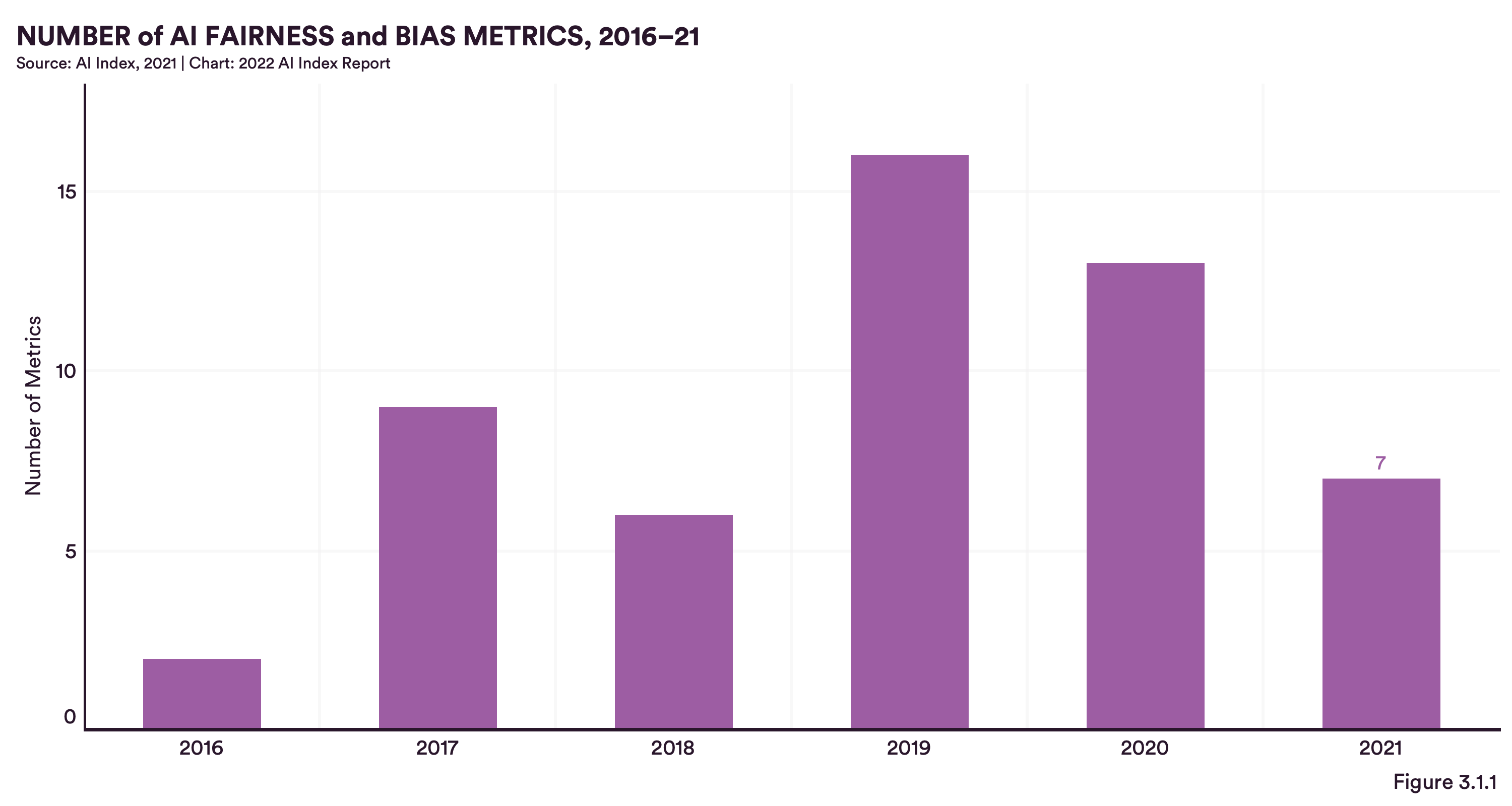
Number of AI fairness and bias metrics, 2016-21

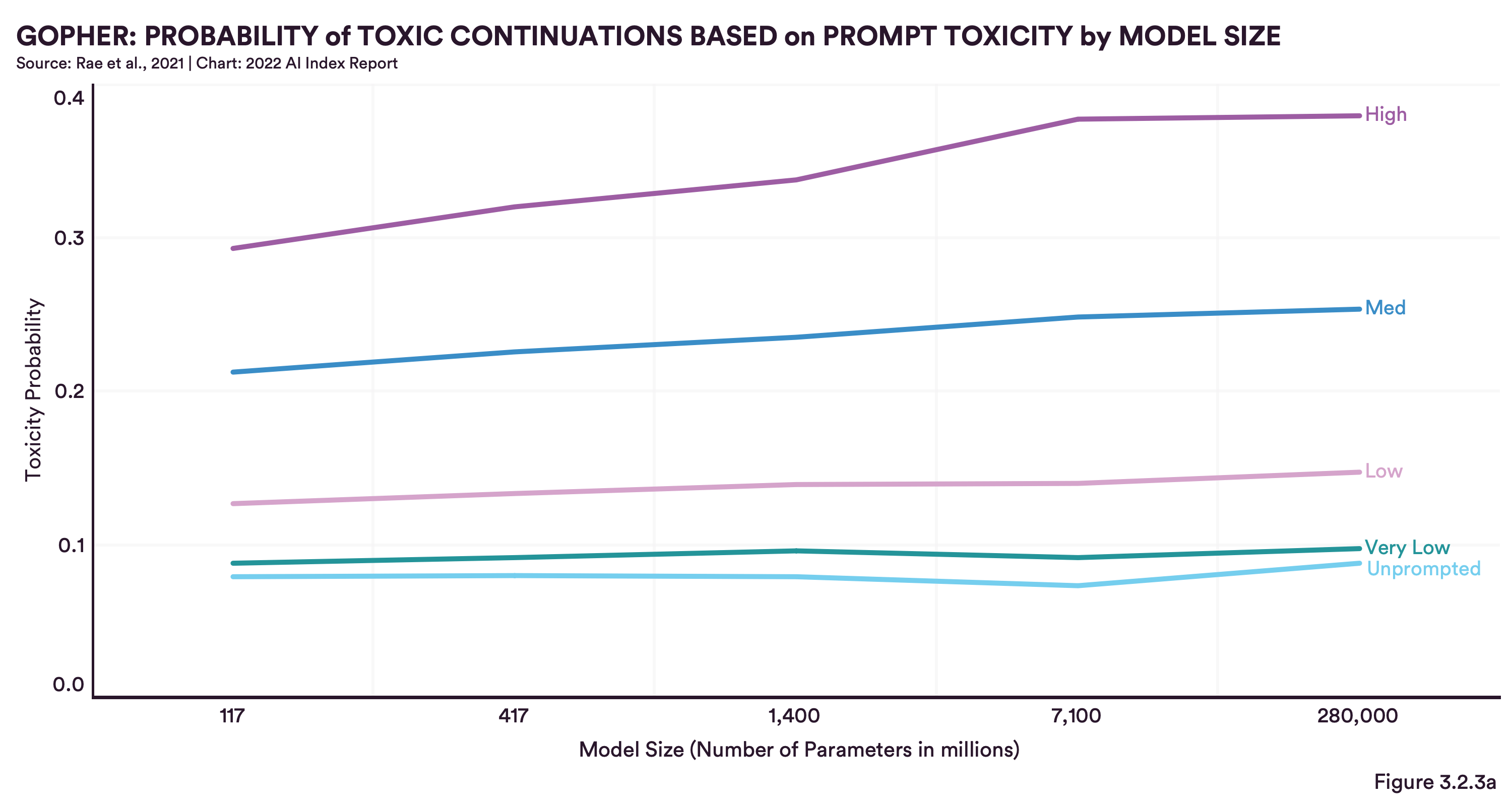
GOPHER: probability of toxic continuations based on prompt toxicity by model size
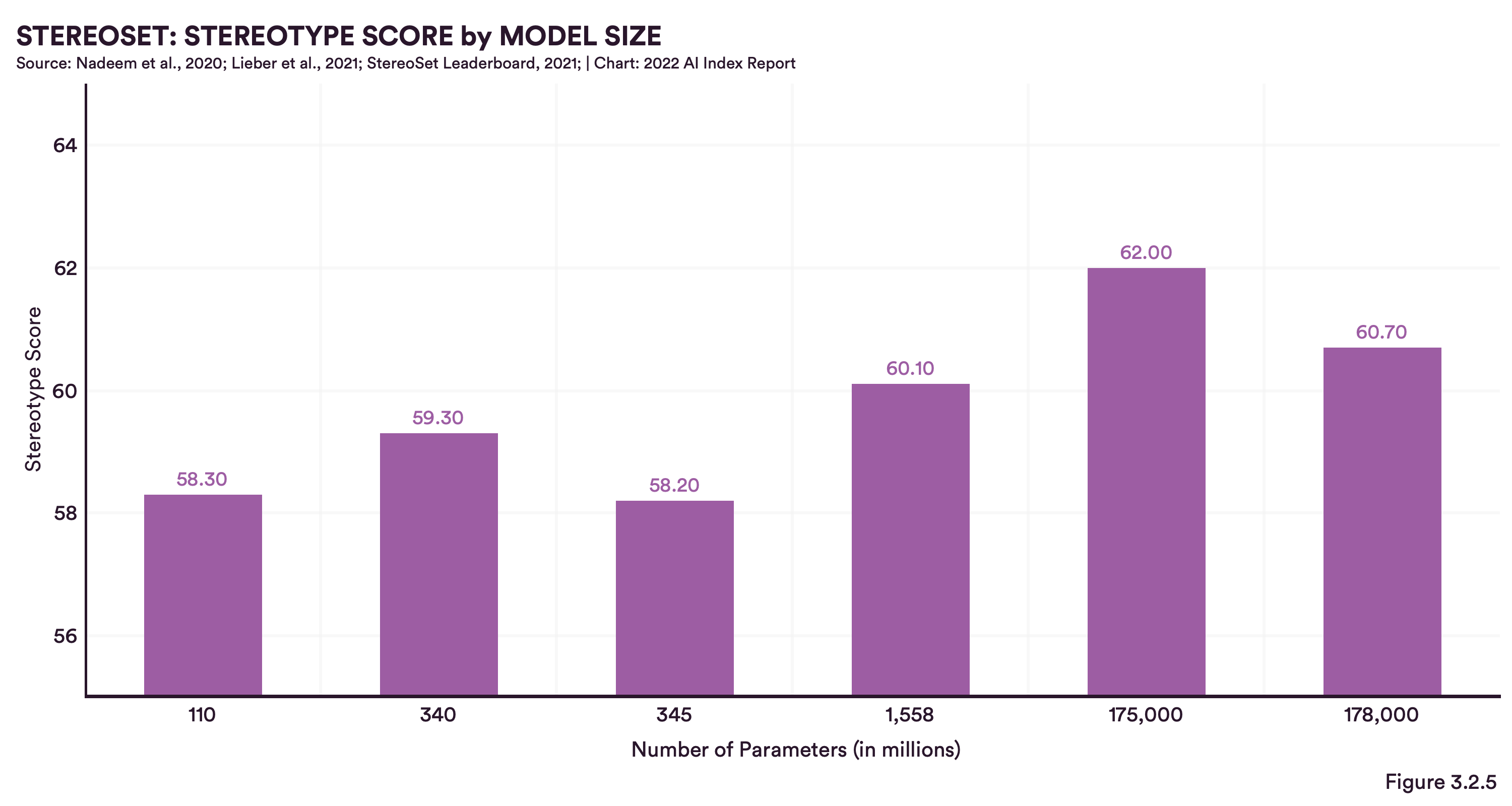
Stereoset: Stereotype score by model size
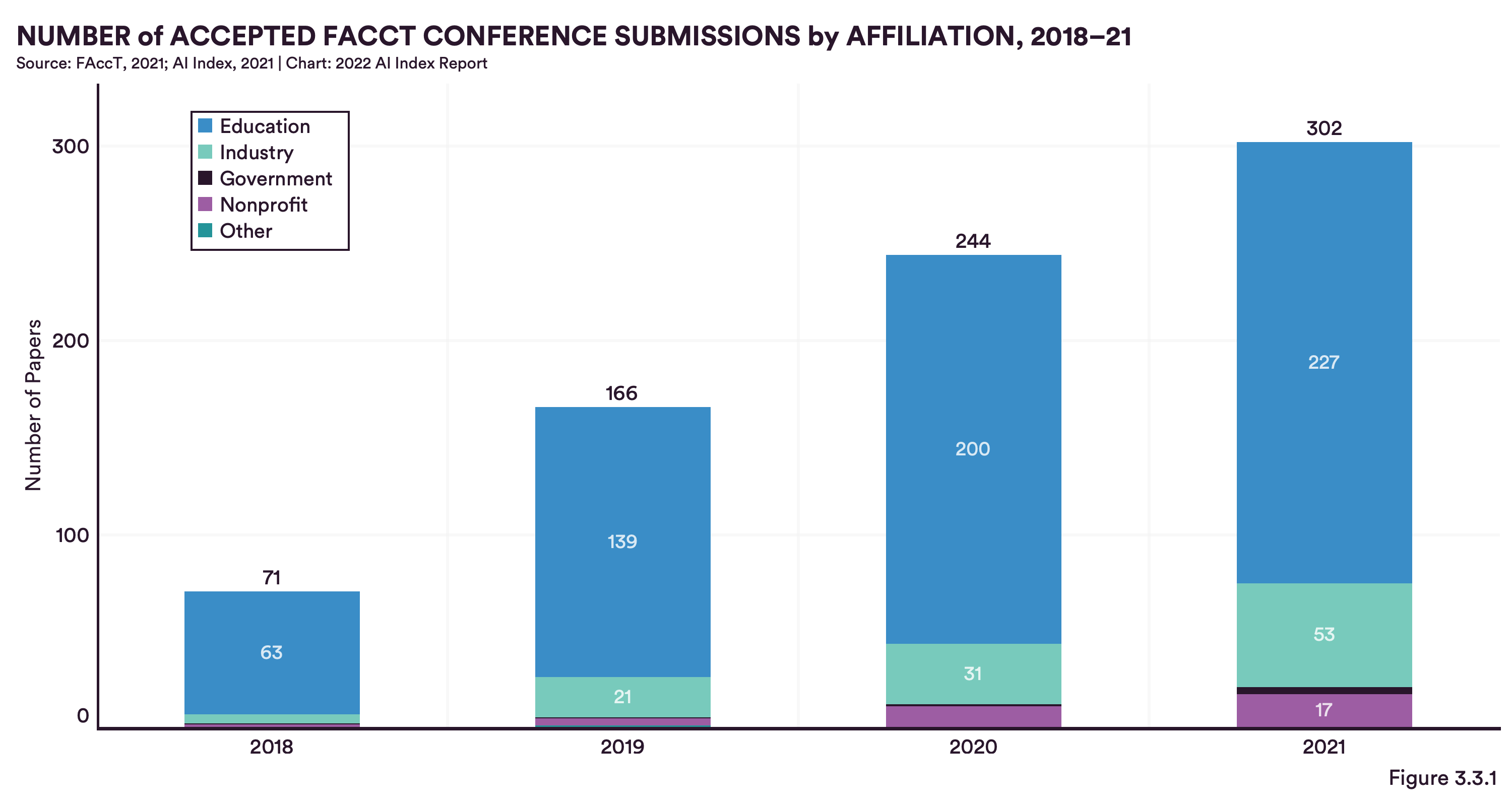
Number of accepted FACCT conference submissions by affiliation, 2018-21
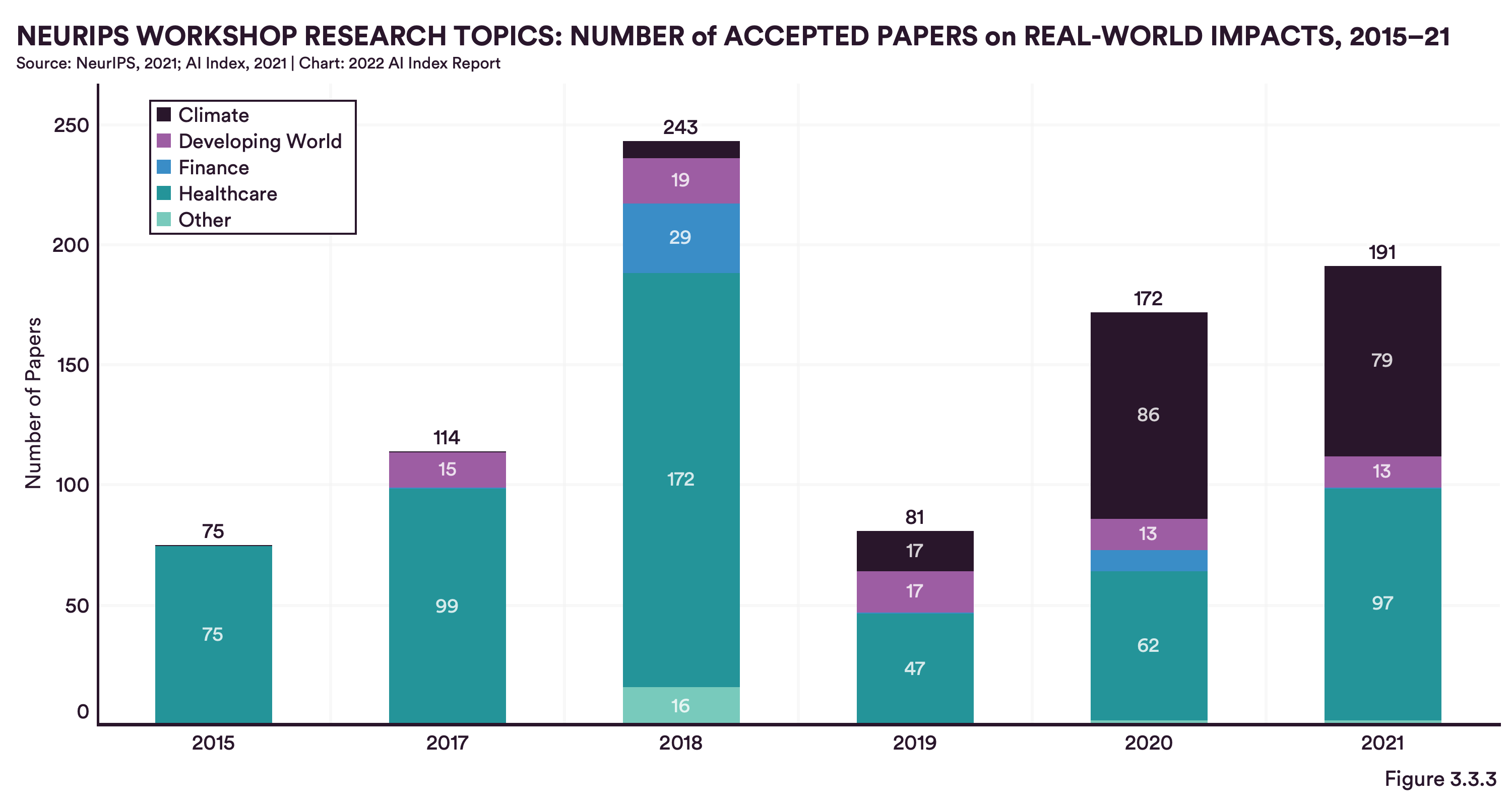
Neurips workshop research topics: number of accepted papers on real-world impacts, 2015-21
Number of automated fact-checking benchmarks for English, 2010-21