2019 HAI Symposium | Stanford HAI
Stanford
University
  • Stanford Home
  • Maps & Directions
  • Search Stanford
  • Emergency Info
  • Terms of Use
  • Privacy
  • Copyright
  • Trademarks
  • Non-Discrimination
  • Accessibility
© Stanford University.  Stanford, California 94305.
Skip to content
  • About

    • About
    • People
    • Get Involved with HAI
    • Support HAI
    • Subscribe to Email
  • Research

    • Research
    • Fellowship Programs
    • Grants
    • Student Affinity Groups
    • Centers & Labs
    • Research Publications
    • Research Partners
  • Education

    • Education
    • Executive and Professional Education
    • Government and Policymakers
    • K-12
    • Stanford Students
  • Policy

    • Policy
    • Policy Publications
    • Policymaker Education
    • Student Opportunities
  • AI Index

    • AI Index
    • AI Index Report
    • Global Vibrancy Tool
    • People
  • News
  • Events
  • Industry
  • Centers & Labs
Navigate
  • About
  • Events
  • AI Glossary
  • Careers
  • Search
Participate
  • Get Involved
  • Support HAI
  • Contact Us

Stay Up To Date

Get the latest news, advances in research, policy work, and education program updates from HAI in your inbox weekly.

Sign Up For Latest News

eventConference

2019 HAI Symposium

Status
Past
Date
Monday, March 18, 2019 8:00 AM - 6:30 PM PST/PDT
Location
David and Joan Traitel Building of Hoover Institution
Topics
Regulation, Policy, Governance
Overview
Speakers
Poster Session
Video Archive
Planning Comittee
Logistics

We invite Stanford University graduate students to submit a poster abstract to present at the Stanford Human-Centered Artificial Intelligence Institute (HAI) inaugural symposium on Monday, March 18, 2019, at the David and Joan Traitel Building.
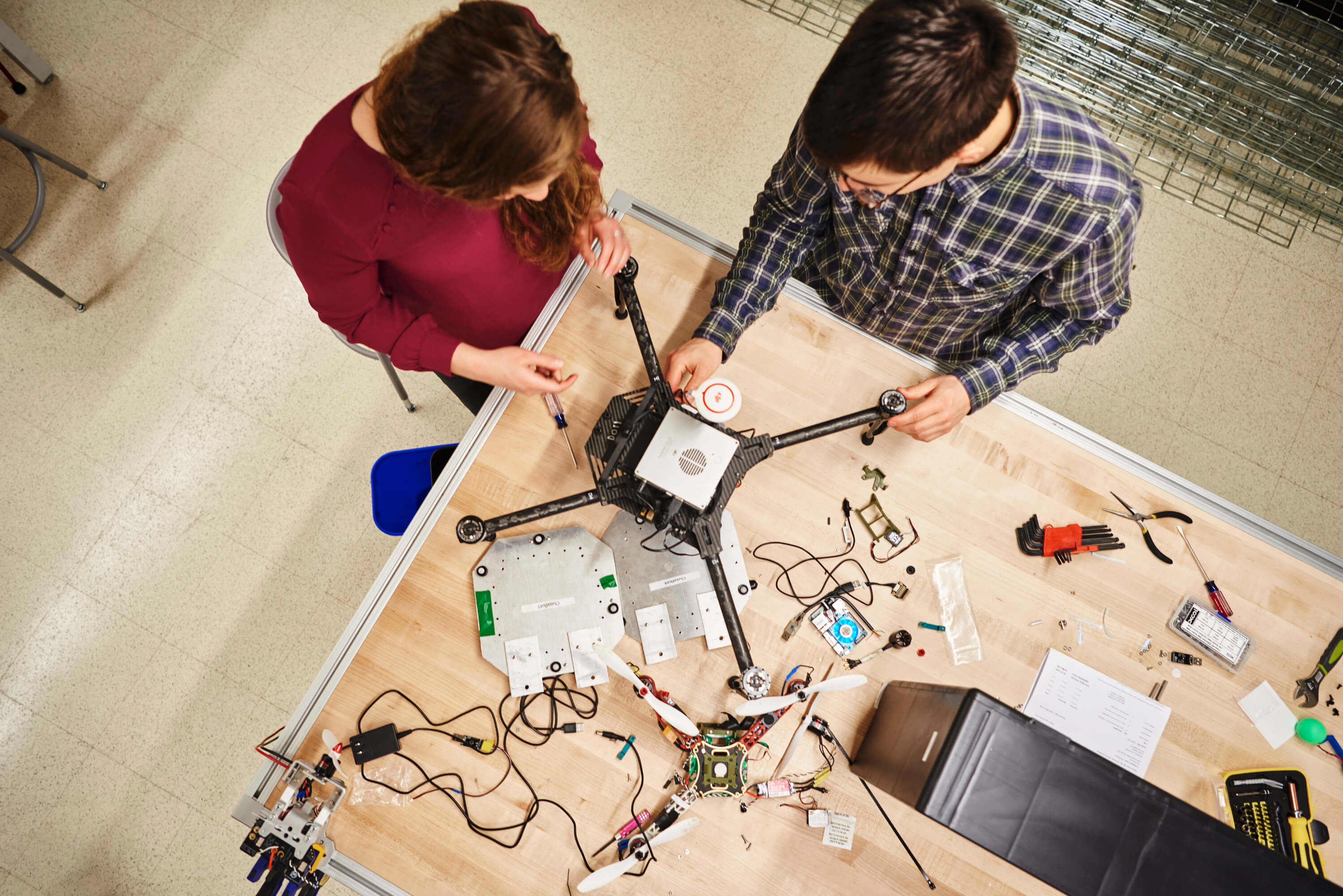
Submissions should be emailed to Celia Clark at celia.clark@stanford.edu by March 4, 2019. Students interested in presenting a poster should submit an abstract no more than 1 page and include name, email address, class year, and school/department. There is a maximum of one submission per person.

Presenters will be notified by March 11.

The poster session will run from 5:30 to 6:30pm on March 18.

Overview
Speakers
Poster Session
Video Archive
Planning Comittee
Logistics
Share
Link copied to clipboard!
Event Contact
Celia Clark
celia.clark@stanford.edu
Related
  • California Governor Gavin Newsom Looks to Stanford’s New AI Institute to Close Tech’s “Empathy Gap"
    Bill Snyder
    Mar 19
    news
    Your browser does not support the video tag.

    California Governor Gavin Newsom spoke about the widening opportunity gap at the symposium for Stanford's new Institute for Human-Centered Artificial Intelligence

  • Opening the Gate
    Fei-Fei Li and John Etchemendy
    Mar 17
    announcement

    Stanford’s new Institute for Human-Centered Artificial Intelligence aims to fundamentally change the field of AI by integrating a wide range of disciplines and prioritizing true diversity of thought.

  • Washington Post: Stanford helped pioneer artificial intelligence. Now the university wants to put humans at its center.
    Elizabeth Dwoskin
    Mar 17
    media mention

Related Events

Inside the 2026 AI Index Report | Stanford HAI
SeminarMay 20, 202612:00 PM - 1:15 PM
May
20
2026

The AI Index, currently in its ninth year, tracks, collates, distills, and visualizes data relating to artificial intelligence.

Seminar

Inside the 2026 AI Index Report | Stanford HAI

May 20, 202612:00 PM - 1:15 PM

The AI Index, currently in its ninth year, tracks, collates, distills, and visualizes data relating to artificial intelligence.

Ashesh Rambachan | From Next-Token Prediction to Automatic Induction of Automata
Apr 13, 202612:00 PM - 1:00 PM
April
13
2026

Sequence data is ubiquitous in economics — job histories in labor economics, diagnosis and treatment sequences in health economics, strategic interactions in game theory. Generative sequence models can learn to predict these sequences well, but their complexity makes it hard to extract interpretable economic insights from their predictions.

Event

Ashesh Rambachan | From Next-Token Prediction to Automatic Induction of Automata

Apr 13, 202612:00 PM - 1:00 PM

Sequence data is ubiquitous in economics — job histories in labor economics, diagnosis and treatment sequences in health economics, strategic interactions in game theory. Generative sequence models can learn to predict these sequences well, but their complexity makes it hard to extract interpretable economic insights from their predictions.

Caroline Meinhardt, Thomas Mullaney, Juan N. Pava, and Diyi Yang | How Can AI Support Language Digitization and Digital Inclusion?
SeminarApr 15, 202612:00 PM - 1:15 PM
April
15
2026

What does digital inclusion look like in the age of AI? Over 6,000 of the world’s 7,000-plus living languages remain digitally disadvantaged.

Seminar

Caroline Meinhardt, Thomas Mullaney, Juan N. Pava, and Diyi Yang | How Can AI Support Language Digitization and Digital Inclusion?

Apr 15, 202612:00 PM - 1:15 PM

What does digital inclusion look like in the age of AI? Over 6,000 of the world’s 7,000-plus living languages remain digitally disadvantaged.