2026 SC2 Student Conference
Please note that this event is open to Stanford affiliates only or by invitation.
Join us for a one-day conference hosted by the Stanford Causal Science Center (SC²), bringing together our community to explore the breadth of work in causal inference, spark new connections, and help chart the path forward.
The program will feature graduate students and postdocs presenting both cutting-edge methods and real-world applications through a dynamic mix of 15-minute talks and a poster session.
Agenda
Time | Session Name | Speaker |
8:30-9:00 AM | Registration & Breakfast | |
9:00-9:15 AM | Welcome | |
9:15-10:15 AM | Session 1 — Chair: Ramesh Johari | |
A Simple Randomization Test for the Presence of Interference | Weihan Zhang, Division of Biostatistics, School of Public Health, UC Berkeley | |
Neyman Jackknife: Design-Based Variance Estimation for Causal Inference under Interference | Bryan Park, Statistics, Stanford | |
Cross-Fitting under Nonregularity: Normality and Inference via Locality | Bruno Fava, HAI Data Science, Stanford | |
Extreme Proxies for Causal Identification: Deconfounding with Outliers | Juraj Bodik, Statistics, Stanford | |
10:15-10:35 AM | Break | |
10:35-11:35 AM | Session 2 — Chair: Dominik Rothenhäusler | |
Causal Inference in Dynamic Thresholding Designs | Aditya Ghosh, Statistics, Stanford | |
Augmented Truncated Policy Gradients for Rapid-Switching Experiments | Wenqian Xing, Management Science and Engineering, Stanford | |
Journey across Time: Validating Pre-Post Comparisons for Measuring Ad Effects | Jessica Nguyen, Marketing (Quantitative), Stanford | |
Highway Construction Drives Dengue Emergence and Amplification in the Brazilian Amazon | Alyson Singleton, Center for Human and Planetary Health, Stanford | |
11:35 AM-12:35 PM | Lunch | |
12:35-1:35 PM | Session 3 — Chair: Malika Korganbekova | |
The Price of Political Ties: Reputational Risk and the Strategic Divestment of Corporate PACs | Takuma Iwasaki, Law School (JSD Program), Stanford | |
Discipline without Slack: Anti-Corruption in China’s Health Sector | Victoria Chuxuan Liu, Political Science, Stanford | |
Cointegrated Synthetic Control | Sarah Vicol, Economics, Stanford | |
CausalSmith: A Formally Grounded, Self-Improving Agentic Framework for Automated Research in Causal Inference | Jiyuan Tan, Management Science and Engineering, Stanford | |
1:35-1:55 PM | Break | |
1:55-2:55 PM | Session 4 — Chair: Stefan Wager | |
Doubly Robust Causal Inference for Interregional Connectivity within the Brain | Abhroneel Ghosh, Statistics, UC Berkeley | |
Longitudinal Adaptive Experimental Design for Learning Multiple Target Estimands with Semiparametric Efficient Inference | Wenxin Zhang, Biostatistics, UC Berkeley & UCSF | |
Learning Mechanistic Models of an Entire Nervous System with Memory-Efficient Natural Gradient Variational Inference | Joshua Lunger, Computer Science, Stanford | |
Inference for Nonlinear Latent Regressors | Alexander Almeida, Economics, Stanford | |
2:55-3:00 PM | Closing Remarks | |
3:00-5:00 PM | Poster Session and Reception |
Related Events
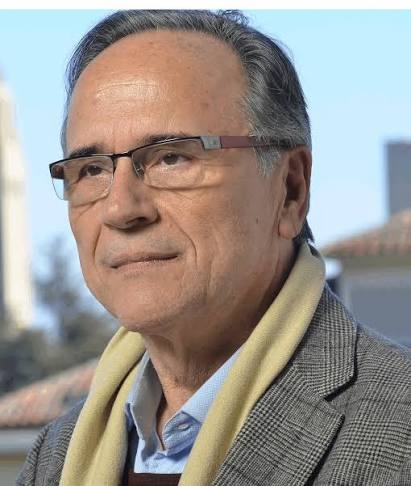
Marlowe | AI + Data for Science with Leonidas Guibas
Sessions run Wednesdays from 4:30–5:30 PM in CoDa E160. Each session features a different Stanford speaker; talk titles are announced by the organizers.
Sessions run Wednesdays from 4:30–5:30 PM in CoDa E160. Each session features a different Stanford speaker; talk titles are announced by the organizers.
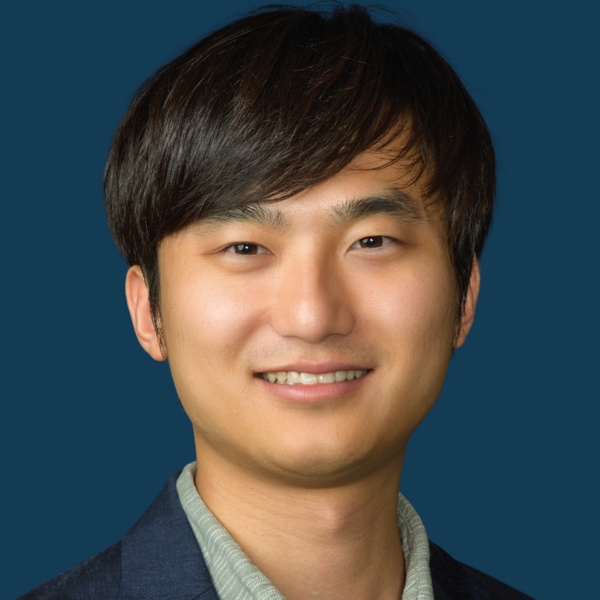
YoungJu Jo | Data-driven Discovery and Control of Neural Computations
A Center for Neural Data Science Seminar Series
A Center for Neural Data Science Seminar Series
2027 Conference on Physics and AI (PhyStat 2027)
The Center for Decoding the Universe brings together researchers across scientific disciplines to answer the biggest questions about our Universe by leveraging complex data with the most advanced statistical and computational methods.
The Center for Decoding the Universe brings together researchers across scientific disciplines to answer the biggest questions about our Universe by leveraging complex data with the most advanced statistical and computational methods.