event
AI100
The One Hundred Year Study on Artificial Intelligence, or AI100, is a 100-year effort to study and anticipate how the effects of artificial intelligence will ripple through every aspect of how people work, live and play.
Get the latest news, advances in research, policy work, and education program updates from HAI in your inbox weekly.
Sign Up For Latest News
The One Hundred Year Study on Artificial Intelligence, or AI100, is a 100-year effort to study and anticipate how the effects of artificial intelligence will ripple through every aspect of how people work, live and play.
Clinical Mind AI is a Stanford-developed, international collaborative platform designed to strengthen clinical reasoning education through AI-simulated patient encounters across health professions.
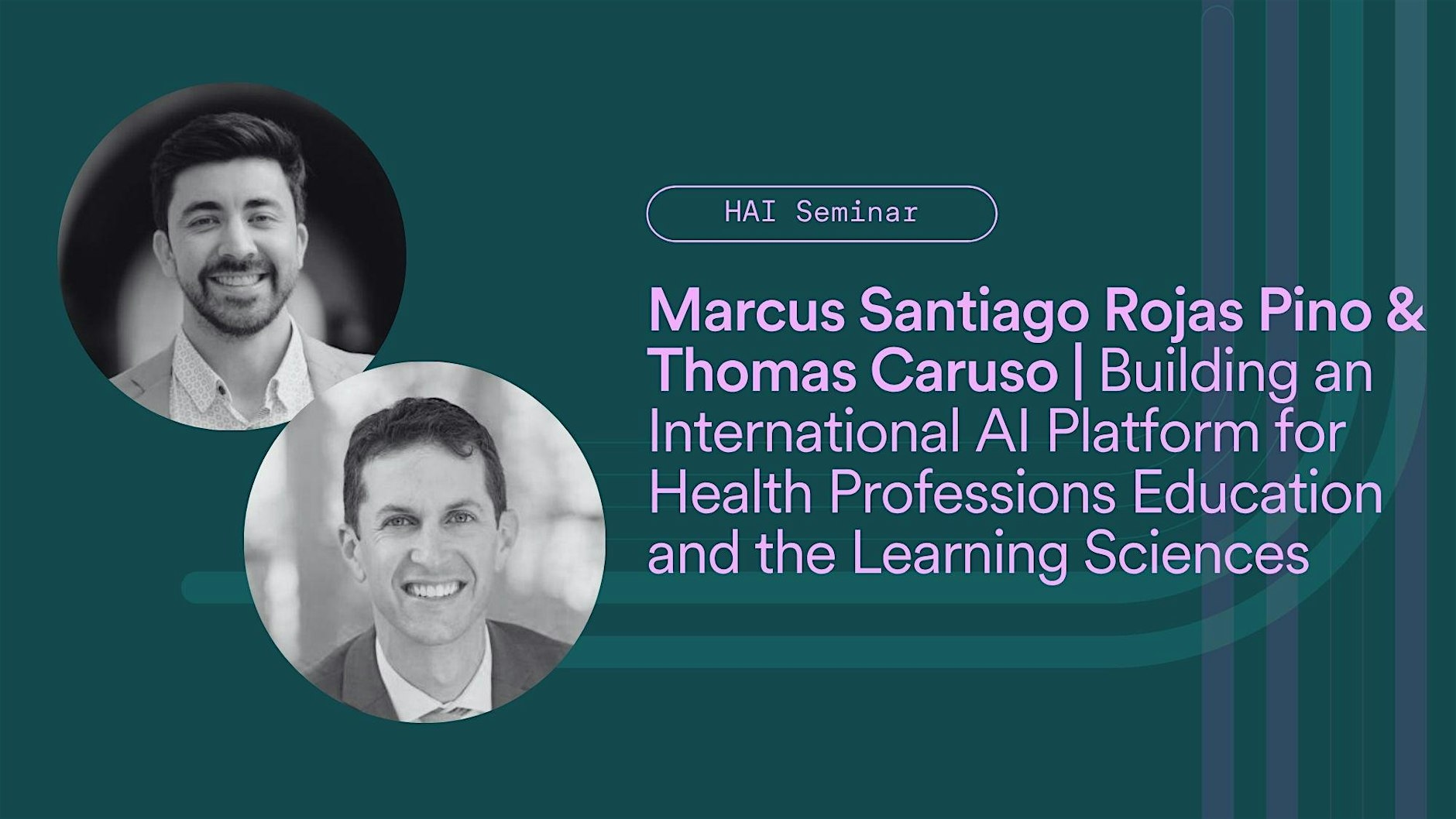
Clinical Mind AI is a Stanford-developed, international collaborative platform designed to strengthen clinical reasoning education through AI-simulated patient encounters across health professions.
Sessions run Wednesdays from 4:30–5:30 PM in CoDa E160. Each session features a different Stanford speaker; talk titles are announced by the organizers.

Sessions run Wednesdays from 4:30–5:30 PM in CoDa E160. Each session features a different Stanford speaker; talk titles are announced by the organizers.
View the 2021 AI100 Study Panel Report Here
This is a fully virtual event that will be led by Russ Altman, Stanford University (AI100 Faculty Director), Peter Stone, University of Texas at Austin (AI100 Standing Committee Chair), and Michael Littman, Brown University (AI100 2021 Report Lead Author) discussing the 2021 AI100 Report, which released on September 16th. The event will offer two broadcasts (9:00am-10:00am PDT and 5:00pm-6:00pm PDT) for attendees to watch and engage with panelists who have contributed to the AI100 Report. We encourage you to watch the event live in order to submit your questions and engage with our panelists during each broadcast. The video recordings of each broadcast will also be available post-event on the HAI Website. Event registration is required.
What is AI100? The One Hundred Year Study on Artificial Intelligence, or AI100, is a 100-year effort to study and anticipate how the effects of artificial intelligence will ripple through every aspect of how people work, live and play. Launched in 2014, AI100 considers the science, engineering, and deployment of AI-enabled computing systems.
As its core activity, the Standing Committee that oversees the One Hundred Year Study forms a Study Panel every five years to assess the current state of AI. The Study Panel reviews AI’s progress in the years following the immediately prior report, envisions the potential advances that lie ahead, and describes the technical and societal challenges and opportunities these advances raise, including in such arenas as ethics, economics, and the design of systems compatible with human cognition. The first report was issued in 2016 and the 2021 installment was published on September 16, 2021.