eventSeminar
Eyck Freymann | AI and Strategic Stability: A Framework for U.S.–China Technology Competition
Strategic stability exists when neither side thinks it can improve its strategic outcome by striking first.
Get the latest news, advances in research, policy work, and education program updates from HAI in your inbox weekly.
Sign Up For Latest News
Strategic stability exists when neither side thinks it can improve its strategic outcome by striking first.
AI is advancing rapidly at the cognitive tasks that make up knowledge work, raising fears among firms, policymakers, and, not least, workers of a “China shock” for white-collar jobs. Neil Thompson will present new research on whether those fears are warranted.
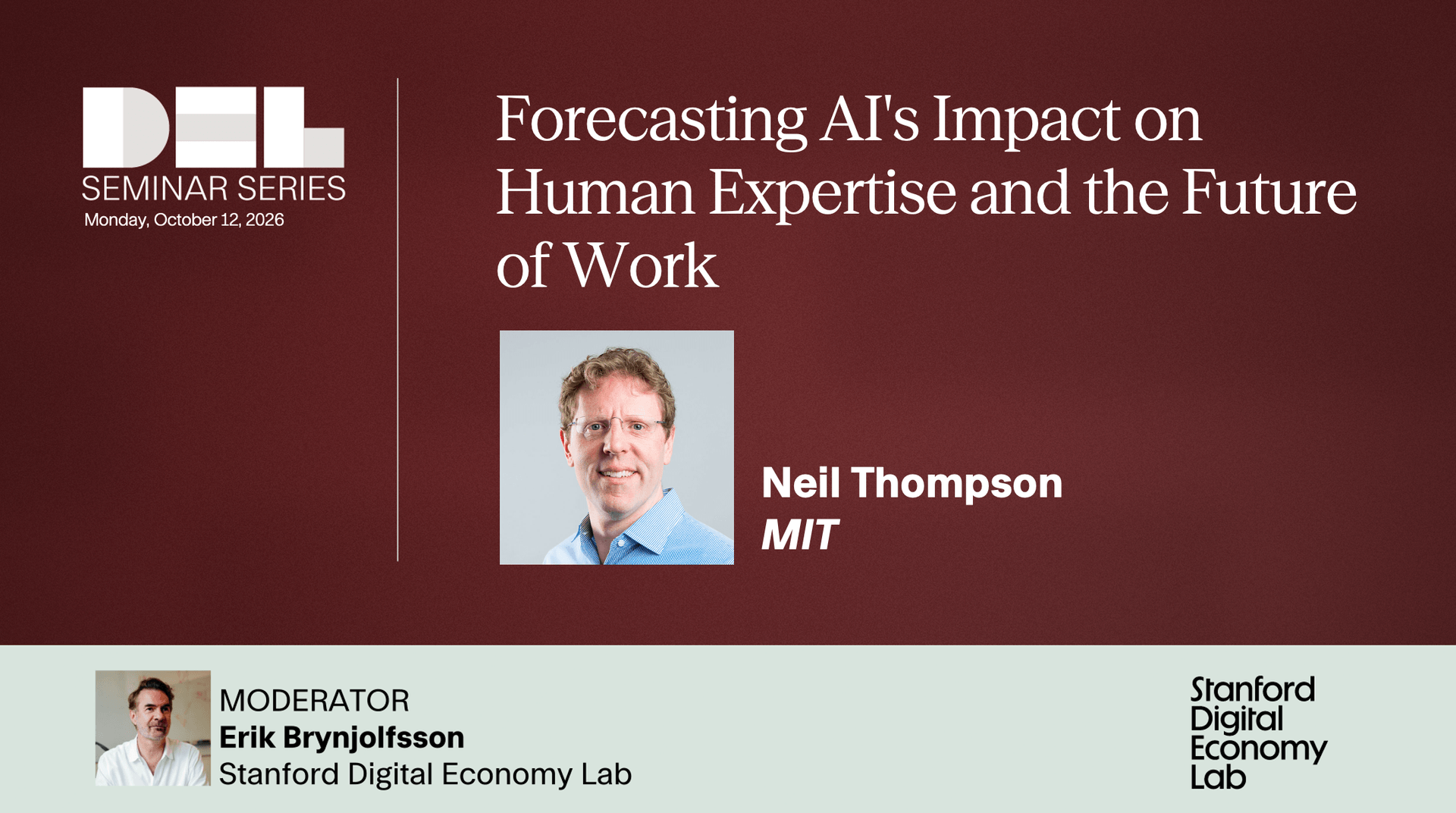
AI is advancing rapidly at the cognitive tasks that make up knowledge work, raising fears among firms, policymakers, and, not least, workers of a “China shock” for white-collar jobs. Neil Thompson will present new research on whether those fears are warranted.
Sessions run Wednesdays from 4:30–5:30 PM in CoDa E160. Each session features a different Stanford speaker; talk titles are announced by the organizers.

Sessions run Wednesdays from 4:30–5:30 PM in CoDa E160. Each session features a different Stanford speaker; talk titles are announced by the organizers.
Today, strategic stability is increasingly important and potentially fragile. Nuclear weapons are no longer the only technology that threatens a state with devastation. AI competition and emergent AI capabilities could challenge strategic stability in many ways, including offensive and defensive cyber operations, sensing, ballistic missile defense, and intelligence / counterintelligence operations.
This talk will provide a detailed account of how AI, nuclear deterrence, and semiconductor interdependence jointly shape strategic stability in U.S.–China competition. From there, the seminar will make the case that AI introduces both new deterrence tools and new threats to strategic stability, especially through its effects on cyber operations, intelligence, and command-and-control.