Stanford
University
  • Stanford Home
  • Maps & Directions
  • Search Stanford
  • Emergency Info
  • Terms of Use
  • Privacy
  • Copyright
  • Trademarks
  • Non-Discrimination
  • Accessibility
© Stanford University.  Stanford, California 94305.
Ellen Kuhl | Automated Model Discovery – A New Paradigm in Biomedical Simulations? | Stanford HAI
Skip to content
  • About

    • About
    • People
    • Get Involved with HAI
    • Support HAI
    • Subscribe to Email
  • Research

    • Research
    • Fellowship Programs
    • Grants
    • Student Affinity Groups
    • Centers & Labs
    • Research Publications
    • Research Partners
  • Education

    • Education
    • Executive and Professional Education
    • Government and Policymakers
    • K-12
    • Stanford Students
  • Policy

    • Policy
    • Policy Publications
    • Policymaker Education
    • Student Opportunities
  • AI Index

    • AI Index
    • AI Index Report
    • Global Vibrancy Tool
    • People
  • News
  • Events
  • Industry
  • Centers & Labs
Navigate
  • About
  • Events
  • Careers
  • Search
Participate
  • Get Involved
  • Support HAI
  • Contact Us

Stay Up To Date

Get the latest news, advances in research, policy work, and education program updates from HAI in your inbox weekly.

Sign Up For Latest News

eventSeminar

Ellen Kuhl | Automated Model Discovery – A New Paradigm in Biomedical Simulations?

Status
Past
Date
Wednesday, November 29, 2023 10:00 AM - 11:00 AM PST/PDT
Location
Hybrid
Overview
Watch Event Recording

Constitutive modeling and parameter identification are the cornerstones of realistic biomedical simulations. For decades, the gold standard in biomedical modeling has been to select a model and then fit its parameters to data. However, the scientific criteria for model selection remain poorly understood, and the success of this approach depends largely on user experience and personal preference. 
Overview
Watch Event Recording
Share
Link copied to clipboard!
Event Contact
Madeleine Wright
mwright7@stanford.edu

Related Events

Gaidi Faraj, Lofred Madzou | Nurturing Africa’s AI Leaders through Math Olympiad
SeminarFeb 25, 202612:00 PM - 1:15 PM
February
25
2026

The African Olympiad Academy is a world-class high school dedicated to training Africa’s most promising students in mathematics, science, and artificial intelligence through olympiad-based pedagogy.

Seminar

Gaidi Faraj, Lofred Madzou | Nurturing Africa’s AI Leaders through Math Olympiad

Feb 25, 202612:00 PM - 1:15 PM

The African Olympiad Academy is a world-class high school dedicated to training Africa’s most promising students in mathematics, science, and artificial intelligence through olympiad-based pedagogy.

Zoë Hitzig | How People Use ChatGPT
Mar 09, 202612:00 PM - 1:00 PM
March
09
2026

Despite the rapid adoption of LLM chatbots, little is known about how they are used. We approach this question theoretically and empirically, modeling a user who chooses whether to complete a task herself, ask the chatbot for information that reduces decision noise, or delegate execution to the chatbot...

Event

Zoë Hitzig | How People Use ChatGPT

Mar 09, 202612:00 PM - 1:00 PM

Despite the rapid adoption of LLM chatbots, little is known about how they are used. We approach this question theoretically and empirically, modeling a user who chooses whether to complete a task herself, ask the chatbot for information that reduces decision noise, or delegate execution to the chatbot...

Hari Subramonyam | Learning by Creating: A Human-Centered Vision for AI in Education
SeminarMar 11, 202612:00 PM - 1:15 PM
March
11
2026
Seminar

Hari Subramonyam | Learning by Creating: A Human-Centered Vision for AI in Education

Mar 11, 202612:00 PM - 1:15 PM

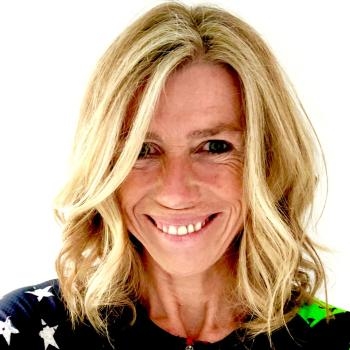
In this seminar, Kuhl proposes a new method that simultaneously and autonomously discovers the model, parameters, and experiment that best explain a wide variety of biological systems toward more realistic human simulations. She illustrates how we solve this problem by formulating it as a neural network, and leverage the success, robustness, and stability of state-of-the-art optimization tools from deep learning. Out of thousands of possible models, this network discovers a unique constitutive model that outperforms traditional models and, at the same time, identifies the best experiment to train itself. These new constitutive neural networks could initiate a paradigm shift in constitutive modeling—from user-defined model selection to automated model discovery— and forever change how we simulate biomedical systems.

Speaker
Ellen Kuhl
Walter B Reinhold Professor in the School of Engineering, Robert Bosch Chair of Mechanical Engineering, Professor of Mechanical Engineering and, by courtesy, of Bioengineering