Stanford
University
  • Stanford Home
  • Maps & Directions
  • Search Stanford
  • Emergency Info
  • Terms of Use
  • Privacy
  • Copyright
  • Trademarks
  • Non-Discrimination
  • Accessibility
© Stanford University.  Stanford, California 94305.
HAI Weekly Seminar with Jeffrey Ding | Stanford HAI

Stay Up To Date

Get the latest news, advances in research, policy work, and education program updates from HAI in your inbox weekly.

Sign Up For Latest News

Navigate
  • About
  • Events
  • Careers
  • Search
Participate
  • Get Involved
  • Support HAI
  • Contact Us
Skip to content
  • About

    • About
    • People
    • Get Involved with HAI
    • Support HAI
    • Subscribe to Email
  • Research

    • Research
    • Fellowship Programs
    • Grants
    • Student Affinity Groups
    • Centers & Labs
    • Research Publications
    • Research Partners
  • Education

    • Education
    • Executive and Professional Education
    • Government and Policymakers
    • K-12
    • Stanford Students
  • Policy

    • Policy
    • Policy Publications
    • Policymaker Education
    • Student Opportunities
  • AI Index

    • AI Index
    • AI Index Report
    • Global Vibrancy Tool
    • People
  • News
  • Events
  • Industry
  • Centers & Labs
Your browser does not support the video tag.
eventSeminar

HAI Weekly Seminar with Jeffrey Ding

Status
Past
Date
Wednesday, January 19, 2022 10:00 AM - 11:00 AM PST/PDT
Location
Virtual
Share
Link copied to clipboard!
Event Contact
Kaci Peel
kpeel@stanford.edu

Related Events

Tom Mitchell | The History of Machine Learning
Feb 23, 202612:00 PM - 1:00 PM
February
23
2026

How did we get to today’s technology which now supports a trillion dollar AI industry? What were the key scientific breakthroughs? What were the surprises and dead-ends along the way...

Event

Tom Mitchell | The History of Machine Learning

Feb 23, 202612:00 PM - 1:00 PM

How did we get to today’s technology which now supports a trillion dollar AI industry? What were the key scientific breakthroughs? What were the surprises and dead-ends along the way...

Gaidi Faraj, Lofred Madzou | Nurturing Africa’s AI Leaders through Math Olympiad
SeminarFeb 25, 202612:00 PM - 1:15 PM
February
25
2026

The African Olympiad Academy is a world-class high school dedicated to training Africa’s most promising students in mathematics, science, and artificial intelligence through olympiad-based pedagogy.

Seminar

Gaidi Faraj, Lofred Madzou | Nurturing Africa’s AI Leaders through Math Olympiad

Feb 25, 202612:00 PM - 1:15 PM

The African Olympiad Academy is a world-class high school dedicated to training Africa’s most promising students in mathematics, science, and artificial intelligence through olympiad-based pedagogy.

Hari Subramonyam | Learning by Creating: A Human-Centered Vision for AI in Education
SeminarMar 11, 202612:00 PM - 1:15 PM
March
11
2026
Seminar

Hari Subramonyam | Learning by Creating: A Human-Centered Vision for AI in Education

Mar 11, 202612:00 PM - 1:15 PM

The Rise and Fall of Great Technologies and Powers

How do technological revolutions affect the rise and fall of great powers? Scholars have long observed that major technological breakthroughs disrupt the economic balance of power, bringing about a power transition. However, there has been surprisingly limited investigation into how this process occurs. Existing studies establish that a nation’s success in adapting to revolutionary technologies is determined by the fit between its institutions and the demands of these technologies. The standard explanation emphasizes institutional factors best suited for monopolizing innovation in new, fast-growing industries (leading sectors). Jeff proposes an alternative mechanism based on the diffusion of general-purpose technologies (GPTs), which presents a different trajectory for countries to leapfrog the industrial leader.

Characterized by their potential for continuous improvement, pervasiveness, and synergies with complementary innovations, GPTs only make an economy-wide impact after a drawn-out process of diffusion across many sectors. The demands of GPT diffusion shape the institutional adaptations crucial to success in technological revolutions. Specifically, Jeff emphasizes the role of education systems and technical associations that broaden the base of engineering skills associated with a GPT. To test this argument, Jeff sets the leading-sector mechanism against the GPT diffusion mechanism across three historical case studies, which correspond to past industrial revolutions: Britain’s rise to preeminence in the early 19th century; the U.S.’s overtaking of Britain before World War I; Japan’s challenge to U.S. technological dominance in the late 20th century. Evidence from these case studies support the GPT diffusion explanation, shedding new insights into how emerging technologies like AI, which some regard as driving a fourth industrial revolution, will affect a possible U.S.-China power transition.
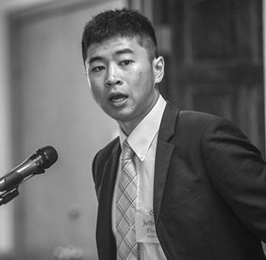
Ding profile photoJeffrey Ding

HAI-CISAC Postdoctoral Fellow

No tweets available.