eventSeminar
HAI Weekly Seminar with Nina Vasan and Sara Johansen
A Psychiatrist’s Perspective on Social Media Algorithms and Mental Health
Get the latest news, advances in research, policy work, and education program updates from HAI in your inbox weekly.
Sign Up For Latest News
A Psychiatrist’s Perspective on Social Media Algorithms and Mental Health
The rapid acceleration of AI comes with a profound wave of anxiety. Across every sector of society, people are facing unsettling questions about their worth and their place in a shifting world.
The rapid acceleration of AI comes with a profound wave of anxiety. Across every sector of society, people are facing unsettling questions about their worth and their place in a shifting world.
Scientific progress is a key driver of economic growth and prosperity. There is great excitement- but also concerns- about the impacts of AI on science, but so far little data. We provide early insights on this from three data sources: a sample of 15 million Gemini interactions, an inventory of over 2,600 specialized AI models across disciplines, and a survey of over 600 scientists.
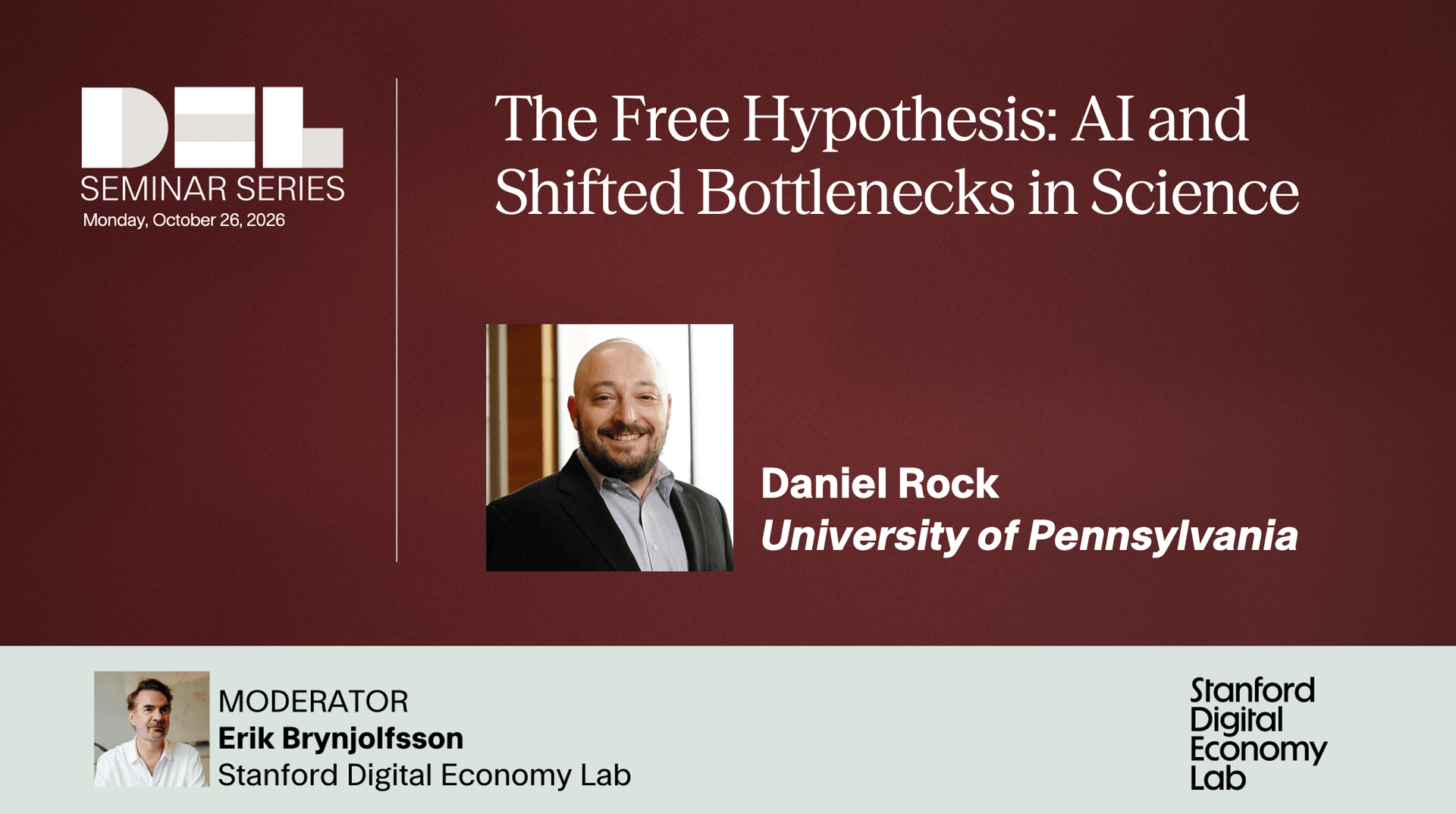
Scientific progress is a key driver of economic growth and prosperity. There is great excitement- but also concerns- about the impacts of AI on science, but so far little data. We provide early insights on this from three data sources: a sample of 15 million Gemini interactions, an inventory of over 2,600 specialized AI models across disciplines, and a survey of over 600 scientists.
The algorithms that determine the people and content we see on social media platforms are designed to keep us watching. These platforms have massive reach, with over 3 billion people active on social media platforms globally. With the opportunity to affect change at scale comes even greater responsibility to act ethically and compassionately. As both physicians and industry consultants to leading social media companies, we offer our perspectives into the ways that social media can both support and harm mental health and wellbeing. Social media can offer individual and collective benefits in creative expression, rapid spread of information, and social connection, and yet, active engagement on social media platforms is correlated with increased symptoms of depression and anxiety, exacerbation of self-harm behavior, and in some cases, suicide and accidental death. Though social media platforms are taking action to be more accountable, there is an opportunity for proactive solutions that consider evidence-based mental health interventions and ethical design principles.
We propose that social media offers a unique intervention point with the potential to impact the health of billions of people globally. We present safety frameworks in social media and explore how algorithms can be used to design interventions that support the most vulnerable groups, considering not only if an intervention is helpful but how and for whom it is helpful. We also discuss empathic design frameworks that seek to emphasize human qualities of compassion, empathy, and mutual support on these platforms.
If you have questions for the speakers, please email them at brainstormlaboratory@gmail.com.

_0.jpg&w=3840&q=100)