eventSeminar
HAI Weekly Seminar with Renata Avila
Prototyping Feminist AI
Get the latest news, advances in research, policy work, and education program updates from HAI in your inbox weekly.
Sign Up For Latest News
Prototyping Feminist AI
In the last year, AI models have rapidly improved on public benchmarks measuring their ability to carry out research tasks autonomously. Such performance suggests that models may be capable of automating parts of the AI R&D process itself, thereby accelerating the pace of AI progress.
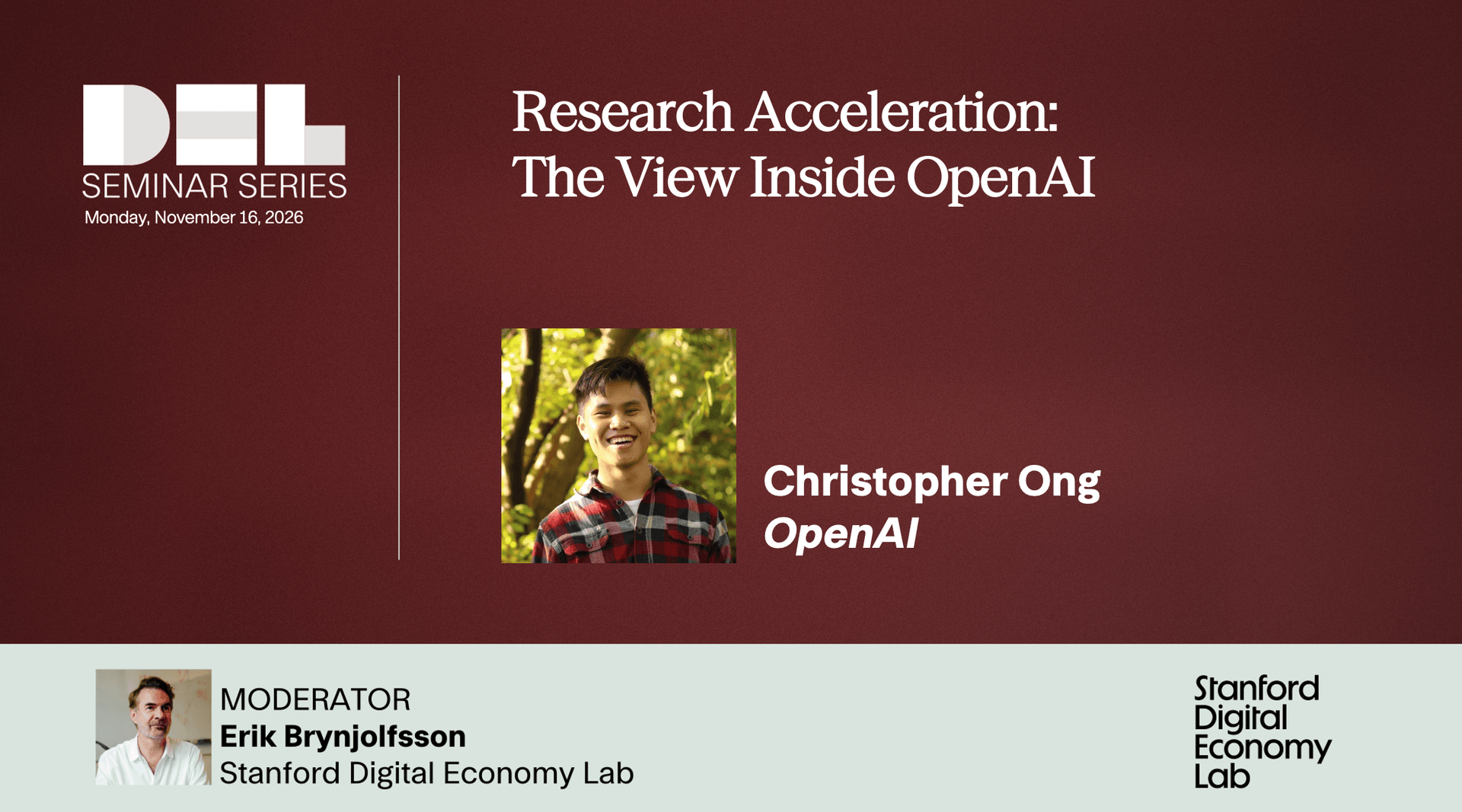
In the last year, AI models have rapidly improved on public benchmarks measuring their ability to carry out research tasks autonomously. Such performance suggests that models may be capable of automating parts of the AI R&D process itself, thereby accelerating the pace of AI progress.
This talk will cover key insights from the third AI100 report, AI Goes Mainstream: The Scaling Era and the Rise of Generative AI, set for release in November 2026. The report was commissioned by the AI100 standing committee and led by study panel chair Michael Wooldridge.
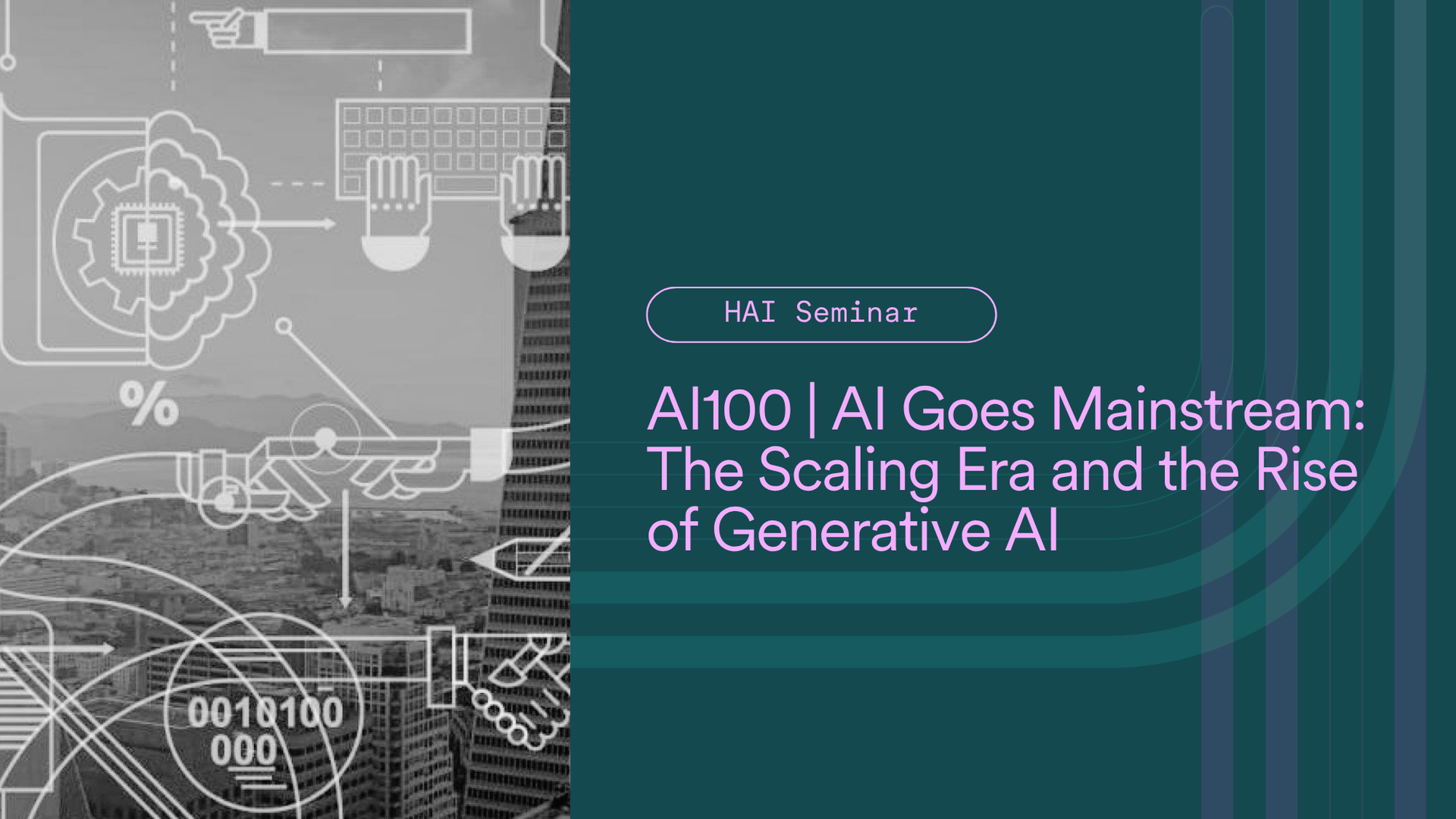
This talk will cover key insights from the third AI100 report, AI Goes Mainstream: The Scaling Era and the Rise of Generative AI, set for release in November 2026. The report was commissioned by the AI100 standing committee and led by study panel chair Michael Wooldridge.
Sessions run Wednesdays from 4:30–5:30 PM in CoDa E160. Each session features a different Stanford speaker; talk titles are announced by the organizers.
Sessions run Wednesdays from 4:30–5:30 PM in CoDa E160. Each session features a different Stanford speaker; talk titles are announced by the organizers.
How can feminist methodologies and approaches be applied and be transformative when developing AI and ADM systems? How can AI innovation and social systems innovation be catalysed concomitantly to create a positive movement for social change larger than the sum of the data science or social science parts? How can we produce actionable research that will lead to the profound changes needed - from scratch - in the processes to produce AI? Can we prototype better digital futures? Which disciplines should we include? Where are the gaps? And how can we make a strong case to prototype different, better digital futures, before embarking on big AI projects in the public sector? The seminar will collect ideas and experiences from different disciplines to draft a blueprint for a better modelled digital future.
