Stanford
University
  • Stanford Home
  • Maps & Directions
  • Search Stanford
  • Emergency Info
  • Terms of Use
  • Privacy
  • Copyright
  • Trademarks
  • Non-Discrimination
  • Accessibility
© Stanford University.  Stanford, California 94305.
Marcos Santiago Rojas Pino & Thomas Caruso | Building an International AI Platform for Health Professions Education and the Learning Sciences | Stanford HAI
Navigate
  • About
  • Events
  • AI Glossary
  • Careers
  • Search
Participate
  • Get Involved
  • Support HAI
  • Contact Us

Stay Up To Date

Get the latest news, advances in research, policy work, and education program updates from HAI in your inbox weekly.

Sign Up For Latest News

Skip to content
  • About

    • About
    • People
    • Get Involved with HAI
    • Support HAI
    • Subscribe to Email
  • Research

    • Research
    • Research Programs
    • Grants
    • Marlowe (opens in new tab)
    • Student Affinity Groups
    • Centers & Labs
    • Research Publications
    • Research Partners
  • Education

    • Education
    • Executive and Professional Education
    • Government and Policymakers
    • K-12
    • Stanford Students
  • Policy

    • Policy
    • Policy Publications
    • Policymaker Education
    • Student Opportunities
  • AI Index

    • AI Index
    • AI Index Report
    • Global Vibrancy Tool
    • People
  • News
  • Events
  • Industry
  • Centers & Labs
Your browser does not support the video tag.
eventSeminar

Marcos Santiago Rojas Pino & Thomas Caruso | Building an International AI Platform for Health Professions Education and the Learning Sciences

Status
Past
Date
Wednesday, November 04, 2026 12:00 PM - 1:15 PM
Location
353 Jane Stanford Way, Stanford, CA, 94305 | Room 119
Topics
Healthcare
Education, Skills
Attend Virtually

Clinical Mind AI is a Stanford-developed, international collaborative platform designed to strengthen clinical reasoning education through AI-simulated patient encounters across health professions.

Share
Link copied to clipboard!
Event Contact
Stanford HAI
stanford-hai@stanford.edu

Related Events

AI100 | AI Goes Mainstream: The Scaling Era and the Rise of Generative AI
SeminarNov 18, 202612:00 PM - 1:15 PM
November
18
2026

This talk will cover key insights from the third AI100 report, AI Goes Mainstream: The Scaling Era and the Rise of Generative AI, set for release in November 2026. The report was commissioned by the AI100 standing committee and led by study panel chair Michael Wooldridge.

Seminar

AI100 | AI Goes Mainstream: The Scaling Era and the Rise of Generative AI

Nov 18, 202612:00 PM - 1:15 PM

This talk will cover key insights from the third AI100 report, AI Goes Mainstream: The Scaling Era and the Rise of Generative AI, set for release in November 2026. The report was commissioned by the AI100 standing committee and led by study panel chair Michael Wooldridge.

Marlowe | AI + Data for Science with Andreas Tolias
SeminarNov 18, 20264:30 PM - 5:30 PM
November
18
2026

Sessions run Wednesdays from 4:30–5:30 PM in CoDa E160. Each session features a different Stanford speaker; talk titles are announced by the organizers.

Event

Marlowe | AI + Data for Science with Andreas Tolias

Nov 18, 20264:30 PM - 5:30 PM

Sessions run Wednesdays from 4:30–5:30 PM in CoDa E160. Each session features a different Stanford speaker; talk titles are announced by the organizers.

NVIDIA & Marlowe | Accelerating Biological Discovery with AI — Youssef Nashed
Dec 02, 2026
December
02
2026

This talk will explore the latest advances in computational protein design and structure prediction, highlighting NVIDIA technologies such as cuEquivariance and the Proteína family of models, including the latest RFdiffusion4 (RFD4)–Proteína developments. We will discuss how accelerated geometric deep learning and generative AI are enabling scalable, high-performance protein modeling and the design of novel proteins with tailored structures and functions.

Bio:
Youssef Nashed is a Senior Solutions Architect on NVIDIA's Healthcare and Life Sciences team. He joined NVIDIA from Bristol Myers Squibb (BMS), where he was a Senior Principal Scientist focused on machine learning and computational protein design. At BMS, Youssef led a team developing and deploying AI models for antibody discovery and development. He previously served as an Assistant Professor at Northwestern University and conducted research in structural biology at SLAC National Accelerator Laboratory at Stanford. Youssef began his career in high-performance and large-scale GPU computing at Argonne National Laboratory. His background spans computer science, mathematics, structural biology, and AI-driven protein engineering.

Location: CoDa W401

Event

NVIDIA & Marlowe | Accelerating Biological Discovery with AI — Youssef Nashed

Dec 02, 2026

This talk will explore the latest advances in computational protein design and structure prediction, highlighting NVIDIA technologies such as cuEquivariance and the Proteína family of models, including the latest RFdiffusion4 (RFD4)–Proteína developments. We will discuss how accelerated geometric deep learning and generative AI are enabling scalable, high-performance protein modeling and the design of novel proteins with tailored structures and functions.

Bio:
Youssef Nashed is a Senior Solutions Architect on NVIDIA's Healthcare and Life Sciences team. He joined NVIDIA from Bristol Myers Squibb (BMS), where he was a Senior Principal Scientist focused on machine learning and computational protein design. At BMS, Youssef led a team developing and deploying AI models for antibody discovery and development. He previously served as an Assistant Professor at Northwestern University and conducted research in structural biology at SLAC National Accelerator Laboratory at Stanford. Youssef began his career in high-performance and large-scale GPU computing at Argonne National Laboratory. His background spans computer science, mathematics, structural biology, and AI-driven protein engineering.

Location: CoDa W401

The platform enables educators to create clinical cases aligned with their local curricula, learning goals, languages, and assessment needs, while giving learners repeated opportunities to practice open-ended history-taking, diagnostic reasoning, and communication. The seminar will present the motivation for Clinical Mind AI, its design principles, and how the platform is being used by educators and institutions across countries to support scalable, instructor-centered clinical simulation.

The talk will also discuss Clinical Mind AI as a research infrastructure for studying learning in clinical reasoning tasks. We will describe how learner interactions with AI-simulated patients can generate interpretable evidence about reasoning processes, including how students gather information, update hypotheses, document findings, and respond to feedback. The seminar will focus on broader questions at the intersection of AI, medical education, and learning science: how to build AI systems that preserve instructor agency, support multilingual and cross-institutional implementation, produce actionable insights for educators, and contribute to a more rigorous evidence base for AI-supported health professions education.
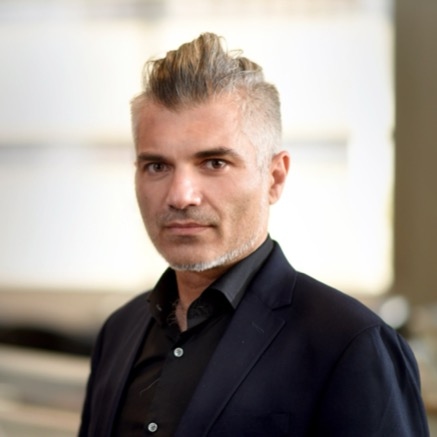
Speakers
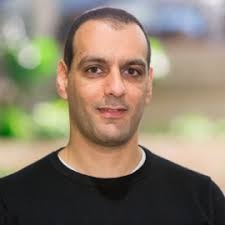
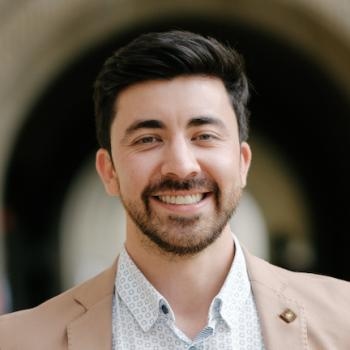
Marcos Rojas Pino
Medical Doctor, University of Chile; Ph.D. Student in Education, Stanford University
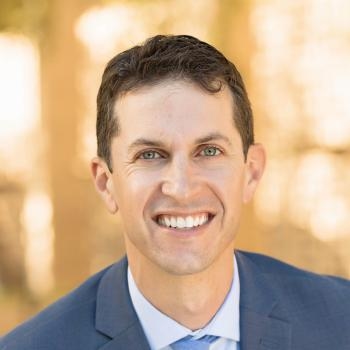
Thomas Caruso
Professor of Anesthesiology, Perioperative and Pain Medicine (Pediatric)