Stanford
University
  • Stanford Home
  • Maps & Directions
  • Search Stanford
  • Emergency Info
  • Terms of Use
  • Privacy
  • Copyright
  • Trademarks
  • Non-Discrimination
  • Accessibility
© Stanford University.  Stanford, California 94305.
Pamela Samuelson | Will Copyright Derail Generative AI Technologies? | Stanford HAI
Skip to content
  • About

    • About
    • People
    • Get Involved with HAI
    • Support HAI
    • Subscribe to Email
  • Research

    • Research
    • Fellowship Programs
    • Grants
    • Student Affinity Groups
    • Centers & Labs
    • Research Publications
    • Research Partners
  • Education

    • Education
    • Executive and Professional Education
    • Government and Policymakers
    • K-12
    • Stanford Students
  • Policy

    • Policy
    • Policy Publications
    • Policymaker Education
    • Student Opportunities
  • AI Index

    • AI Index
    • AI Index Report
    • Global Vibrancy Tool
    • People
  • News
  • Events
  • Industry
  • Centers & Labs
Navigate
  • About
  • Events
  • Careers
  • Search
Participate
  • Get Involved
  • Support HAI
  • Contact Us

Stay Up To Date

Get the latest news, advances in research, policy work, and education program updates from HAI in your inbox weekly.

Sign Up For Latest News

Your browser does not support the video tag.
eventSeminar

Pamela Samuelson | Will Copyright Derail Generative AI Technologies?

Status
Past
Date
Wednesday, November 13, 2024 12:00 PM - 1:00 PM PST/PDT
Location
Gates Computer Science Building Room 119
Topics
Law Enforcement and Justice

At last count, thirty lawsuits are challenging the legality of using in-copyright works to train generative AI models. While the lawsuits are still in early stages, fair use defenses are likely to be the main focus of judicial analyses of their merits. This talk will explain what judges have decided so far, that is, what issues are now out of those cases and what issues remain. Although generative AI developers point to some precedents that support their fair use defenses, this talk will explain why judges may find them not as helpful as the developers hope. At this point, some cases seem stronger than others. Not only are the plaintiffs seeking very large damage awards, but also some want courts to order models trained on the plaintiffs' data to be destroyed, and courts have power to issue such orders. The broader impacts of these lawsuits for academic research and development are at present invisible to the courts.

Speakers
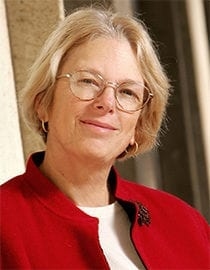
Pamela Samuelson
Richard M. Sherman, Distinguished Professor of Law, UC Berkeley Law; Professor, UC Berkeley School of Information; Co-Director, Berkeley Center for Law & Technology
Share
Link copied to clipboard!
Event Contact
Annie Benisch
abenisch@stanford.edu
More from HAI and SDS seminars
  • Hari Subramonyam | Learning by Creating: A Human-Centered Vision for AI in Education
    SeminarMar 11, 202612:00 PM - 1:15 PM
    March
    11
    2026

Related Events

Zoë Hitzig | How People Use ChatGPT
Mar 09, 202612:00 PM - 1:00 PM
March
09
2026

Despite the rapid adoption of LLM chatbots, little is known about how they are used. We approach this question theoretically and empirically, modeling a user who chooses whether to complete a task herself, ask the chatbot for information that reduces decision noise, or delegate execution to the chatbot...

Event

Zoë Hitzig | How People Use ChatGPT

Mar 09, 202612:00 PM - 1:00 PM

Despite the rapid adoption of LLM chatbots, little is known about how they are used. We approach this question theoretically and empirically, modeling a user who chooses whether to complete a task herself, ask the chatbot for information that reduces decision noise, or delegate execution to the chatbot...

Hari Subramonyam | Learning by Creating: A Human-Centered Vision for AI in Education
SeminarMar 11, 202612:00 PM - 1:15 PM
March
11
2026
Seminar

Hari Subramonyam | Learning by Creating: A Human-Centered Vision for AI in Education

Mar 11, 202612:00 PM - 1:15 PM
Joel Becker | Reconciling Impressive AI Benchmark Performance with Limited Developer Productivity Impacts
Mar 16, 202612:00 PM - 1:00 PM
March
16
2026

AI coding agents now complete multi-hour coding benchmarks with roughly 50% reliability, yet a randomized trial found experienced open-source developers took about 19% longer when allowed frontier AI tools than when tools were disallowed...

Event

Joel Becker | Reconciling Impressive AI Benchmark Performance with Limited Developer Productivity Impacts

Mar 16, 202612:00 PM - 1:00 PM

AI coding agents now complete multi-hour coding benchmarks with roughly 50% reliability, yet a randomized trial found experienced open-source developers took about 19% longer when allowed frontier AI tools than when tools were disallowed...