Stanford
University
  • Stanford Home
  • Maps & Directions
  • Search Stanford
  • Emergency Info
  • Terms of Use
  • Privacy
  • Copyright
  • Trademarks
  • Non-Discrimination
  • Accessibility
© Stanford University.  Stanford, California 94305.
Skip to content
  • About

    • About
    • People
    • Get Involved with HAI
    • Support HAI
    • Subscribe to Email
  • Research

    • Research
    • Fellowship Programs
    • Grants
    • Student Affinity Groups
    • Centers & Labs
    • Research Publications
    • Research Partners
  • Education

    • Education
    • Executive and Professional Education
    • Government and Policymakers
    • K-12
    • Stanford Students
  • Policy

    • Policy
    • Policy Publications
    • Policymaker Education
    • Student Opportunities
  • AI Index

    • AI Index
    • AI Index Report
    • Global Vibrancy Tool
    • People
  • News
  • Events
  • Industry
  • Centers & Labs
Navigate
  • About
  • Events
  • Careers
  • Search
Participate
  • Get Involved
  • Support HAI
  • Contact Us

Stay Up To Date

Get the latest news, advances in research, policy work, and education program updates from HAI in your inbox weekly.

Sign Up For Latest News

Sarah E. Kreps | The Promise and Perils of AI-Mediated Political Communication | Stanford HAI
eventSeminar

Sarah E. Kreps | The Promise and Perils of AI-Mediated Political Communication

Status
Past
Date
Wednesday, May 17, 2023 10:00 AM - 11:00 AM PST/PDT
Location
Hybrid

Smart replies, writing enhancements, and virtual assistants powered by artificial intelligence language technologies are increasingly being integrated into consumer products and everyday experiences.

Share
Link copied to clipboard!
Event Contact
Madeleine Wright
mwright7@stanford.edu

Related Events

Zoë Hitzig | How People Use ChatGPT
Mar 09, 202612:00 PM - 1:00 PM
March
09
2026

Despite the rapid adoption of LLM chatbots, little is known about how they are used. We approach this question theoretically and empirically, modeling a user who chooses whether to complete a task herself, ask the chatbot for information that reduces decision noise, or delegate execution to the chatbot...

Event

Zoë Hitzig | How People Use ChatGPT

Mar 09, 202612:00 PM - 1:00 PM

Despite the rapid adoption of LLM chatbots, little is known about how they are used. We approach this question theoretically and empirically, modeling a user who chooses whether to complete a task herself, ask the chatbot for information that reduces decision noise, or delegate execution to the chatbot...

Hari Subramonyam | Learning by Creating: A Human-Centered Vision for AI in Education
SeminarMar 11, 202612:00 PM - 1:15 PM
March
11
2026
Seminar

Hari Subramonyam | Learning by Creating: A Human-Centered Vision for AI in Education

Mar 11, 202612:00 PM - 1:15 PM
Joel Becker | Reconciling Impressive AI Benchmark Performance with Limited Developer Productivity Impacts
Mar 16, 202612:00 PM - 1:00 PM
March
16
2026

AI coding agents now complete multi-hour coding benchmarks with roughly 50% reliability, yet a randomized trial found experienced open-source developers took about 19% longer when allowed frontier AI tools than when tools were disallowed...

Event

Joel Becker | Reconciling Impressive AI Benchmark Performance with Limited Developer Productivity Impacts

Mar 16, 202612:00 PM - 1:00 PM

AI coding agents now complete multi-hour coding benchmarks with roughly 50% reliability, yet a randomized trial found experienced open-source developers took about 19% longer when allowed frontier AI tools than when tools were disallowed...

This research explores both the potential and risks of AI-mediated communication (AI-MC) technologies such as GPT-4—specifically in the political sphere—through a series of experiments designed to assess the possible uses and misuses of AI-MC. The initial part of the research evaluates whether human-AI collaboration can increase legislator responsiveness by studying citizen responses to AI-generated tweets and email correspondence. The findings point to the importance of disclosure, transparency, and human-in-the-loop accountability for AI-mediated political communication. The research then turns to the plausibility of misuse by actors seeking to influence the democratic process. It shares results from a field experiment on legislators, highlights the challenge these technologies present to democratic representation, and suggests techniques elected officials might employ to guard against AI-sourced astroturfing.


Speaker
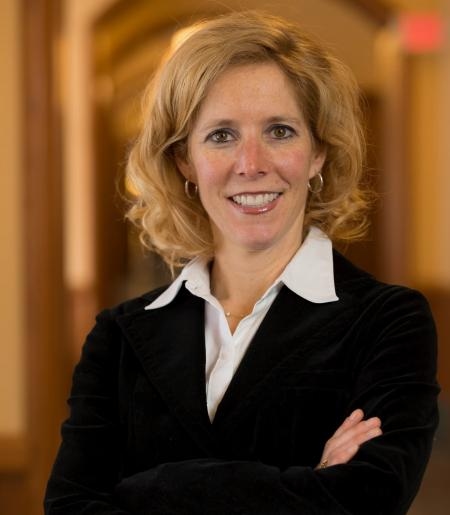
Sarah E. Kreps
John L. Wetherill Professor in the Department of Government, Adjunct Professor of Law; Director of the Cornell Tech Policy Institute, Cornell University

Watch Event Recording