Stanford
University
  • Stanford Home
  • Maps & Directions
  • Search Stanford
  • Emergency Info
  • Terms of Use
  • Privacy
  • Copyright
  • Trademarks
  • Non-Discrimination
  • Accessibility
© Stanford University.  Stanford, California 94305.
Unlocking Public Sector AI Innovation: Next Steps for the National AI Research Resource | Stanford HAI
Skip to content
  • About

    • About
    • People
    • Get Involved with HAI
    • Support HAI
    • Subscribe to Email
  • Research

    • Research
    • Fellowship Programs
    • Grants
    • Student Affinity Groups
    • Centers & Labs
    • Research Publications
    • Research Partners
  • Education

    • Education
    • Executive and Professional Education
    • Government and Policymakers
    • K-12
    • Stanford Students
  • Policy

    • Policy
    • Policy Publications
    • Policymaker Education
    • Student Opportunities
  • AI Index

    • AI Index
    • AI Index Report
    • Global Vibrancy Tool
    • People
  • News
  • Events
  • Industry
  • Centers & Labs
Navigate
  • About
  • Events
  • Careers
  • Search
Participate
  • Get Involved
  • Support HAI
  • Contact Us

Stay Up To Date

Get the latest news, advances in research, policy work, and education program updates from HAI in your inbox weekly.

Sign Up For Latest News

Your browser does not support the video tag.
eventSeminar

Unlocking Public Sector AI Innovation: Next Steps for the National AI Research Resource

Status
Past
Date
Tuesday, October 31, 2023 9:00 AM - 10:00 AM PST/PDT
Location
Gates Computer Science Building, Room 119

On Monday, October 30th 2023, President Biden signed a landmark Executive Order to manage the opportunities and risks of artificial intelligence.

The EO seeks to promote innovation and competition through a pilot of the National AI Research Resource (NAIRR), which can provide access to much-needed compute and datasets for academics, nonprofit researchers, and startups. Earlier this year, Congress had introduced a bi-partisan, bicameral CREATE AI Act, which also supports the establishment of this public AI infrastructure. NAIRR aims to strengthen academic AI innovation driven by societal benefits through catalyzing groundbreaking advancements reminiscent of academic triumphs such as GPS, CRISPR, and the internet.

Watch the recording below to hear Stanford faculty and researchers, Fei-Fei Li, Russ Altman, and Jennifer King, for a discussion on how academia can capitalize on the opportunities NAIRR brings featuring a keynote address by U.S. Representative Anna Eshoo, co-chair of the Congressional AI Caucus, and co-sponsor of the CREATE AI Act.

Speakers
Russ Altman
Russ Altman
Kenneth Fong Professor and Professor of Bioengineering, of Genetics, of Medicine, of Biomedical Data Science | Associate Director and Senior Fellow, Stanford HAI | Professor, by courtesy, of Computer Science
Anna Eshoo
U.S. Representative (CA-16), Co-chair Congressional AI Caucus
John Etchemendy
Denning Co-Director, Stanford HAI | Stanford Provost Emeritus | Patrick Suppes Family Professor in the School of Humanities and Sciences, Stanford University
Jennifer King
Jennifer King
Privacy and Data Policy Fellow, Stanford HAI
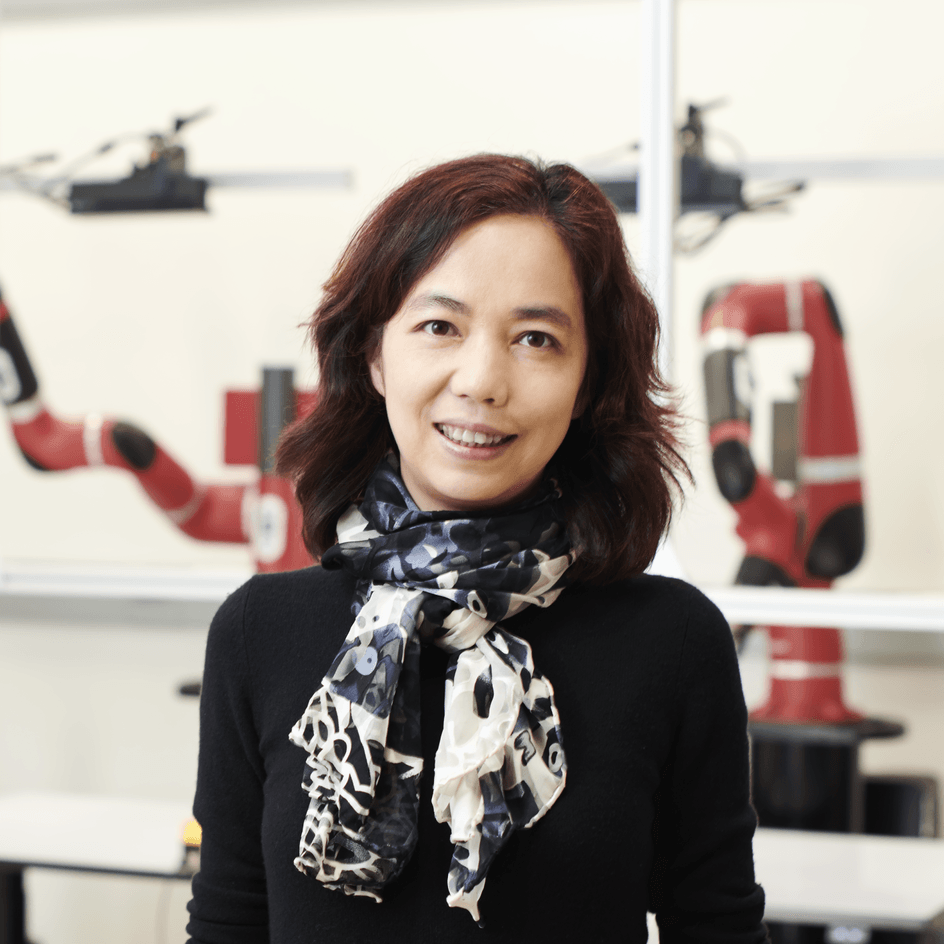
fei fei li headshot
Fei-Fei Li
Denning Co-Director, Stanford HAI | Sequoia Professor of Computer Science, Stanford University

Watch Event Recording

Share
Link copied to clipboard!
Event Contact
HAI Events Team
stanford-hai@stanford.edu
Related
  • Fei-Fei Li
    Denning Co-Director, Stanford HAI | Sequoia Professor of Computer Science, Stanford University
    fei fei li headshot
  • A Plan To Democratize Access To Powerful AI Tools Gets A Last-Ditch Push In Congress
    Semafor
    Nov 22
    media mention

    HAI Executive Director Russell Wald speaks about the importance of passing the CREATE AI Act, born from Stanford HAI's National AI Research Resource. 

Related Events

Zoë Hitzig | How People Use ChatGPT
Mar 09, 202612:00 PM - 1:00 PM
March
09
2026

Despite the rapid adoption of LLM chatbots, little is known about how they are used. We approach this question theoretically and empirically, modeling a user who chooses whether to complete a task herself, ask the chatbot for information that reduces decision noise, or delegate execution to the chatbot...

Event

Zoë Hitzig | How People Use ChatGPT

Mar 09, 202612:00 PM - 1:00 PM

Despite the rapid adoption of LLM chatbots, little is known about how they are used. We approach this question theoretically and empirically, modeling a user who chooses whether to complete a task herself, ask the chatbot for information that reduces decision noise, or delegate execution to the chatbot...

Hari Subramonyam | Learning by Creating: A Human-Centered Vision for AI in Education
SeminarMar 11, 202612:00 PM - 1:15 PM
March
11
2026
Seminar

Hari Subramonyam | Learning by Creating: A Human-Centered Vision for AI in Education

Mar 11, 202612:00 PM - 1:15 PM
Joel Becker | Reconciling Impressive AI Benchmark Performance with Limited Developer Productivity Impacts
Mar 16, 202612:00 PM - 1:00 PM
March
16
2026

AI coding agents now complete multi-hour coding benchmarks with roughly 50% reliability, yet a randomized trial found experienced open-source developers took about 19% longer when allowed frontier AI tools than when tools were disallowed...

Event

Joel Becker | Reconciling Impressive AI Benchmark Performance with Limited Developer Productivity Impacts

Mar 16, 202612:00 PM - 1:00 PM

AI coding agents now complete multi-hour coding benchmarks with roughly 50% reliability, yet a randomized trial found experienced open-source developers took about 19% longer when allowed frontier AI tools than when tools were disallowed...