Upcoming Events
Confronting Our AI Future: Hope, Fear, and the Choices Ahead
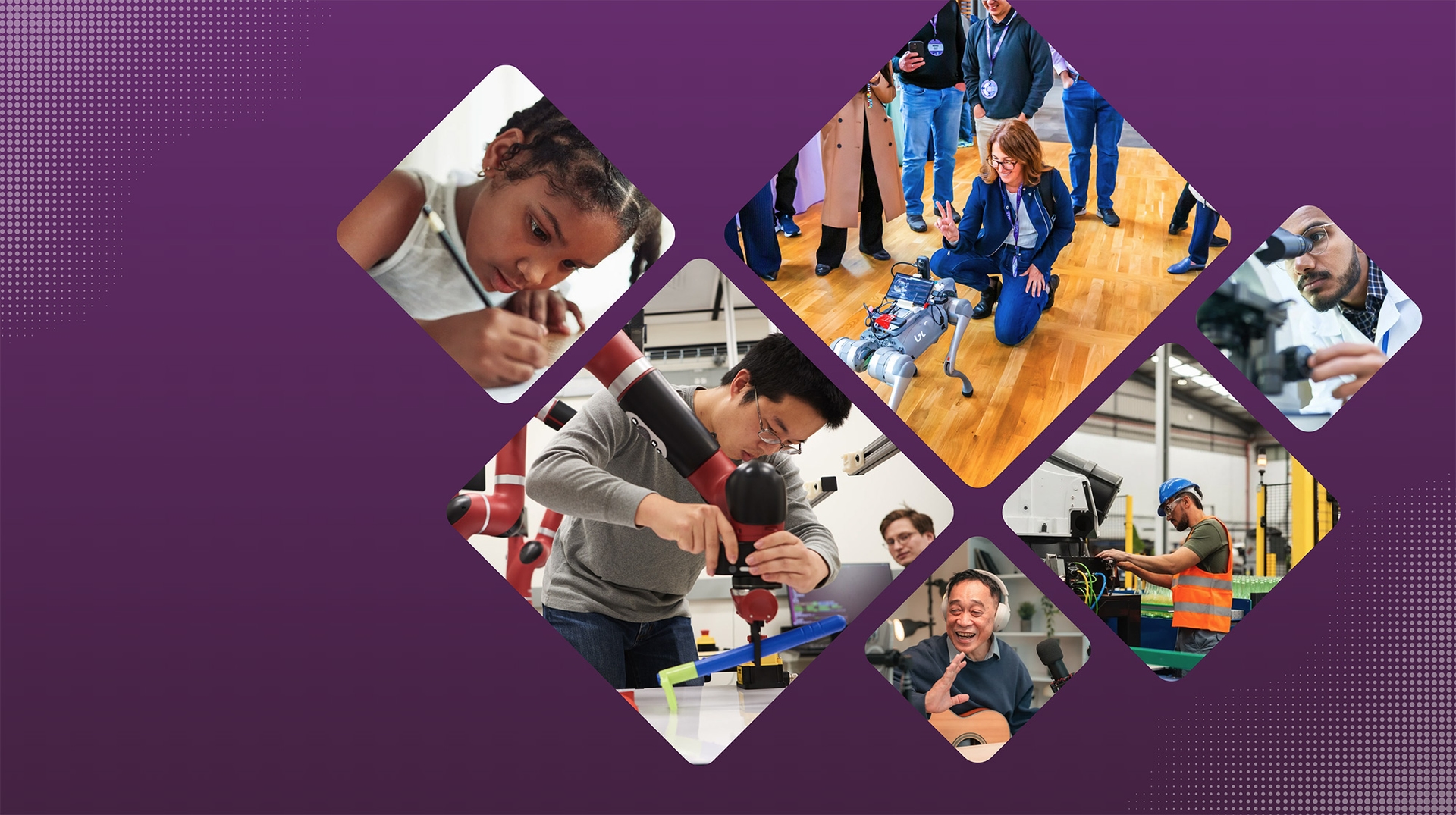
The rapid acceleration of AI comes with a profound wave of anxiety. Across every sector of society, people are facing unsettling questions about their worth and their place in a shifting world.
Confronting Our AI Future: Hope, Fear, and the Choices Ahead
The rapid acceleration of AI comes with a profound wave of anxiety. Across every sector of society, people are facing unsettling questions about their worth and their place in a shifting world.
Featured Videos
Hear from speakers and attendees at recent Stanford HAI events across research, policy, and education.
Previous Events at HAI
CRISPR, AI, and the Ethics of Scientific Discovery
Twin revolutions at the start of the 21st century are shaking up the very idea of what it means to be human. Computer vision and image recognition are at the heart of the AI revolution. And CRISPR is a powerful new technique for genetic editing that allows humans to intervene in evolution.
CRISPR, AI, and the Ethics of Scientific Discovery
Twin revolutions at the start of the 21st century are shaking up the very idea of what it means to be human. Computer vision and image recognition are at the heart of the AI revolution. And CRISPR is a powerful new technique for genetic editing that allows humans to intervene in evolution.
HAI Weekly Seminar with Todd Karhu - Occupant-Favoring Autonomous Vehicles
Good news! The near future has arrived and you’re ready to purchase your first fully autonomous vehicle. You have narrowed down your search to a few manufacturers and have just one decision left to make: How would you like your vehicle to respond if it finds itself in a potential collision with other autonomous vehicles?
HAI Weekly Seminar with Todd Karhu - Occupant-Favoring Autonomous Vehicles
Good news! The near future has arrived and you’re ready to purchase your first fully autonomous vehicle. You have narrowed down your search to a few manufacturers and have just one decision left to make: How would you like your vehicle to respond if it finds itself in a potential collision with other autonomous vehicles?
HAI Monthly Community Building Reception - Compassionate intelligence: Can machine learning bring more humanity to health care?
We will describe the Stanford Medicine Program for AI in Healthcare, which aims to bring AI into clinical use, safely and ethically. The session will begin with an overview of the effort and then focus on describing a project to improve palliative care using machine learning. We will summarize the creation and validation of a mortality prediction model, describe the associated care planning workflow it triggers and the work constraints it needs to function under. We will present preliminary results on an HAI supported project for understanding and addressing ethical challenges with implementation of machine learning to advance palliative care. Using this real-life example, we will elucidate several of the ethical challenges that need to be studied and addressed when combining artificial intelligence technologies with medical expertise to help doctors make faster, more informed and humane decisions.
HAI Monthly Community Building Reception - Compassionate intelligence: Can machine learning bring more humanity to health care?
We will describe the Stanford Medicine Program for AI in Healthcare, which aims to bring AI into clinical use, safely and ethically. The session will begin with an overview of the effort and then focus on describing a project to improve palliative care using machine learning. We will summarize the creation and validation of a mortality prediction model, describe the associated care planning workflow it triggers and the work constraints it needs to function under. We will present preliminary results on an HAI supported project for understanding and addressing ethical challenges with implementation of machine learning to advance palliative care. Using this real-life example, we will elucidate several of the ethical challenges that need to be studied and addressed when combining artificial intelligence technologies with medical expertise to help doctors make faster, more informed and humane decisions.
HAI Weekly Seminar with Pamela Chen
In this talk, Pamela Chen, 2020 Human-Centered AI and JSK Journalism Fellow at Stanford, shares her experiences leading an editorial team at Instagram as the company scaled content discovery to serve more than 1 billion monthly active users. Spoiler alert: it doesn’t go as planned.
HAI Weekly Seminar with Pamela Chen
In this talk, Pamela Chen, 2020 Human-Centered AI and JSK Journalism Fellow at Stanford, shares her experiences leading an editorial team at Instagram as the company scaled content discovery to serve more than 1 billion monthly active users. Spoiler alert: it doesn’t go as planned.
Artificial Intelligence in Healthcare: The Hope, The Hype, The Promise, The Peril
This conference is anchored and building on the release of the Special National Academy of Medicine (NAM) publication titled: “Artificial Intelligence in Healthcare: The Hope, The Hype, The Promise, The Peril.” Co-led by Michael Matheny and Sonoo Thadaney Israni.
Objectives At the conclusion of this activity, participants should be able to:Evaluate AI in the healthcare landscape
Critically assess the opportunities for AI in healthcare
Develop appropriate criteria for evaluating/deploying AI solutions
Build frameworks for creating and testing AI healthcare solutions
Artificial Intelligence in Healthcare: The Hope, The Hype, The Promise, The Peril
This conference is anchored and building on the release of the Special National Academy of Medicine (NAM) publication titled: “Artificial Intelligence in Healthcare: The Hope, The Hype, The Promise, The Peril.” Co-led by Michael Matheny and Sonoo Thadaney Israni.
Objectives At the conclusion of this activity, participants should be able to:Evaluate AI in the healthcare landscape
Critically assess the opportunities for AI in healthcare
Develop appropriate criteria for evaluating/deploying AI solutions
Build frameworks for creating and testing AI healthcare solutions
Human-Centered Artificial Intelligence: Trusted, Reliable and Safe
The next generation of user experiences will produce 1000-fold improvements in human capabilities. This new tools will amplify, augment, enhance, and empower people, just as the Web, email, search, navigation, digital photography, and many other applications have already done. Rather than emphasize autonomous machines and humanoid robots as team partners, these new tools will produce comprehensible, predictable, and controllable applications that promote self-efficacy, human responsibility, and social participation at scale. The goal is to ensure human control, while increasing the level of automation.
Human-Centered Artificial Intelligence: Trusted, Reliable and Safe
The next generation of user experiences will produce 1000-fold improvements in human capabilities. This new tools will amplify, augment, enhance, and empower people, just as the Web, email, search, navigation, digital photography, and many other applications have already done. Rather than emphasize autonomous machines and humanoid robots as team partners, these new tools will produce comprehensible, predictable, and controllable applications that promote self-efficacy, human responsibility, and social participation at scale. The goal is to ensure human control, while increasing the level of automation.
AI and Ethics
Faculty Leaders: Rob Reich and Seth Lazar
Conversations about ethics and AI are commonplace today, but they are often pitched at a high level of generality or abstraction. In this workshop, we gathered together leading young scholars, chiefly philosophers, to discuss a more detailed research agenda with a particular focus on moral and political philosophy and their intersections with AI. Topics included AI and explainability, AI and value alignment, governance of AI, and more.
AI and Ethics
Faculty Leaders: Rob Reich and Seth Lazar
Conversations about ethics and AI are commonplace today, but they are often pitched at a high level of generality or abstraction. In this workshop, we gathered together leading young scholars, chiefly philosophers, to discuss a more detailed research agenda with a particular focus on moral and political philosophy and their intersections with AI. Topics included AI and explainability, AI and value alignment, governance of AI, and more.
AI and Digital Policy in China
China’s government and tech industry have great ambitions for artificial intelligence development and leadership, and Chinese society is facing economic, ethical, and regulatory challenges related to AI much like those around the world. At a time when the U.S. and Chinese governments are locked in escalating disputes over technology and trade, understanding Chinese ambitions, realities, and politics surrounding digital technologies is ever more important. Hosted by DigiChina, a project of the Stanford Cyber Policy Center Program on Geopolitics, Technology and Governance and the New America Cybersecurity Initiative. Speakers include: Shazeda Ahmed, PhD Candidate, UC Berkeley School of Information; Predoctoral Fellow, Stanford Institute for Human-Centered Artificial Intelligence and Center for International Security and CooperationRogier Creemers, Assistant Professor in the Law and Governance of China, University of LeidenAndrew Grotto, William J. Perry International Security Fellow and Director of the Program on Geopolitics, Technology and Governance at the Stanford Cyber Policy Center; Visiting Fellow, Hoover InstitutionSamm Sacks, Cybersecurity Policy and China Digital Economy Fellow, New AmericaKatharin Tai, PhD Student, Political Science, Massachusetts Institute of TechnologyGraham Webster, Coordinating Editor, Stanford-New America DigiChina Project; China Digital Economy Fellow, New AmericaWu Shenkuo, Professor of Law, Beijing Normal UniversityJulia Voo, Research Director, China Cyber Policy Initiative, Harvard Belfer CenterYuan Yang, China Technology Correspondent, Financial Times The organizers are grateful for the support of the Harvard-MIT Ethics and Governance of AI Initiative. Please register at https://www.eventbrite.com/e/ai-and-digital-policy-in-china-tickets-76168400737 *Please park in the Galvez Lot (L-96) in one of the spaces with a HAI Only reserved sign.
AI and Digital Policy in China
China’s government and tech industry have great ambitions for artificial intelligence development and leadership, and Chinese society is facing economic, ethical, and regulatory challenges related to AI much like those around the world. At a time when the U.S. and Chinese governments are locked in escalating disputes over technology and trade, understanding Chinese ambitions, realities, and politics surrounding digital technologies is ever more important. Hosted by DigiChina, a project of the Stanford Cyber Policy Center Program on Geopolitics, Technology and Governance and the New America Cybersecurity Initiative. Speakers include: Shazeda Ahmed, PhD Candidate, UC Berkeley School of Information; Predoctoral Fellow, Stanford Institute for Human-Centered Artificial Intelligence and Center for International Security and CooperationRogier Creemers, Assistant Professor in the Law and Governance of China, University of LeidenAndrew Grotto, William J. Perry International Security Fellow and Director of the Program on Geopolitics, Technology and Governance at the Stanford Cyber Policy Center; Visiting Fellow, Hoover InstitutionSamm Sacks, Cybersecurity Policy and China Digital Economy Fellow, New AmericaKatharin Tai, PhD Student, Political Science, Massachusetts Institute of TechnologyGraham Webster, Coordinating Editor, Stanford-New America DigiChina Project; China Digital Economy Fellow, New AmericaWu Shenkuo, Professor of Law, Beijing Normal UniversityJulia Voo, Research Director, China Cyber Policy Initiative, Harvard Belfer CenterYuan Yang, China Technology Correspondent, Financial Times The organizers are grateful for the support of the Harvard-MIT Ethics and Governance of AI Initiative. Please register at https://www.eventbrite.com/e/ai-and-digital-policy-in-china-tickets-76168400737 *Please park in the Galvez Lot (L-96) in one of the spaces with a HAI Only reserved sign.
2019 Fall Conference: AI Ethics, Policy, and Governance
HAI's October 28-29 conference on AI Ethics, Policy, and Governance at Stanford University will convene experts and leaders from academia, industry, civil society, and government to explore critical and emerging issues related to understanding and guiding AI's human and societal impact. Through plenary discussions, breakout sessions, and workshops we will explore the latest research, delve into case studies, illuminate best practices, and build a global community of research, policy, and practice committed to ensuring that AI benefits humanity.
HAI's October 28-29 conference on AI Ethics, Policy, and Governance at Stanford University will convene experts and leaders from academia, industry, civil society, and government to explore critical and emerging issues related to understanding and guiding AI's human and societal impact. Through plenary discussions, breakout sessions, and workshops we will explore the latest research, delve into case studies, illuminate best practices, and build a global community of research, policy, and practice committed to ensuring that AI benefits humanity.