Stanford
University
  • Stanford Home
  • Maps & Directions
  • Search Stanford
  • Emergency Info
  • Terms of Use
  • Privacy
  • Copyright
  • Trademarks
  • Non-Discrimination
  • Accessibility
© Stanford University.  Stanford, California 94305.
Meet New SDS Faculty Ludwig Schmidt at the Causal Science Center Conference on Experimentation | Stanford HAI
Navigate
  • About
  • Events
  • AI Glossary
  • Careers
  • Search
Participate
  • Get Involved
  • Support HAI
  • Contact Us
Skip to content
  • About

    • About
    • People
    • Get Involved with HAI
    • Support HAI
    • Subscribe to Email
  • Research

    • Research
    • Research Programs
    • Grants
    • Marlowe (opens in new tab)
    • Student Affinity Groups
    • Centers & Labs
    • Research Publications
    • Research Partners
  • Education

    • Education
    • Executive and Professional Education
    • Government and Policymakers
    • K-12
    • Stanford Students
  • Policy

    • Policy
    • Policy Publications
    • Policymaker Education
    • Student Opportunities
  • AI Index

    • AI Index
    • AI Index Report
    • Global Vibrancy Tool
    • People
  • News
  • Events
  • Industry
  • Centers & Labs

Stay Up To Date

Get the latest news, advances in research, policy work, and education program updates from HAI in your inbox weekly.

Sign Up For Latest News

news

Meet New SDS Faculty Ludwig Schmidt at the Causal Science Center Conference on Experimentation
Date
May 15, 2025
Topics
Communications, Media

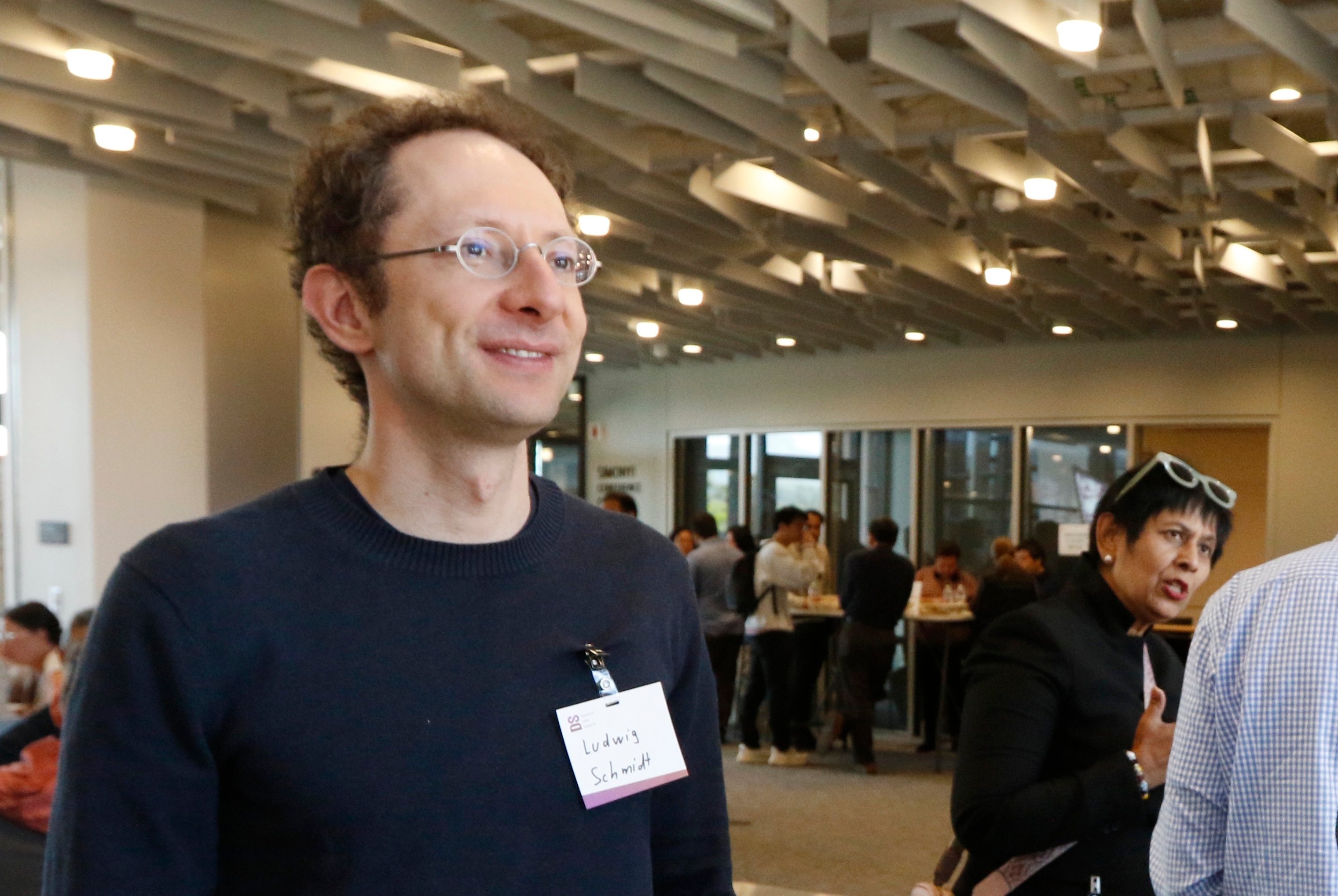
We’re thrilled to welcome Ludwig Schmidt to Stanford Data Science! 

Ludwig joins us as our fourth core SDS faculty member, with a joint appointment in the Computer Science Department. Prior to Stanford, he was an assistant professor at the University of Washington and held research roles at Anthropic. He earned his PhD from MIT and completed a postdoc at UC Berkeley.
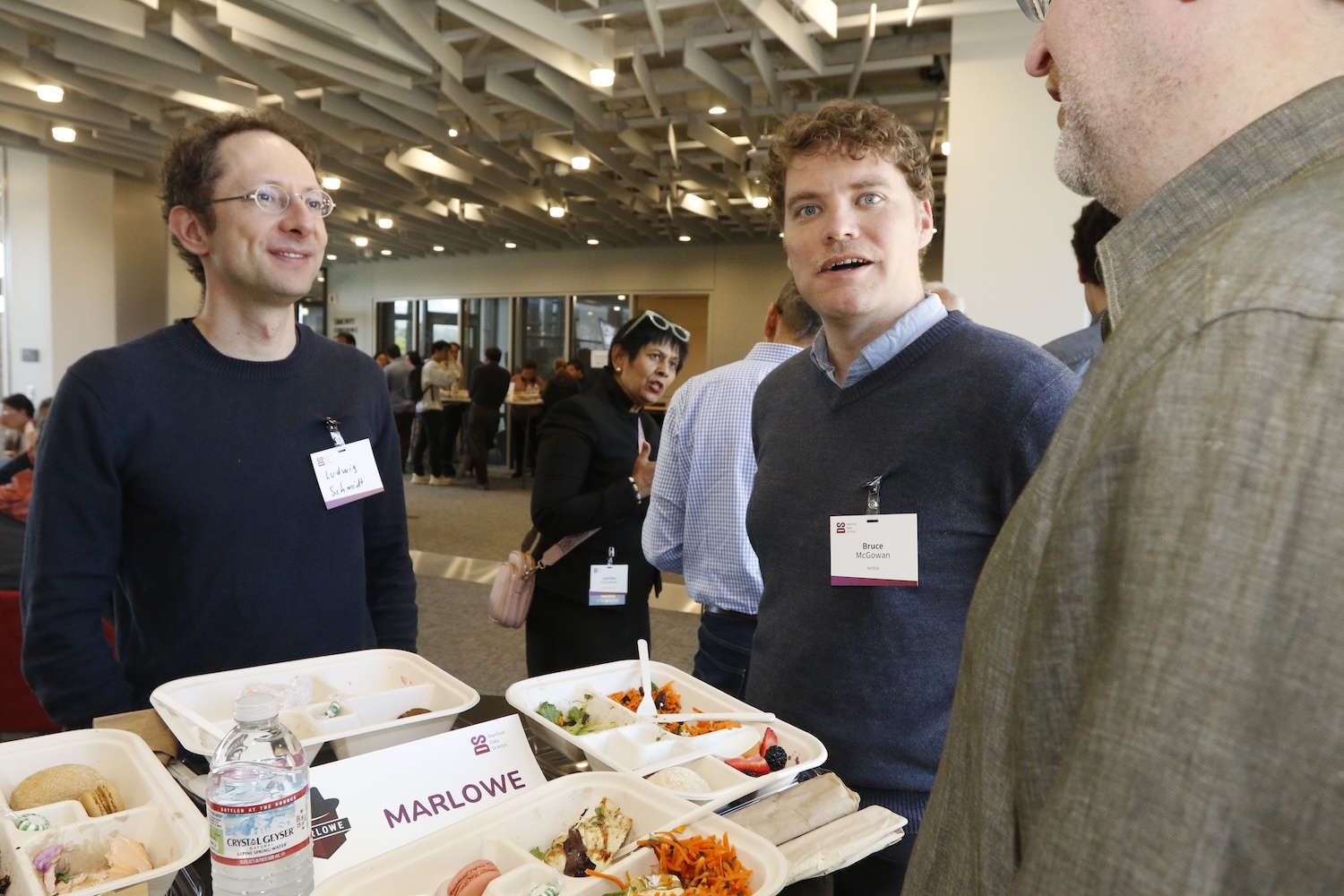
Ludwig’s work centers on the empirical foundations of machine learning, with particular interest in datasets, reliable generalization, multimodality, and language models. His group has made notable contributions to open source AI, including OpenCLIP, DCLM, and the LAION-5B dataset. At Stanford, he plans to continue advancing dataset development for AI and machine learning, including agent systems and applications in the sciences.

Catch Ludwig’s talk—“Evaluating AI: From Overfitting to Agents”—at 2:30 PM on Friday, May 23, during the Stanford Causal Science Center Conference on Experimentation. The event is nearly sold out, but a few tickets are still available!


This article is a part of the Stanford Data Science legacy publication. Read more about the HAI and Stanford Data Science merger.

Share
Link copied to clipboard!

Related News

Reading Today’s Headlines Through AI: A Real-Time Audit of Six Commercial Chatbots

Mirac Suzgun and James Zou
Jun 03, 2026
News

In a new study, scholars measured how accurately popular AI chatbots answered questions about the emerging news and found substantial regional disparity, dependence on distinct information ecosystems, and acute fragility under imperfect prompts.

News

Reading Today’s Headlines Through AI: A Real-Time Audit of Six Commercial Chatbots

Mirac Suzgun and James Zou
Communications, MediaGenerative AIJun 03

In a new study, scholars measured how accurately popular AI chatbots answered questions about the emerging news and found substantial regional disparity, dependence on distinct information ecosystems, and acute fragility under imperfect prompts.

CORES Faculty Director Featured in "The Transmitter": A brief history of precision self-scanning
Jan 21, 2026
Media Mention
Media Mention

CORES Faculty Director Featured in "The Transmitter": A brief history of precision self-scanning
Communications, MediaJan 21
Marlowe Computing Spotlight: Andreas Tolias Lab
Jan 20, 2026
Media Mention
Media Mention

Marlowe Computing Spotlight: Andreas Tolias Lab

Communications, MediaJan 20