
Experts from industry, academia, and government share lessons learned and outline a path forward at a Princeton-Stanford workshop.
Experts from industry, academia, and government share lessons learned and outline a path forward at a Princeton-Stanford workshop.


The image-generating model has some impressive capabilities that parallel the brain, but is it really creative?
The image-generating model has some impressive capabilities that parallel the brain, but is it really creative?

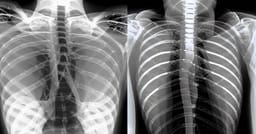
Stanford AIMI scholars found a way to generate synthetic chest X-rays by fine-tuning the open-source Stable Diffusion foundation model.
Stanford AIMI scholars found a way to generate synthetic chest X-rays by fine-tuning the open-source Stable Diffusion foundation model.
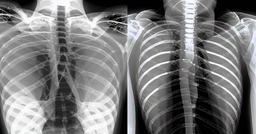

This new class of models may lead to more affordable, easily adaptable health AI.
This new class of models may lead to more affordable, easily adaptable health AI.
