Mind the (Language) Gap: Mapping the Challenges of LLM Development in Low-Resource Language Contexts

This white paper maps the LLM development landscape for low-resource languages, highlighting challenges, trade-offs, and strategies to increase investment; prioritize cross-disciplinary, community-driven development; and ensure fair data ownership.
Mind the (Language) Gap: Mapping the Challenges of LLM Development in Low-Resource Language Contexts
This white paper maps the LLM development landscape for low-resource languages, highlighting challenges, trade-offs, and strategies to increase investment; prioritize cross-disciplinary, community-driven development; and ensure fair data ownership.

Scholars develop a new model to surface high-risk messages and dramatically reduce the time it takes to reach a patient in crisis, from 10 hours to 10 minutes.
Scholars develop a new model to surface high-risk messages and dramatically reduce the time it takes to reach a patient in crisis, from 10 hours to 10 minutes.

The HAI and CCSRE fellow hopes to bring the complexity and value of African American Vernacular English to natural language processing.
The HAI and CCSRE fellow hopes to bring the complexity and value of African American Vernacular English to natural language processing.


The Multi-VALUE framework achieves consistent performance across dozens of English dialects.
The Multi-VALUE framework achieves consistent performance across dozens of English dialects.


Stanford education researchers are at the forefront of building natural language processing systems that will support teachers and improve instruction in the classroom.
Stanford education researchers are at the forefront of building natural language processing systems that will support teachers and improve instruction in the classroom.

Diyi Yang: Human-Centered Natural Language Processing Will Produce More Inclusive Technologies
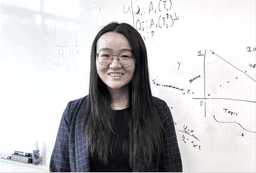
In her course called Human-Centered NLP, Yang challenges students to think beyond technical performance or accuracy.
In her course called Human-Centered NLP, Yang challenges students to think beyond technical performance or accuracy.
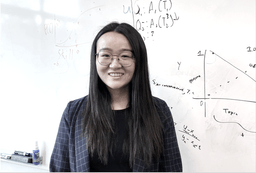

AI can help us read tens of thousands of case records within minutes, but some key Natural Language Processing challenges remain.
AI can help us read tens of thousands of case records within minutes, but some key Natural Language Processing challenges remain.