AI+HEALTH 2024
Join us online December 10-11, for Stanford's largest annual convening of AI+HEALTH experts and learners
This year, we are dedicated to delivering practical takeaways that you can immediately apply in your clinical practice or organizational setting. With more time allocated for Q&A discussions and interactive sessions, you'll have ample opportunities to dive deep into the topics that matter most to you. We're particularly excited about sessions exploring real-world use cases of AI in clinical settings today, as well as critical discussions for implementing AI in healthcare settings. These sessions are designed to equip you with actionable insights and strategies to navigate the complexities of AI adoption in healthcare.
AI+HEALTH is Stanford's largest convening for AI in health and medicine. Hosted by the Stanford Institute for Human-Centered Artificial Intelligence (HAI), Center for Artificial Intelligence in Medicine and Imaging (AIMI), and Center for Continuing Medical Education (CME), we aim to convene experts and leaders from academia, industry, government, and clinical practice to explore critical and emerging issues related to AI's impact across the spectrum of healthcare. Content will be relevant to clinical practitioners, researchers, executives, policymakers, and professionals, with and without technical expertise.
Join us as we collectively explore how AI is shaping the future of healthcare, fostering collaboration across sectors to drive meaningful advancements and improve healthcare delivery. We look forward to welcoming you to enriching discussions, valuable networking opportunities, and a conference experience designed to empower your AI journey.
Visit Conference Website
Related Events
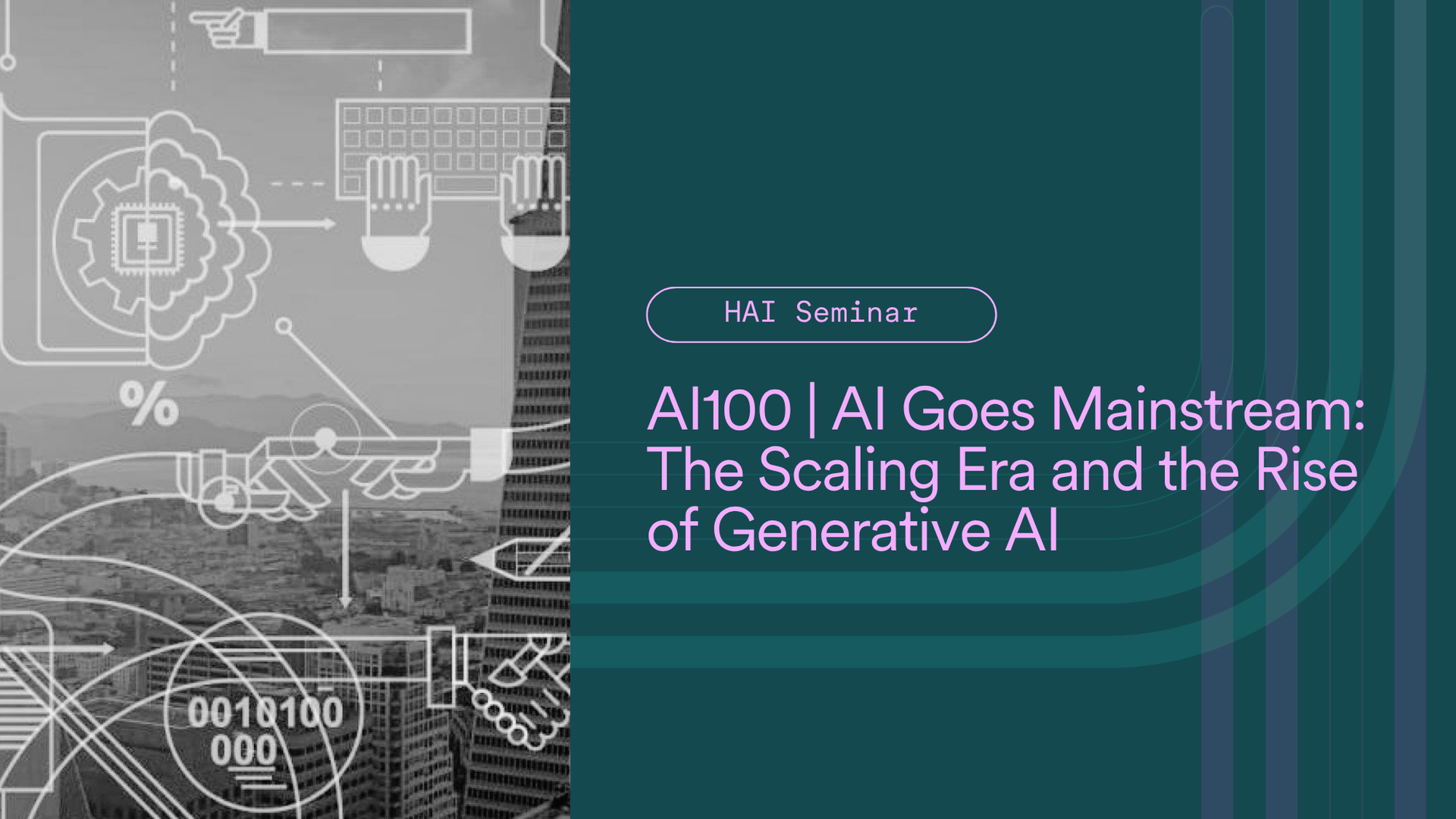
AI100 | AI Goes Mainstream: The Scaling Era and the Rise of Generative AI
This talk will cover key insights from the third AI100 report, AI Goes Mainstream: The Scaling Era and the Rise of Generative AI, set for release in November 2026. The report was commissioned by the AI100 standing committee and led by study panel chair Michael Wooldridge.
This talk will cover key insights from the third AI100 report, AI Goes Mainstream: The Scaling Era and the Rise of Generative AI, set for release in November 2026. The report was commissioned by the AI100 standing committee and led by study panel chair Michael Wooldridge.
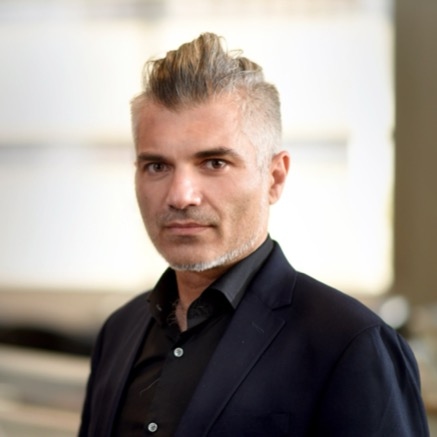
Marlowe | AI + Data for Science with Andreas Tolias
Sessions run Wednesdays from 4:30–5:30 PM in CoDa E160. Each session features a different Stanford speaker; talk titles are announced by the organizers.
Sessions run Wednesdays from 4:30–5:30 PM in CoDa E160. Each session features a different Stanford speaker; talk titles are announced by the organizers.
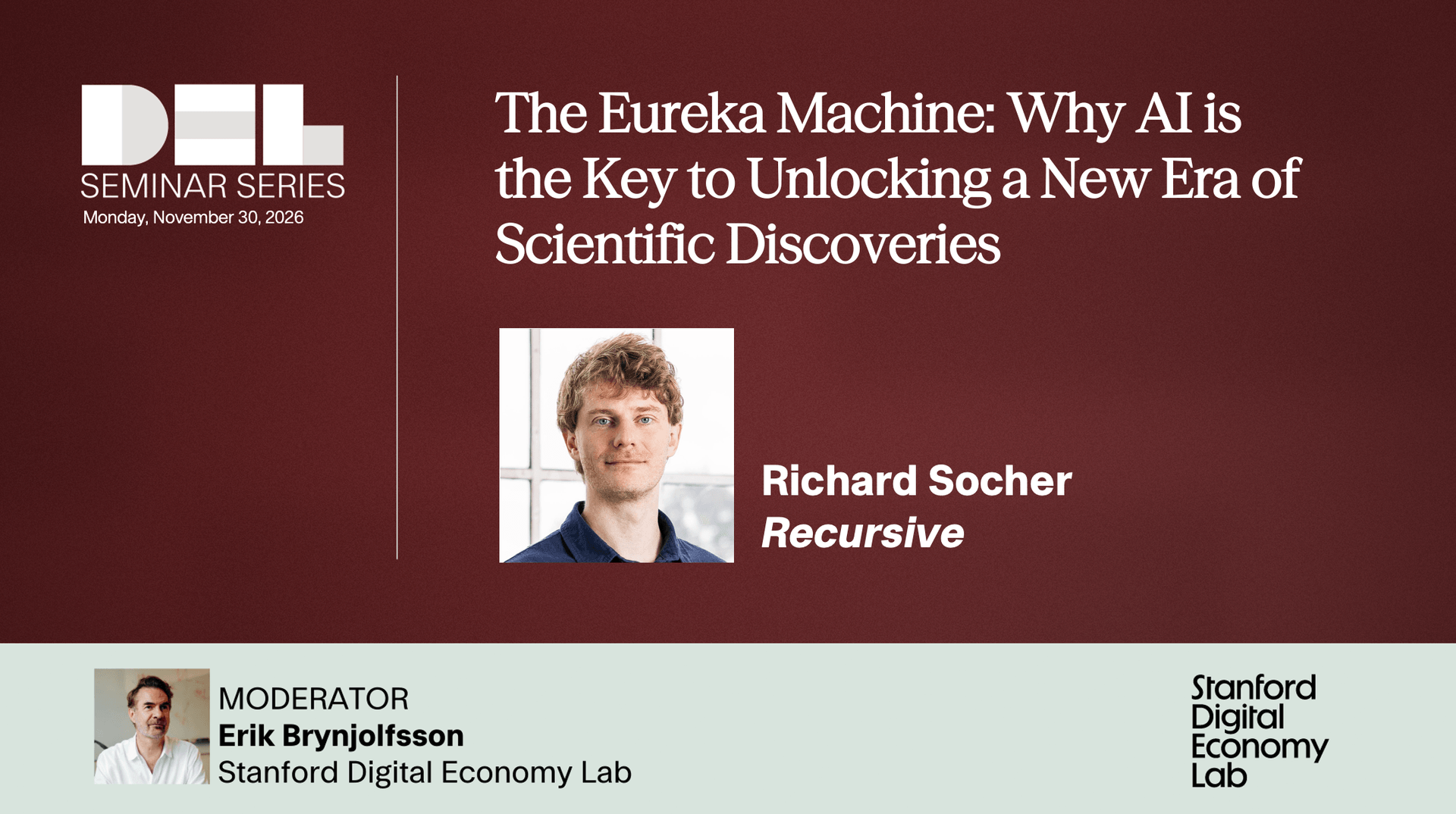
Richard Socher | The Eureka Machine: Why AI is the Key to Unlocking a New Era of Scientific Discoveries
The next, maybe final, frontier of AI research is automating the process of knowledge discovery. By pointing AI first at itself and then at the R&D process of all scientific domains, we can far exceed where human-led research can take us. Richard Socher argues the current pace of scientific discovery has slowed significantly over the past several decades as the fields of science fragment and the number of researchers focused on any one continues to shrink.
The next, maybe final, frontier of AI research is automating the process of knowledge discovery. By pointing AI first at itself and then at the R&D process of all scientific domains, we can far exceed where human-led research can take us. Richard Socher argues the current pace of scientific discovery has slowed significantly over the past several decades as the fields of science fragment and the number of researchers focused on any one continues to shrink.